
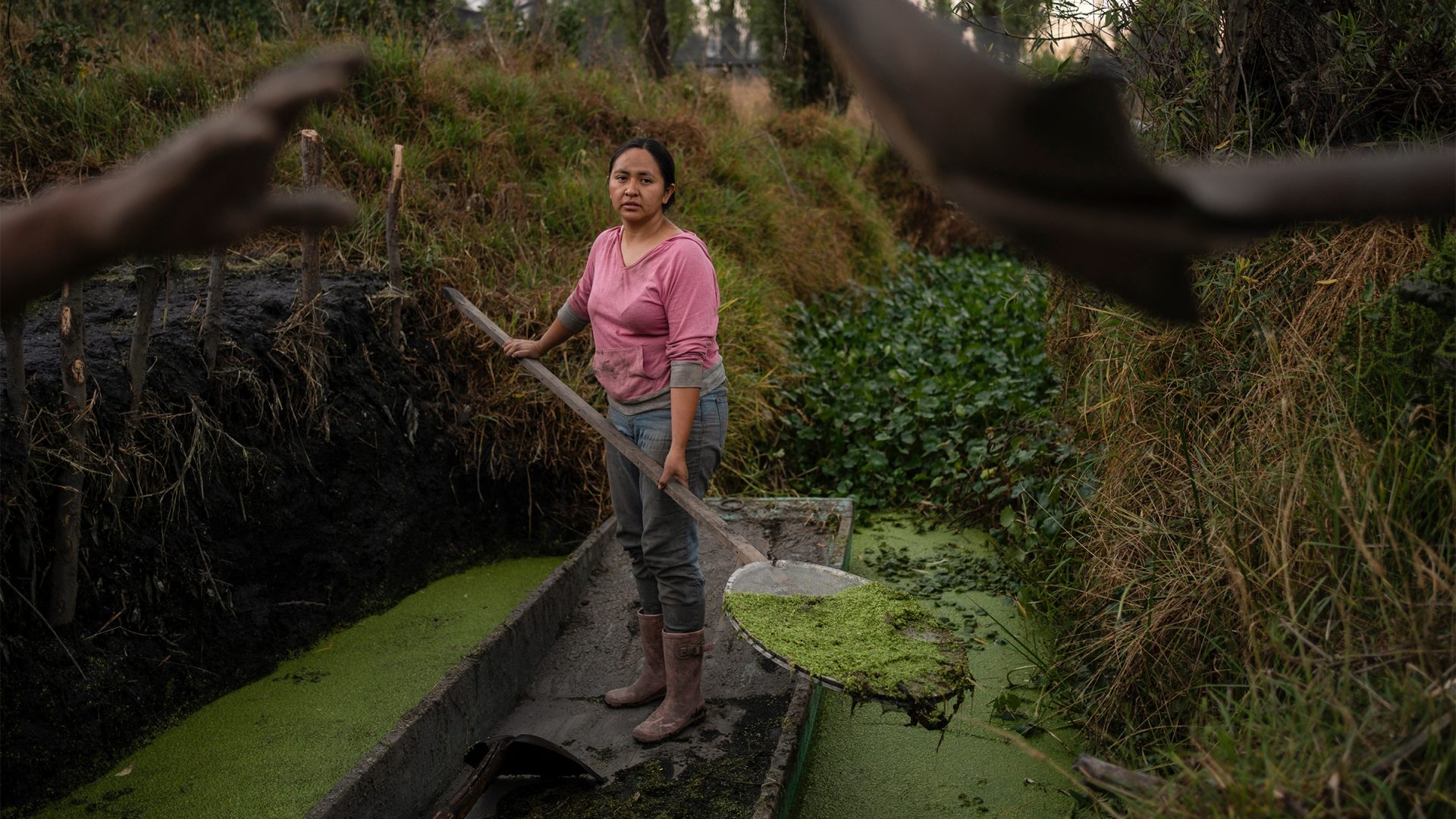
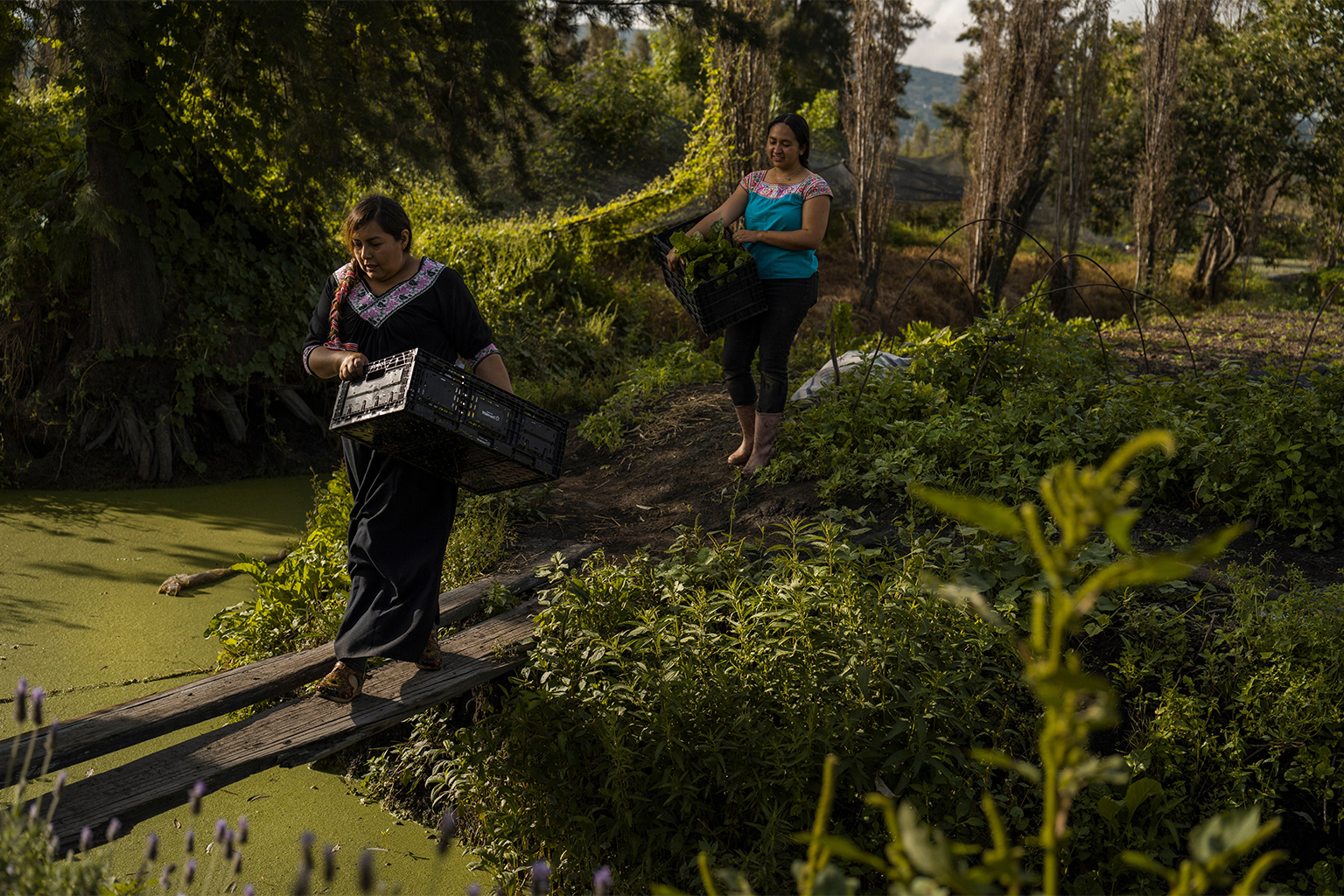
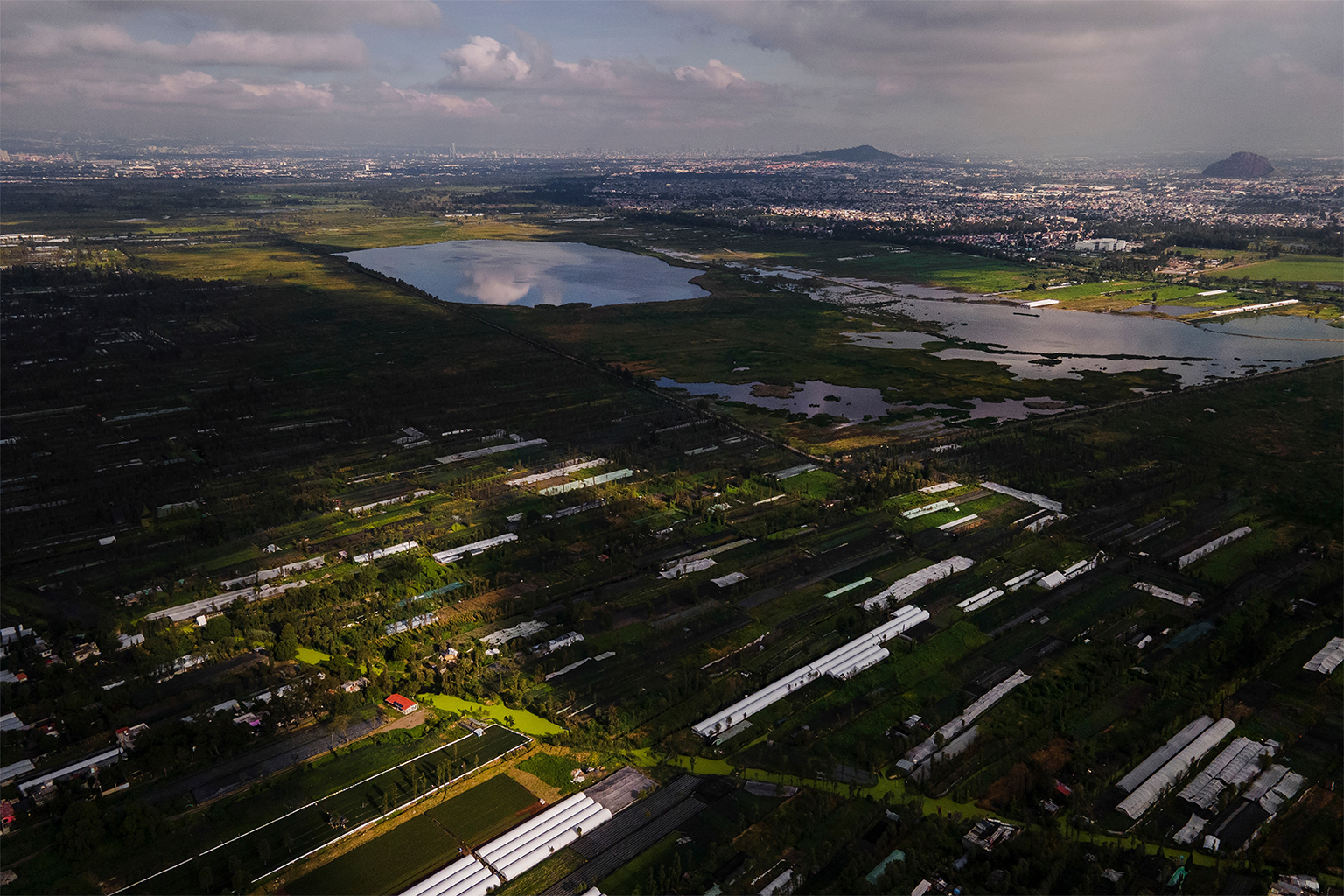
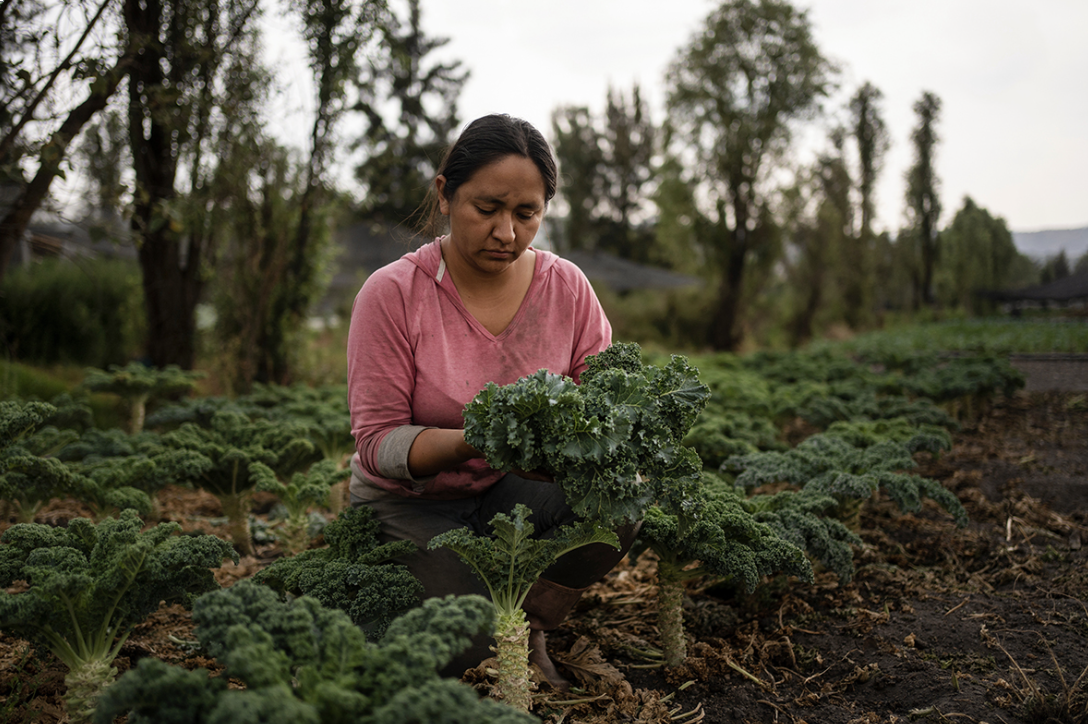
In Mexico City, ‘chinampas’ are sustainable floating farms that were built by the Aztecs thousands of years ago as part of Tenochtitlan, the capital of the Aztecs. Built on the lakes that once filled the Valley of Mexico, they resembled a series of islands which helped feed the empire.
Through the millennia, this tradition faded as modernity took hold, but ancestral rights to the islands continued to be passed down and the farms are still worked until this day, in reduced scope but during a time when a need for local, urban produce is starting to spike.
The reporting team from Mongabay and the Associated Press became interested in the fact that women did not traditionally inherit chinampas, so the ownership and also the farming of such islands has traditionally been done by men.
However, the reporters also knew that today, women have begun buying chinampas from men to continue the legacy and business of sustainable urban agriculture, and along the way are helping to maintain ecosystems that are threatened by urbanization and water pollution.
What remains today represents only 3% of the original extent of those lakes, yet the chinampas are still key to the stability of the city. If the system were to disappear, the average temperature of the capital could rise by up to 2 degrees Celsius (3.6 Fahrenheit). They also reduce flooding during the rainy season, provide a natural carbon sink and are home to hundreds of species, such as waterbirds, the Tlaloc frog, and the nation’s iconic and endangered salamander-like ‘axolotl.’
Despite the challenge of finding a woman who would agree to be the focus of a feature set in this male dominated sphere, the results revealed there’s great public interest in preserving these floating farms, and viewers were captivated by the role of women in their continuance. Offers of funding were also expressed to the women via the partner media outlets.