
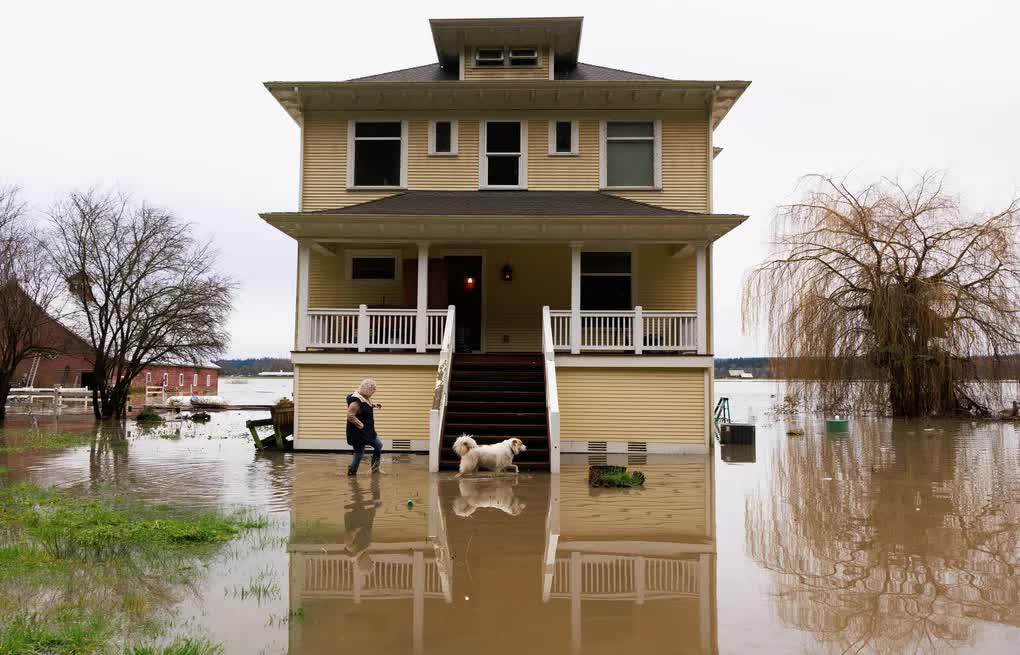
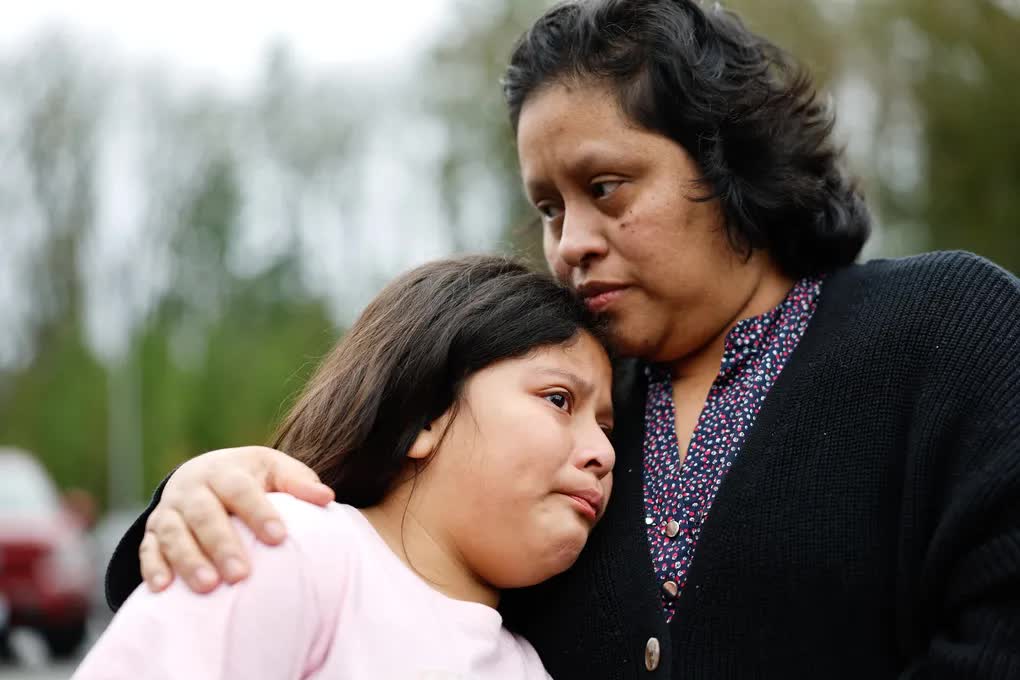
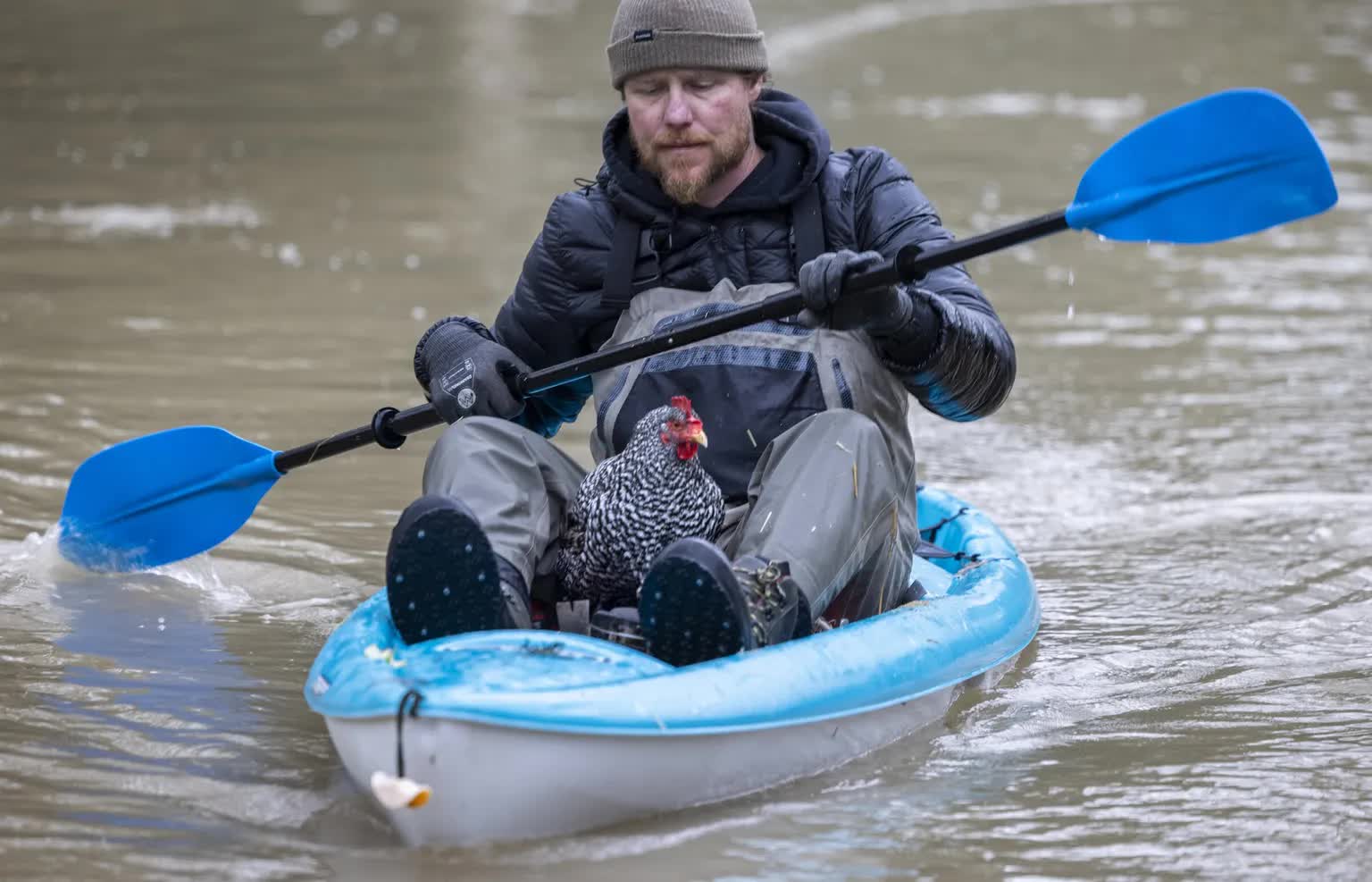
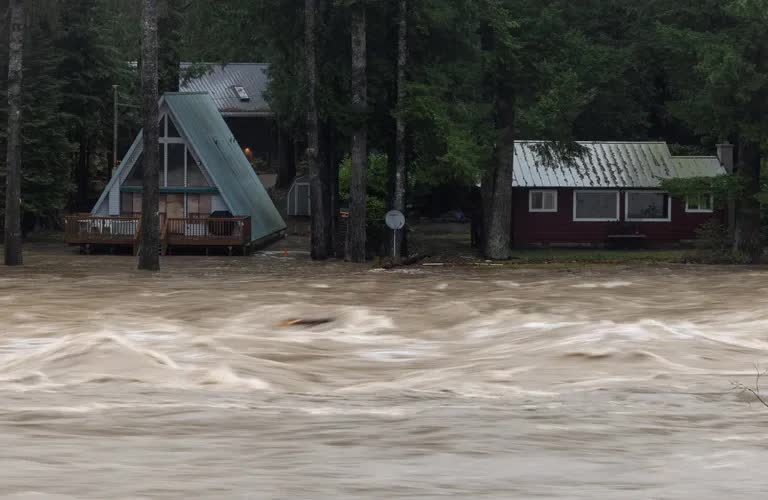
This was well-organized, informative breaking news coverage that balanced essential, actionable information with compelling human stories. Judges were especially impressed by the impactful photography, which vividly captured the experience of people — and their animals — navigating the floods.
Massive storms stretched some 7,000 miles across the Pacific Ocean and barreled toward the Pacific Northwest. A deluge hit the region. Then another. And another.
Trillions of gallons inundated river valleys in December, causing historic floods that damaged or destroyed nearly 4,000 homes, washed away vital highways and breached levees. First responders saved more than 380 people from the floodwaters. One died. In all, 33 rivers flooded, hitting Washington communities from the Canadian border to many miles south of Seattle.
To cover this monumental disaster, The Seattle Times broke the region into zones, sending teams to track the devastation that shifted by the hour. The cascading floods often blocked access to communities with little warning, but we were there. In the floodplains and on rivers’ edges, as the residents of a mobile home park rushed to save their belongings, we were there. When levees breached and emergency workers knocked on doors urging people to flee, we were there.
Late on Dec. 10, authorities ordered the entire Skagit River floodplain, including some 70,000 people, to evacuate immediately. Times reporters spent that day embedding with evacuees and those who decided to stay, and published crucial information in multiple formats. Colleagues delved into the storm’s origins and unusual strength and created infographics about the dangers of floodwaters.
The coming hours brought rivers to heights never seen before.
Photojournalists using drones and riding in a helicopter revealed the extent of the floods: farmland and roads underwater, homes swallowed, the roar of mountain rivers bringing more rainfall to the waterlogged valleys.
The danger would not recede for days. The recovery will take years.
As communities held their breath, we also reported on how years of government inaction — including delays in levee reconstruction and incomplete flood- and landslide-risk maps — put so many lives at risk.
The flooding has ended, but our coverage of this disaster will not stop.