
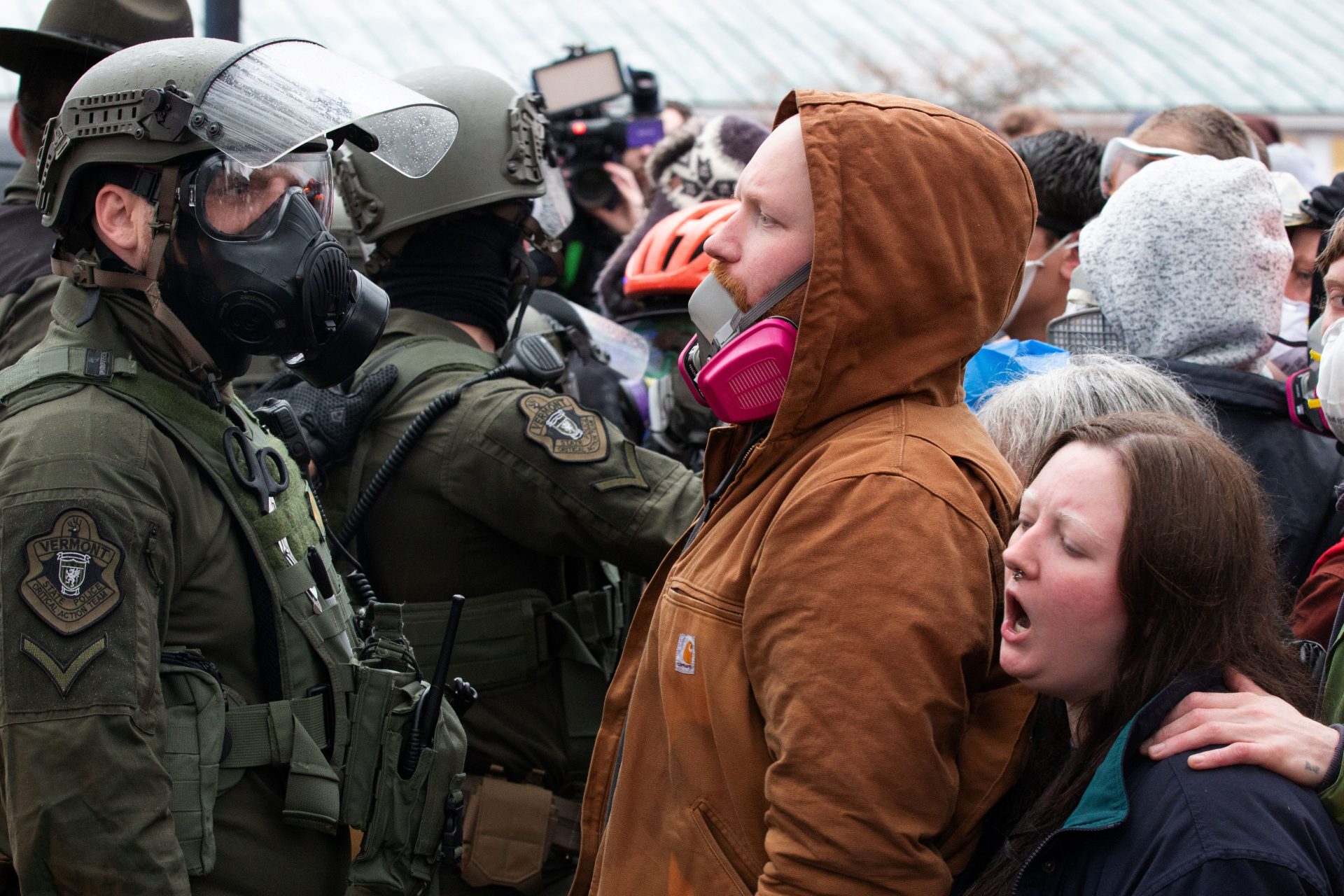
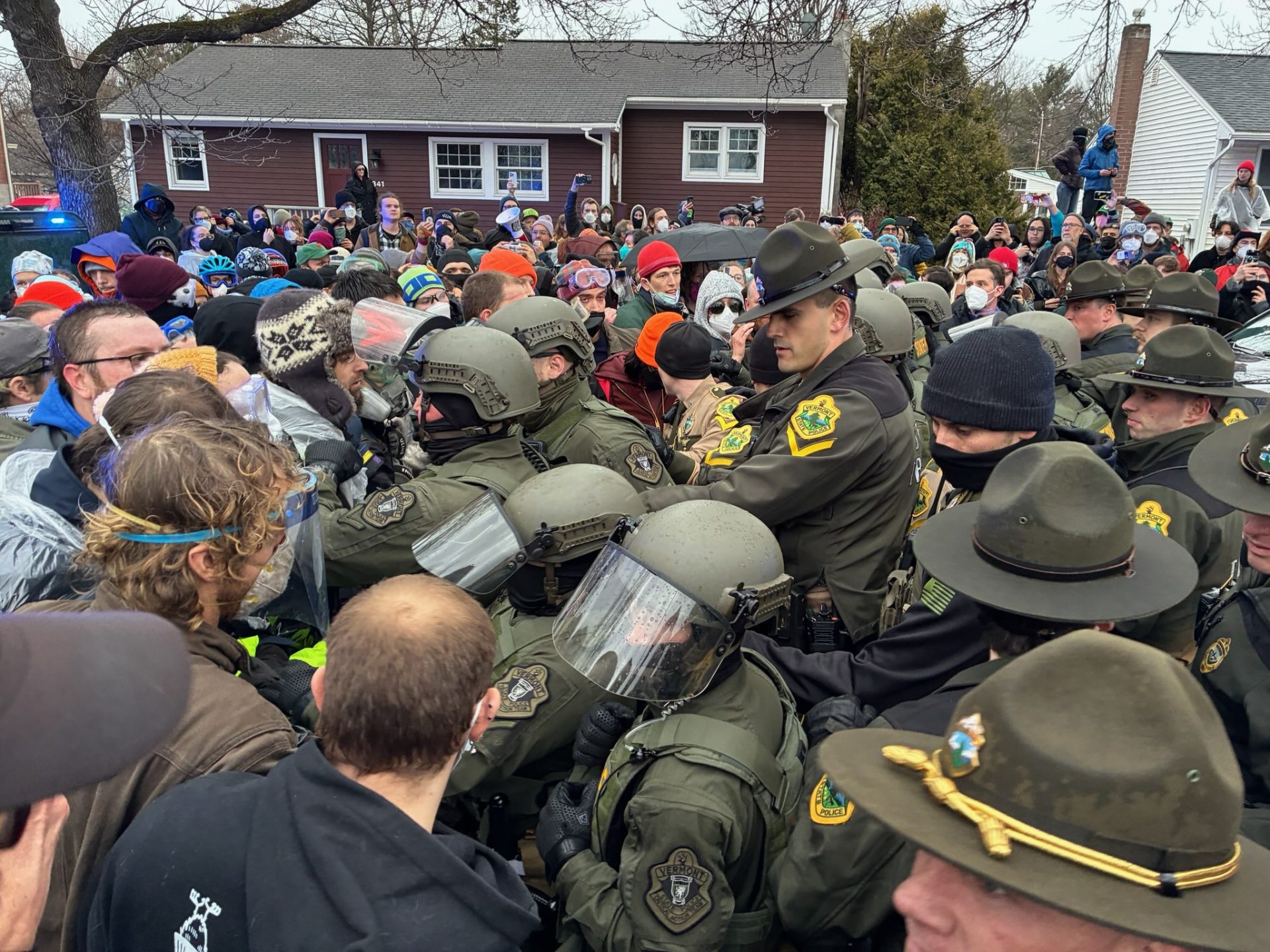
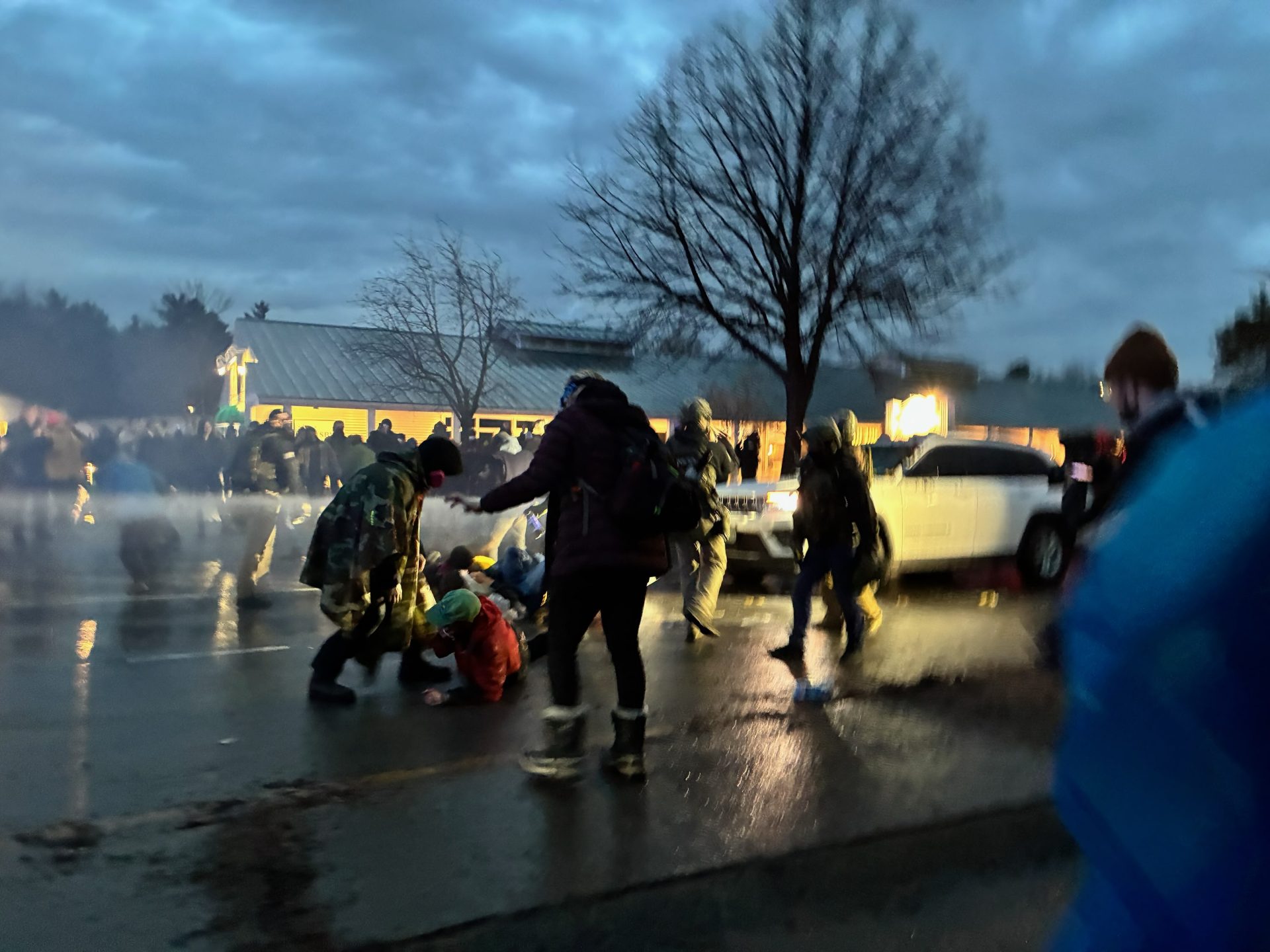
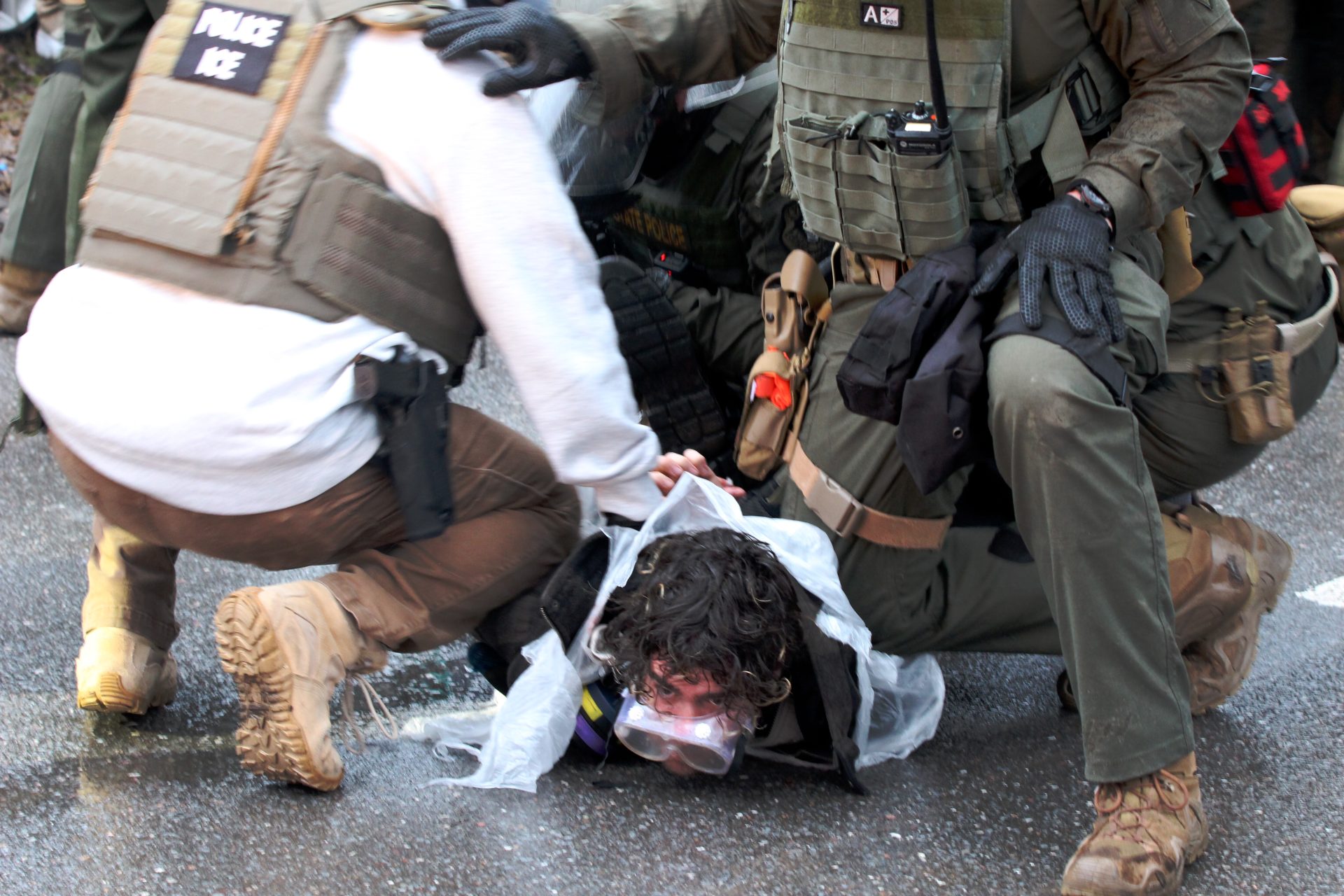
On March 11, 2026, agents from U.S. Immigration and Customs Enforcement attempted to stop a vehicle they believed was being driven by an undocumented Mexican man facing a DUI charge. It would turn into a daylong breaking news event that ended with three immigrant arrests, six protesters facing charges, and the deployment of flash-bangs and tear gas – the first major confrontation between protesters and federal immigration authorities in Vermont.
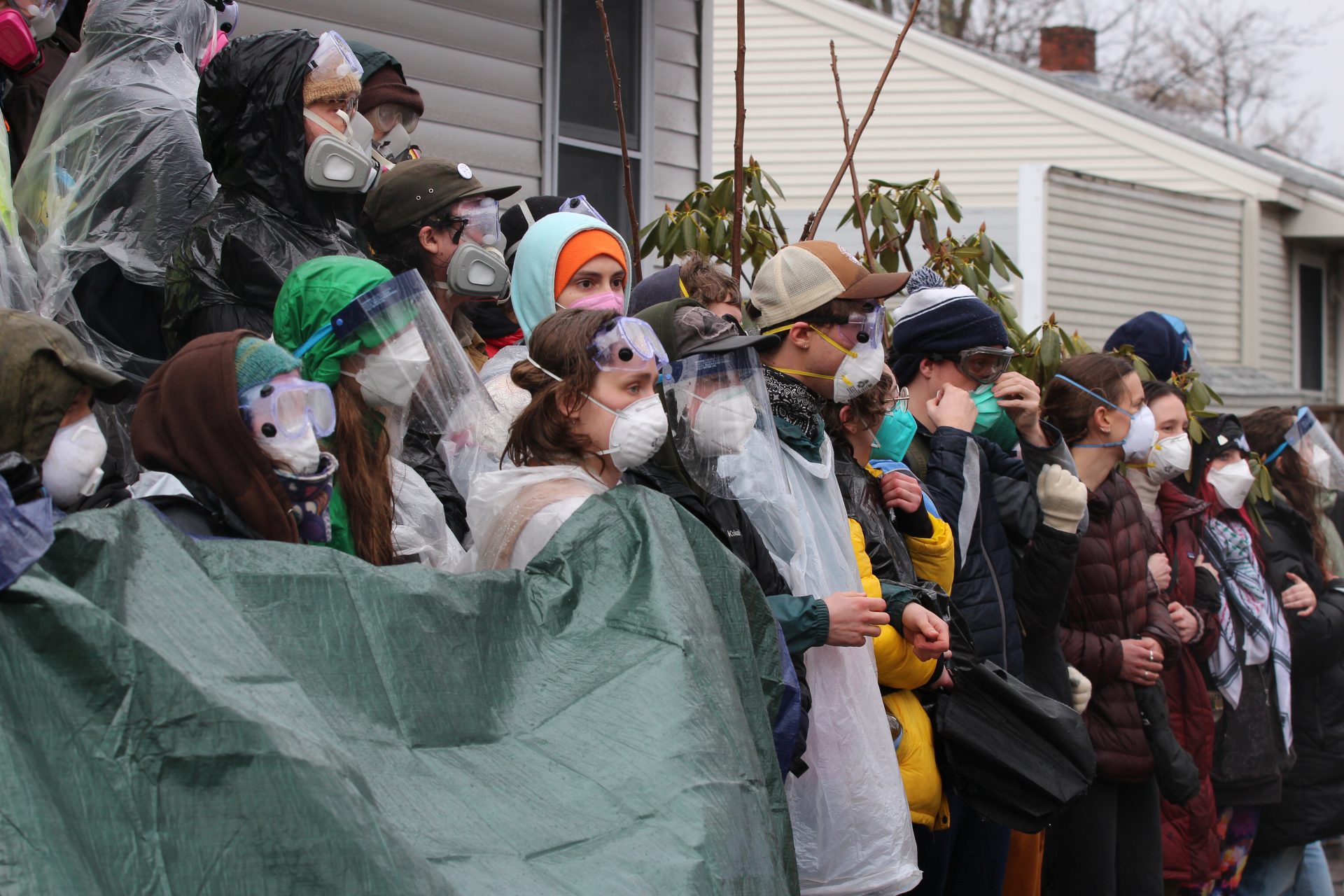
After the agents’ pursuit of the vehicle ended in crashes, the driver and passenger fled into a nearby house, forcing ICE to obtain a judicial warrant to proceed. Hundreds of protesters converged on the site. Local and state police arrived to assist ICE in executing the warrant, amid virulent criticism from the crowd. ICE ultimately removed two women and a man from inside the home, none of whom was the man named on their warrant. Protesters attempted to block federal and state vehicles from leaving the chaotic scene.
Vermont Public journalists arrived at about 10:30 a.m., as protesters were amassing outside the house and specialized law enforcement units had not yet arrived. An early version of the article went live at about 12:15 p.m., followed by a mobile push notification, a breaking news email and social media posts. (We later learned that at least one other media organization found out about the news via this push notification.)
Our journalists remained on site through the late afternoon when immigrants were removed from the house, into the evening when ICE agents deployed tear gas and pepper balls to clear protesters, and finally when local police officials held a press conference criticizing ICE. The final update to the story was made at about 9:43 p.m. and shared via another push notification and email.
The following day, Vermont Public followed up with a second breaking news story revealing that ICE had been targeting the wrong person from the beginning. We also produced a succinct Q&A-style explainer and an in-depth story delving into the questions around, and ramifications of, local police’s involvement with the raid. Our daily radio show hosted a full-hour discussion about the news that was posted online. This provided the public’s first opportunity to grapple with what happened and included first-hand accounts from protesters. We also filmed, edited and posted a one-minute video summarizing what had happened.
All together, this coverage represents a careful yet timely response to a volatile news situation. There were many allegations, rumors and videos from the day that we could not immediately verify. Our approach was to share the known facts as clearly as possible, based on more than eight hours of observation, extensive interviews, photos and videos collected by our journalists on the scene. We packaged the material in multiple ways to reach the broadest audience. This was a major news event for our state, bringing insight into how local and state law enforcement interact with ICE, as well as ICE’s refusal to back down from its enforcement approach.