
Judges called this phenomenal work — a huge story of global impact that still manages to feel focused and deeply personal. They praised the reporter’s restraint and dedication to his source’s safety, along with storytelling that was breathtaking without ever feeling overly hyped or sensational.
In early June, WIRED reporter Andy Greenberg received an email with no subject line.
“Hello. I’m currently working inside a major crypto romance scam operation based in the Golden Triangle,” the message began. “I am still inside the compound, so I cannot risk direct exposure. But I want to help shut this down.”
The source, who asked Greenberg to call him Red Bull, would later tell him that he had reached out to numerous other news outlets, human rights groups, and even law enforcement agencies. Only Greenberg replied.
For months to come, Greenberg and this source would be in almost daily contact on the encrypted messaging app Signal as they strategized about how Red Bull could safely obtain and leak a trove of secrets — and then escape — from the human trafficking scam compound where he and thousands of others had been enslaved. Greenberg became his confidant, security consultant, and handler as Red Bull undertook an unprecedented act of whistleblowing to expose, from a never-before-seen perspective, what has become both the most profitable form of cybercrime in the world and a sprawling human trafficking tragedy.
Survivors of forced-labor scam compounds across Southeast Asia, which have enslaved hundreds of thousands of people, have previously told their harrowing stories after they escape from their captors. Never before has one become a real-time source while still inside a scam compound, using that access to collect and leak information to a journalist.
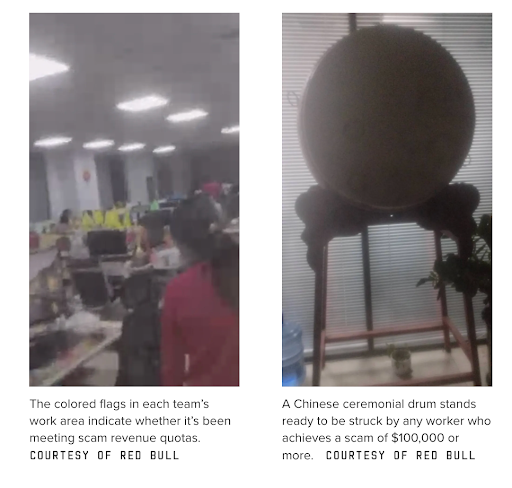
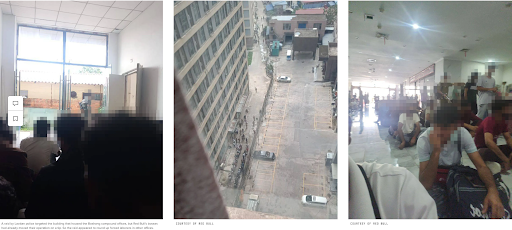
Recognizing the risks Red Bull was taking, Greenberg made himself available to his source at all hours of the day and night for the next six months. Red Bull ultimately sent him dozens of scam guides and scripts, enough information about his bosses to assemble an org chart of the office, photos he secretly took inside the compound and even videos he secretly transmitted to Greenberg over Signal video calls. His biggest leak was 100 minutes of screen recordings Red Bull made while scrolling through the compound’s WhatsApp conversations, which WIRED painstakingly screenshotted to create 4,000 pages of chat logs revealing the minute-by-minute conversations between the compound’s workers and their bosses.
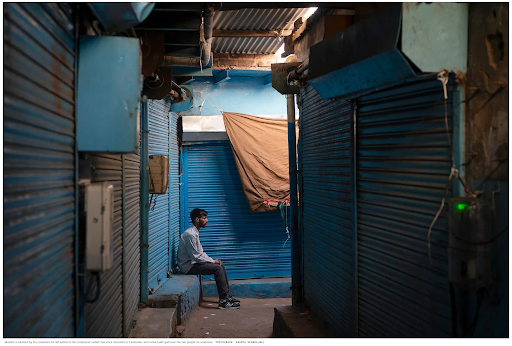
The leaks and Greenberg’s reporting resulted in three distinct pieces of revelatory journalism: First, a narrative feature that tells Red Bull’s story, his work as a source, and his eventual escape from the compound to his home country of India. (Greenberg traveled there to finally meet him face-to-face in November.) Second, WIRED’s cybersecurity coverage team produced an in-depth analysis of the materials Red Bull leaked. And finally, our video team produced a 25-minute documentary encompassing the full story.