‘They Didn’t Want to Have C-Sections. A Judge Would Decide How They Gave Birth’ is stellar accountability journalism that combines deeply personal, intimate reporting with rigorous investigation and data. Judges praised how ProPublica took audiences inside a shocking court hearing through YouTube and TikTok, adding power and immediacy beyond the written story. Precise legal reporting, deeply human testimony and original analysis come together in an exemplary investigation of an issue with profound consequences for women’s autonomy and health.
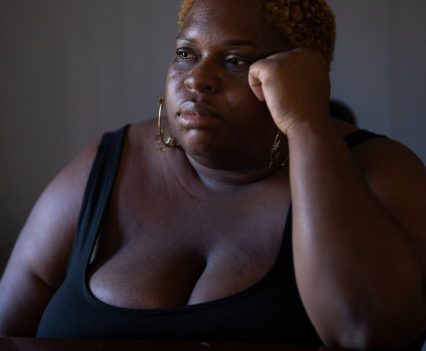
In 2024, Cherise Doyley arrived at a hospital in downtown Jacksonville in labor with her fourth child. Twelve hours into her contractions, the hospital sought an emergency court hearing — held on Zoom, with Doyley forced to join from her hospital bed. The hospital was challenging her decision to decline a C-section.
The hearing, which lasted three hours, wasn’t the first. Along with Doyley, another Florida woman, Brianna Bennett, was forced to attend a similar hearing months earlier in Tallahassee. Both women lost their ability to make medical decisions because they were pregnant in a state that, along with many others, has embraced the legal concept of fetal personhood. Both ended up having court-ordered C-sections. Bennett’s surgery, complicated by the presence of scar tissue, also left her ability to have future children in doubt.
Pregnant patients are the only mentally competent adults who don’t have the right to refuse medical care in the United States. In Florida, courts have found pregnant women’s medical decisions can be overridden if the state wishes to intervene on behalf of the fetus. Women forced into emergency hearings for their birth choices have no right to legal assistance.
In the course of her research, ProPublica reporter Amy Yurkanin obtained a video recording of Doyley’s hearing that showed the trained doula passionately arguing her case while in labor, draped with a bed sheet. Yurkanin also requested court documents from every county in Florida with a hospital labor and delivery unit and unearthed hospital emails related to Bennett’s case.
Yurkanin’s investigation included two powerful components. The first was an investigative piece that examined the connection between court-ordered C-sections and the emergence of the fetal personhood movement, which seeks to recognize the rights of the unborn over the rights of the mother. The second delved into Doyley’s hearing, offering snippets from Doyley’s hearing that allowed readers to see how the painstaking process played out.
By examining these cases, ProPublica has for the first time scrutinized state and hospital C-section policies that undermined the rights of pregnant women and forced them to undergo unwanted surgery. Yurkanin’s work also illuminates yet another way in which the fetal personhood movement erodes the rights of pregnant patients and could lead to more women being stripped of the right to decide how they give birth.