U.S. employers spent 2024 and 2025 fleeing from their promises to pursue “diversity, equity, and inclusion,” or DEI. President Trump’s re-election hastened this retreat, which has taken a disproportionate toll on women and other workers who are often underrepresented in corporate America. In the months after Trump returned to office, NPR business correspondent Maria Aspan broke news and reported in-depth, multiplatform stories about the human costs of corporate America’s widespread retreat from DEI.
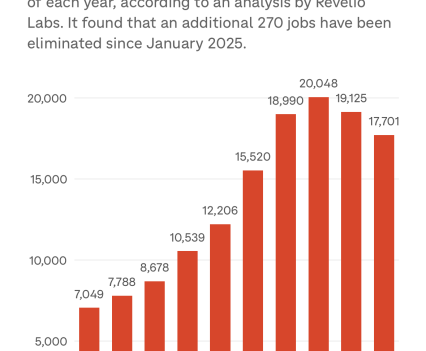
Aspan was first to report on the estimated number of DEI-related jobs that corporate America has eliminated, in a deep-dive digital feature and audio companion piece that told the story of one affected worker and showed the personal toll this employment trend has taken.
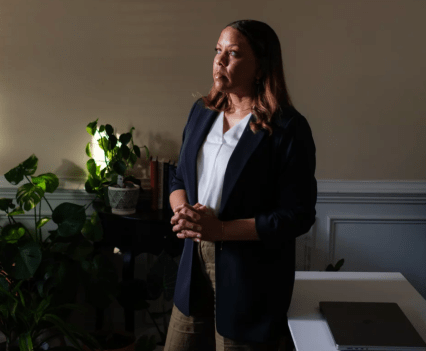
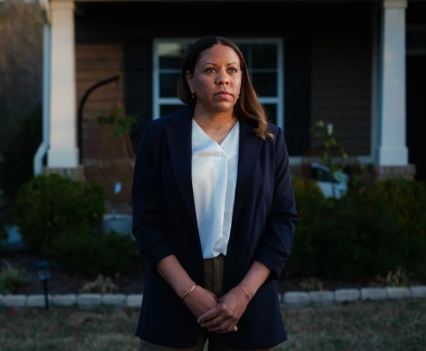
Aspan spent hours speaking with Candace Byrdsong Williams over Zoom and in person, gaining her trust to share the painful details of her layoff and her frustrating job search, at a time when many corporate DEI workers were unwilling to go on the record about their suddenly-politicized field of employment.
The resulting profile of Byrdsong Williams was also grounded in data that showed the broader workforce impact of this corporate strategy shift. Aspan was the first to report on the number of U.S. jobs eliminated by corporate America’s DEI retreat, according to an exclusive data analysis conducted for NPR at Aspan’s request, by the workplace analytics firm Revelio Labs.
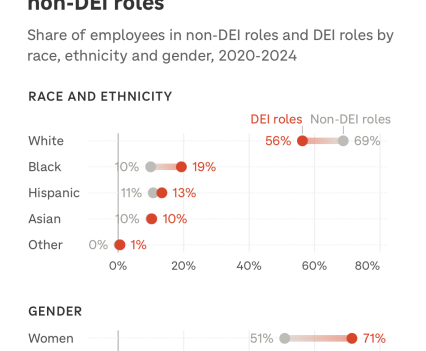
That analysis showed that the DEI rollback is having an outsized impact on underrepresented employees — both the executives who run these initiatives, and the more diverse workforces they helped create.
Women accounted for more than 71% of all DEI professionals from 2020 through 2024 — compared with 51% of other roles, according to Revelio Labs. Black and Hispanic workers together held only 21% of other jobs — but 33% of DEI roles. Moreover, companies that remain committed to diversity do in fact tend to hire a more diverse workforce, especially Black and Asian workers, than companies without DEI teams, Revelio Labs found.
NPR graphics reporter Connie Hanzhang Jin used Revelio Labs’ data to create clear, striking infographics for the feature that conveyed the number of jobs lost and the scope of the impact on workers like Byrdsong Williams. NPR visual editor Emily Bogle commissioned photos of Byrdsong Williams that grounded the feature in her individual experiences.
Aspan also presented her reporting in broadcast and podcast forms, including in breaking-news interviews and reported audio features that aired on NPR’s Morning Edition and All Things Considered, as well as its Up First and Consider This podcasts.