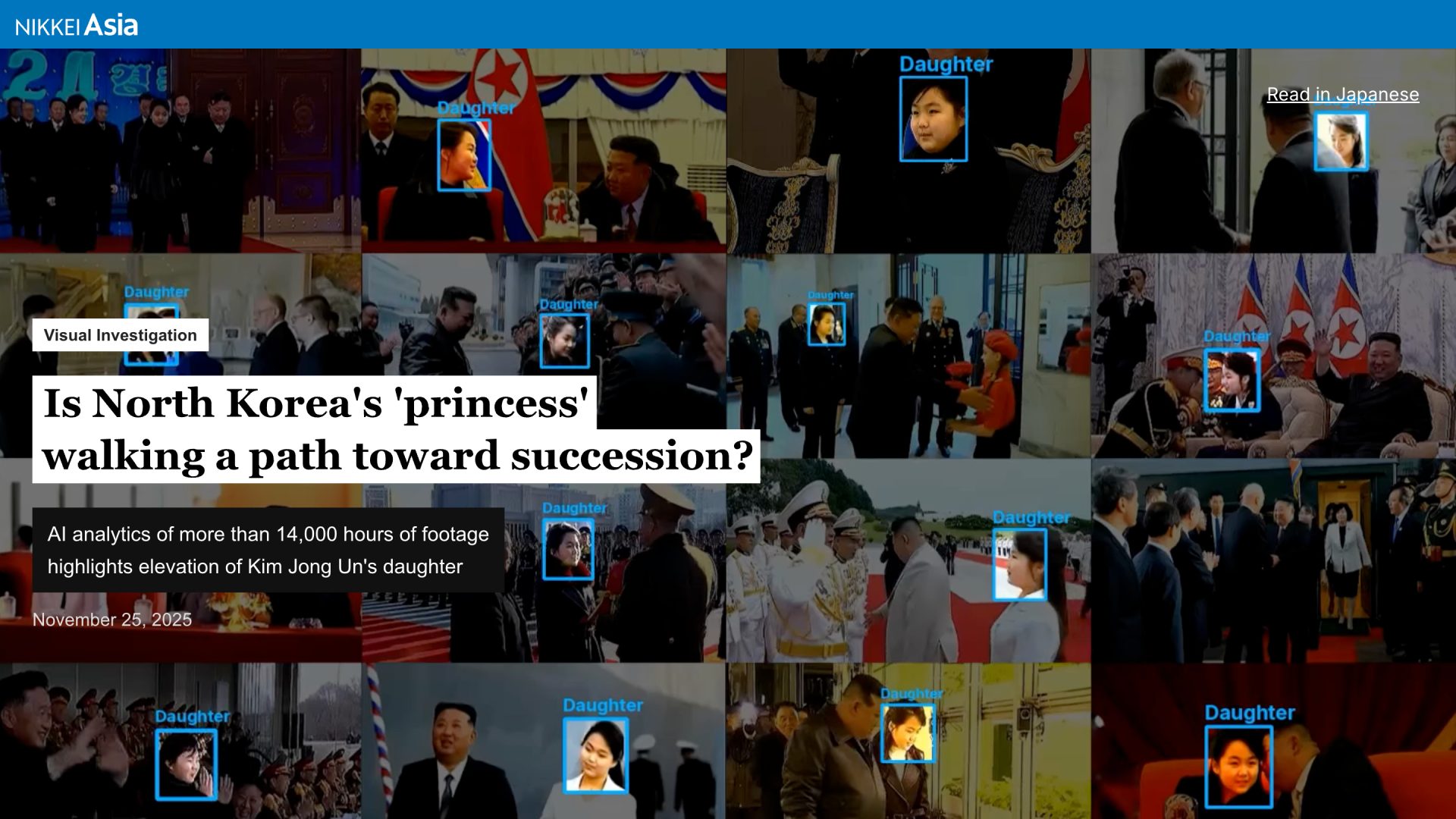
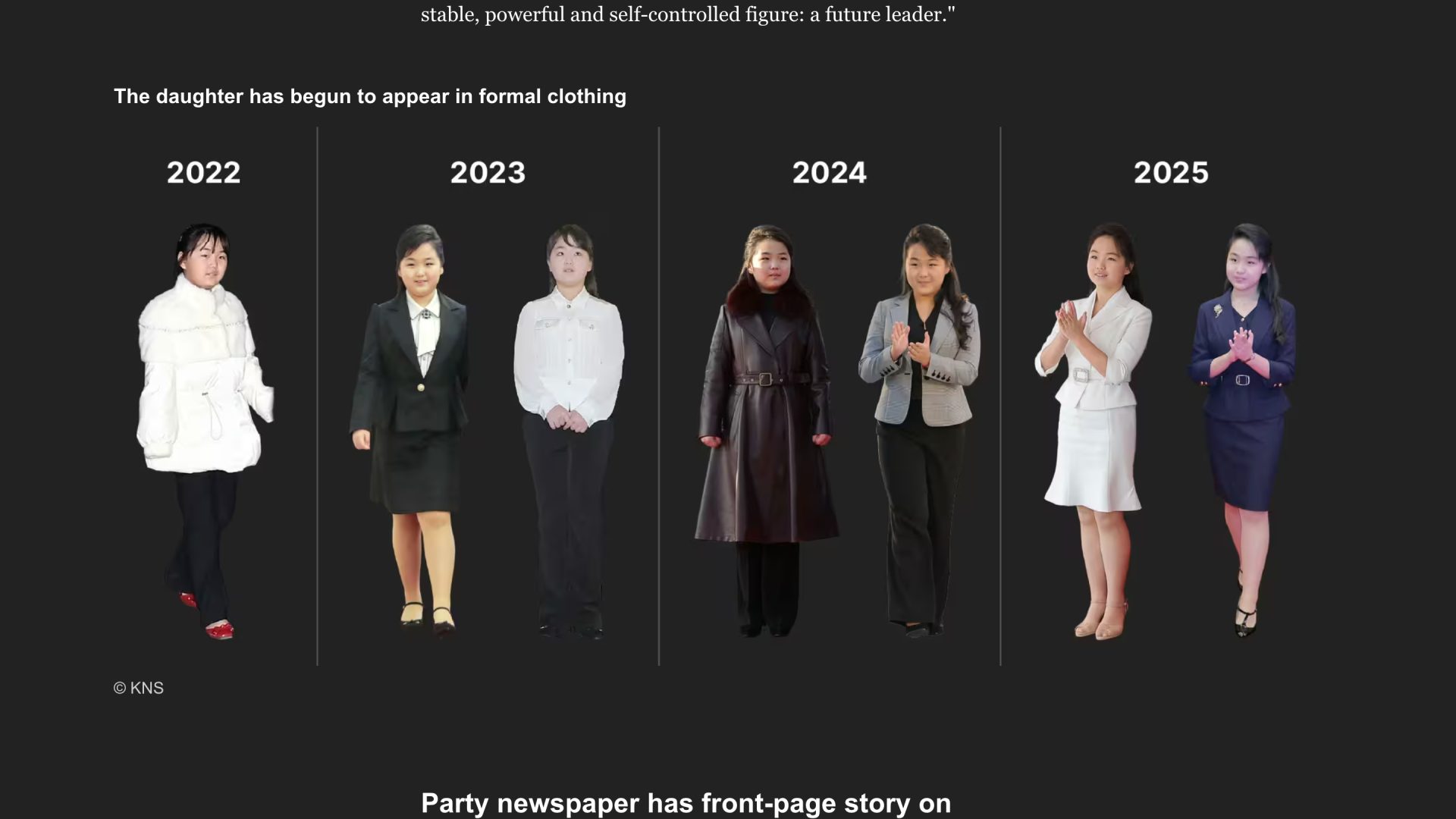

This project utilized AI-powered facial recognition technology to uncover the exceptional privileged treatment of Kim Ju Ae, daughter of North Korean leader Kim Jong Un, who is widely considered a potential successor. By analyzing 14,115 hours of Korean Central Television (KCTV) footage, we discovered that the number of days she appeared in 2025 approached the frequency of her father, Kim Jong Un. Her increasing exposure revealed North Korea’s apparent intention to perpetuate its dictatorial regime. The reporting team employed a new journalistic approach by leveraging AI for video analysis.
Three years have passed since Kim Ju Ae’s public appearances began, yet her position and role remain entirely undisclosed. A significant challenge was the impossibility of on-site reporting, which precluded conventional journalistic methods. The footage from state media KCTV became the key to addressing these challenges. By analyzing this state media, which strongly reflects the regime’s intentions, we were able to approach the true reality of Kim Ju Ae’s situation within North Korea.
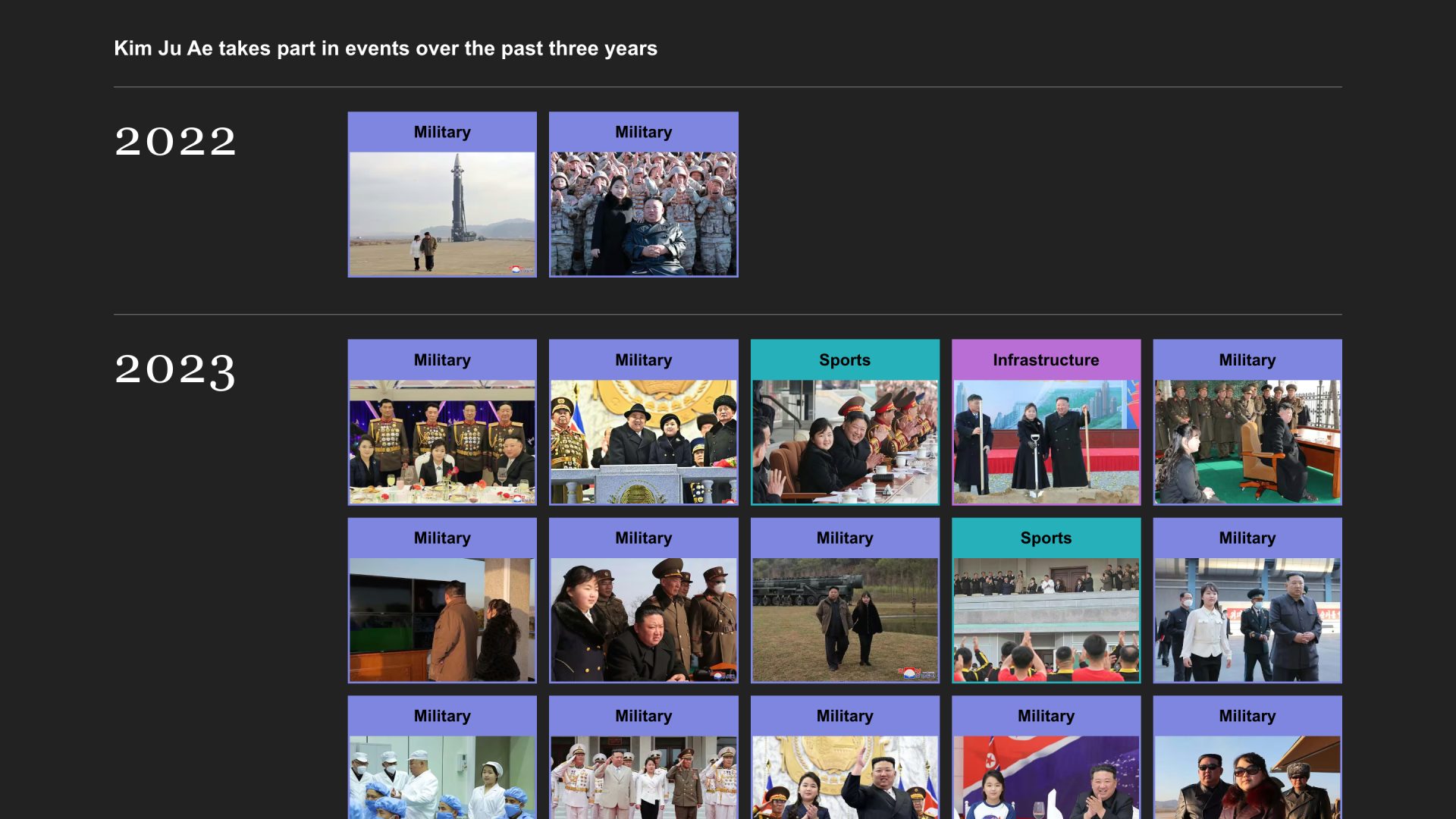
Our investigation used AI facial recognition to automatically extract scenes featuring Kim Ju Ae, followed by manual verification by reporters. It was found that she appeared on public occasions for over 600 days in the past three years. In 2025, her monthly appearance days exceeded 24, indicating a level of exposure nearing that of her father, Kim Jong Un. Our data-driven findings were the first to confirm her increasing public presence among global media outlets.
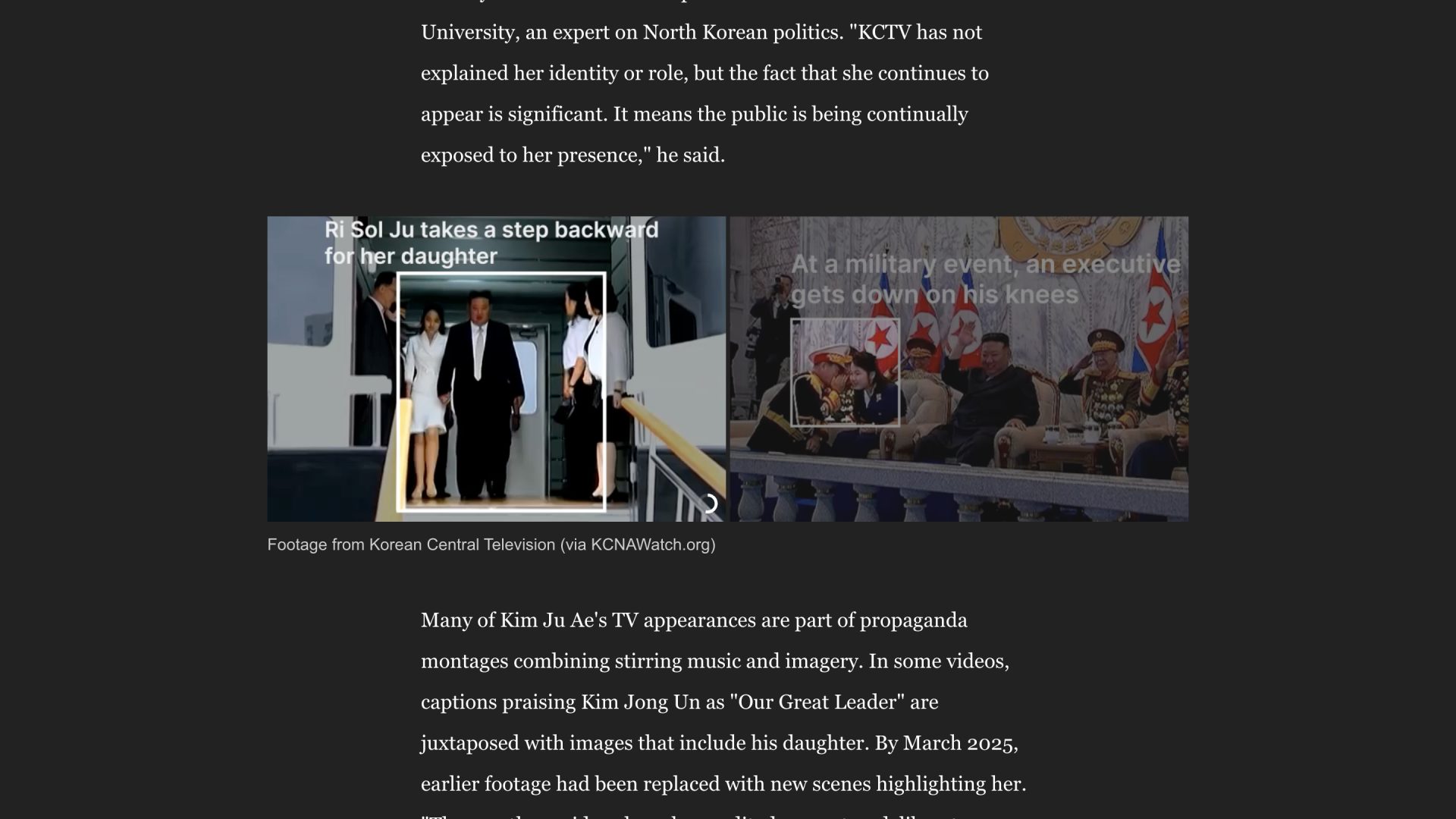
Further analysis of the extracted footage by reporters clearly revealed her exceptionally privileged treatment. She consistently accompanied Kim Jong Un to a wide range of important events. Scenes showed her being escorted by Kim Jong Un, and even being treated with higher regard than her mother, Ri Sol Ju. Furthermore, the footage employed imagery designed to emphasize her succession, such as displaying her alongside praises for Kim Jong Un.
This project generated significant international attention immediately after its publication. Analysts responsible for North Korean affairs at Japan’s Cabinet Office even approached the Nikkei reporting team to request details of the investigation, demonstrating its substantial impact on government‑level intelligence and analysis. In South Korea, eight major media outlets reported on the investigation in quick succession, citing the findings. These included five broadcasters—among them the public broadcaster KBS—as well as leading newspapers such as The Chosun Ilbo and JoongAng Ilbo. The strong interest shown by Japan’s national intelligence community and South Korean media sparked broad public debate.
The project was highly praised for visualizing the critical theme of North Korean power succession based on data and video evidence. The Global Investigative Journalism Network recognized our work as one of the “Editor’s Pick: Best of Data Journalism from 2025,” showcasing it among the top 10 excellent data journalism pieces of the year. The extensive citations by South Korean media and the commendation from an international professional organization underscore the significant impact and high value of this project.