
This visual digital storytelling piece confronts the mysteries surrounding the March 11, 2011 Great East Japan Earthquake and the TEPCO Fukushima Daiichi Nuclear Power Plant accident — questions that remain unresolved 15 years on.
The disaster released an estimated hundreds of thousands of terabecquerels of radioactive material into the environment. Rated Level 7 on the International Nuclear Event Scale — the most severe classification — it stands alongside the 1986 Chernobyl accident as one of the gravest nuclear disasters in history.
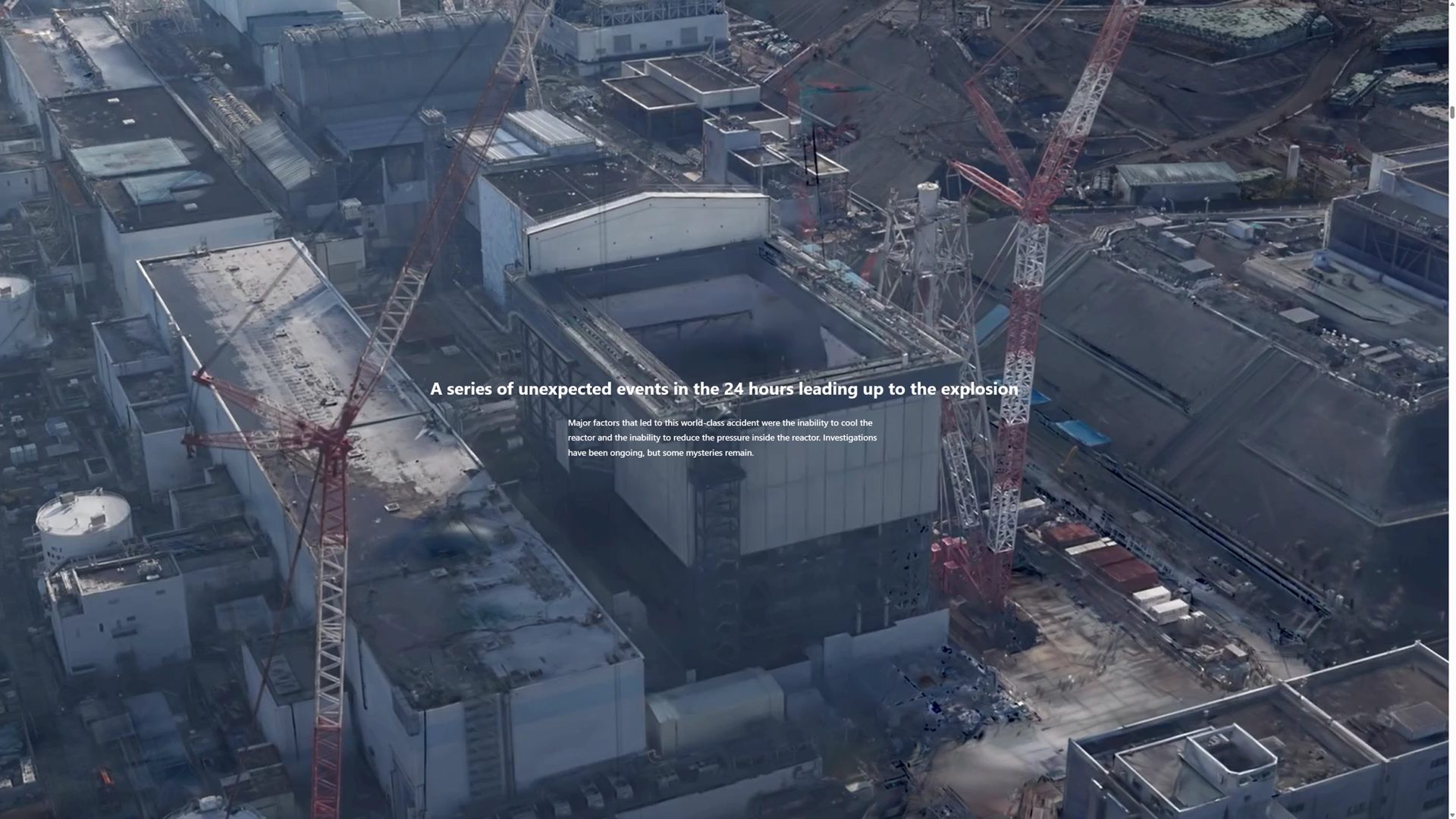
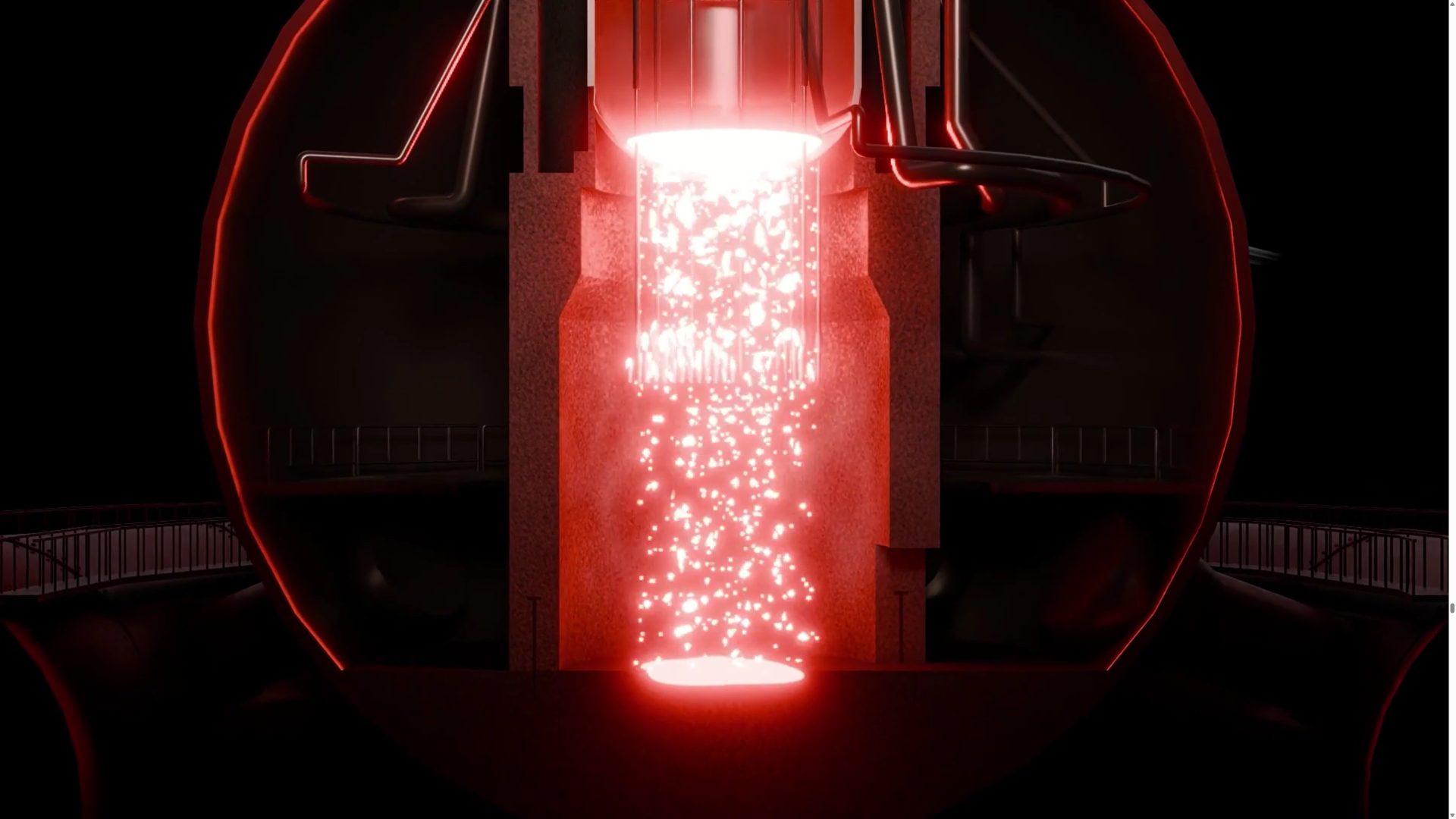
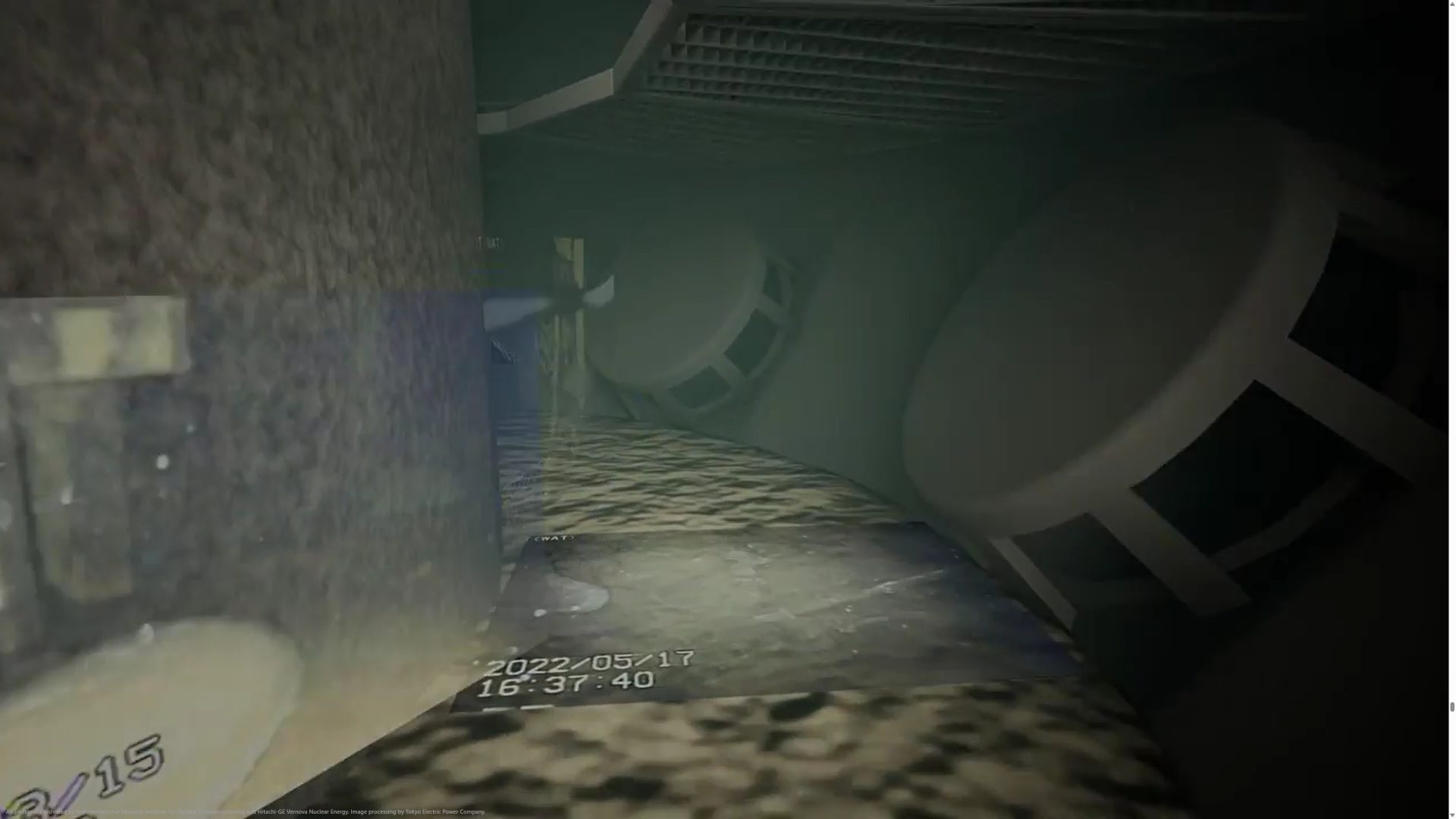
The project’s defining feature is a set of meticulously crafted 3D computer graphics that recreate the accident sites as they exist today. Built from TEPCO documents and nuclear regulatory authority records, these graphics allow readers to explore areas that remain inaccessible to human entry due to extreme radiation levels. The opening panoramic view of the plant site was rendered in three dimensions using photogrammetry, stitching together hundreds of aerial photographs taken from a helicopter.
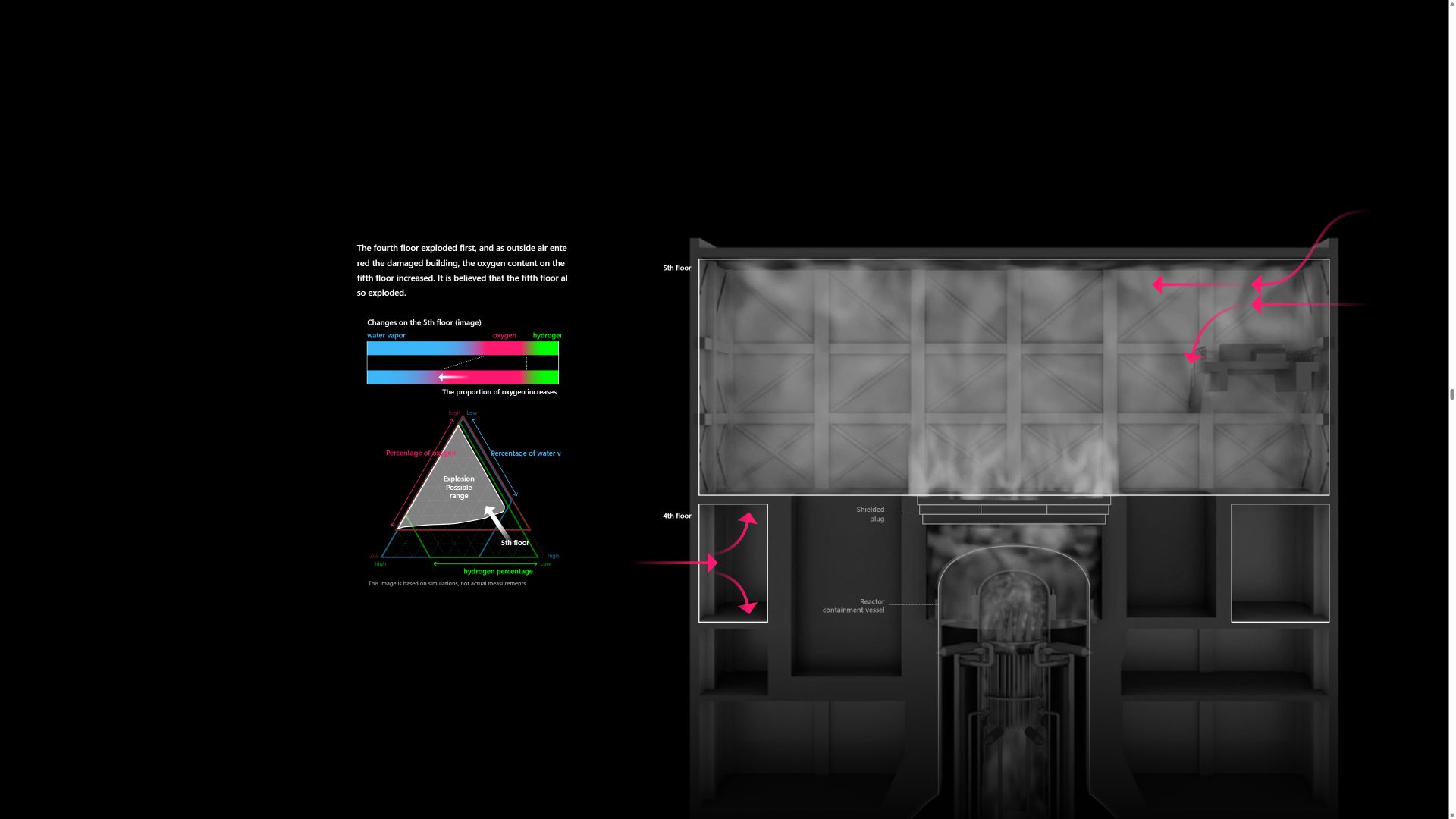
Complex phenomena are explained visually throughout: the mechanisms behind successive hydrogen explosions at Units 1, 3, and 4; the disappearance of concrete structures supporting the reactors; and other events too technical to convey through text alone. The piece employs scrollytelling to deliver an intuitive and immersive experience on both smartphones and PCs, allowing readers to navigate at their own pace.