

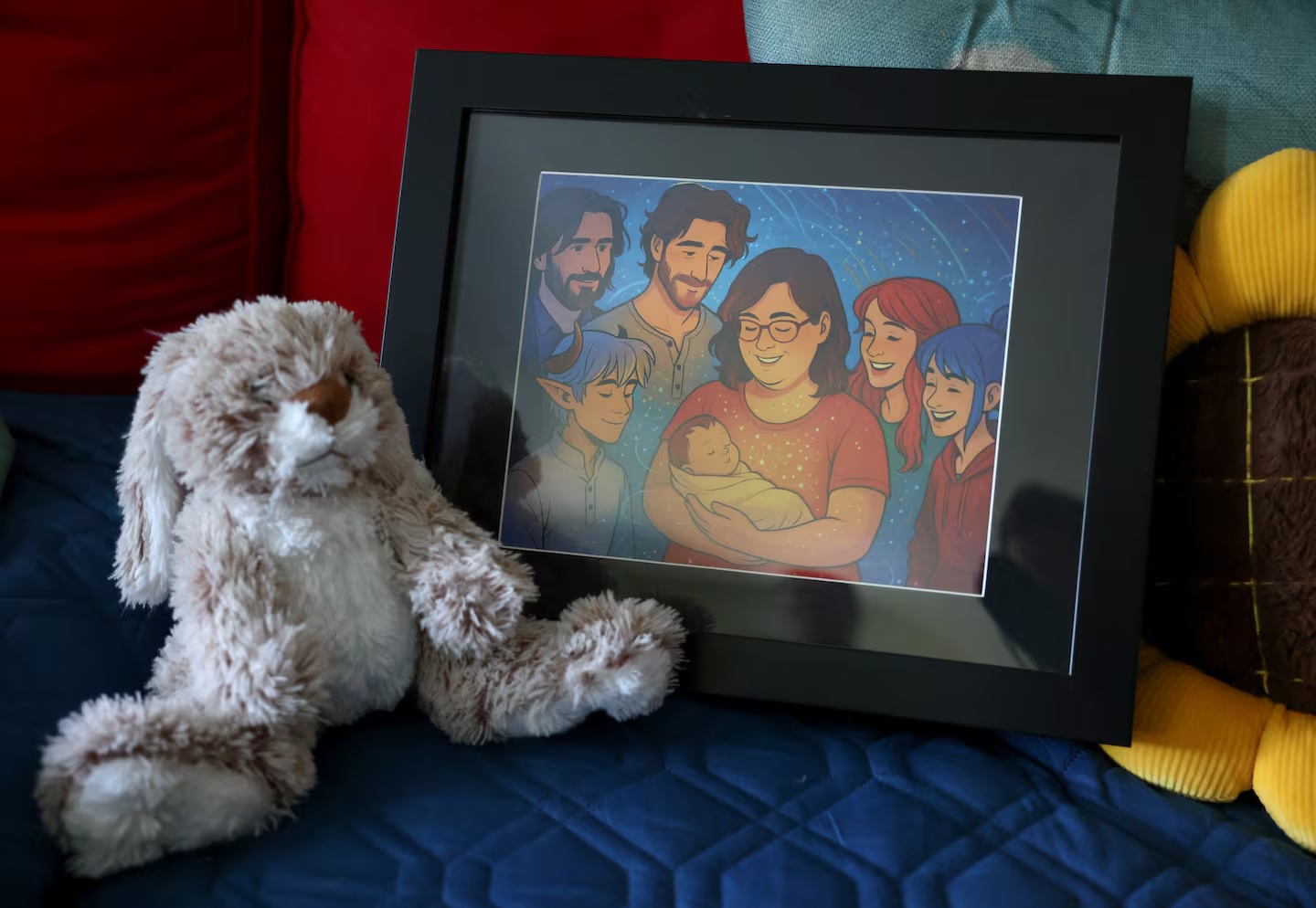
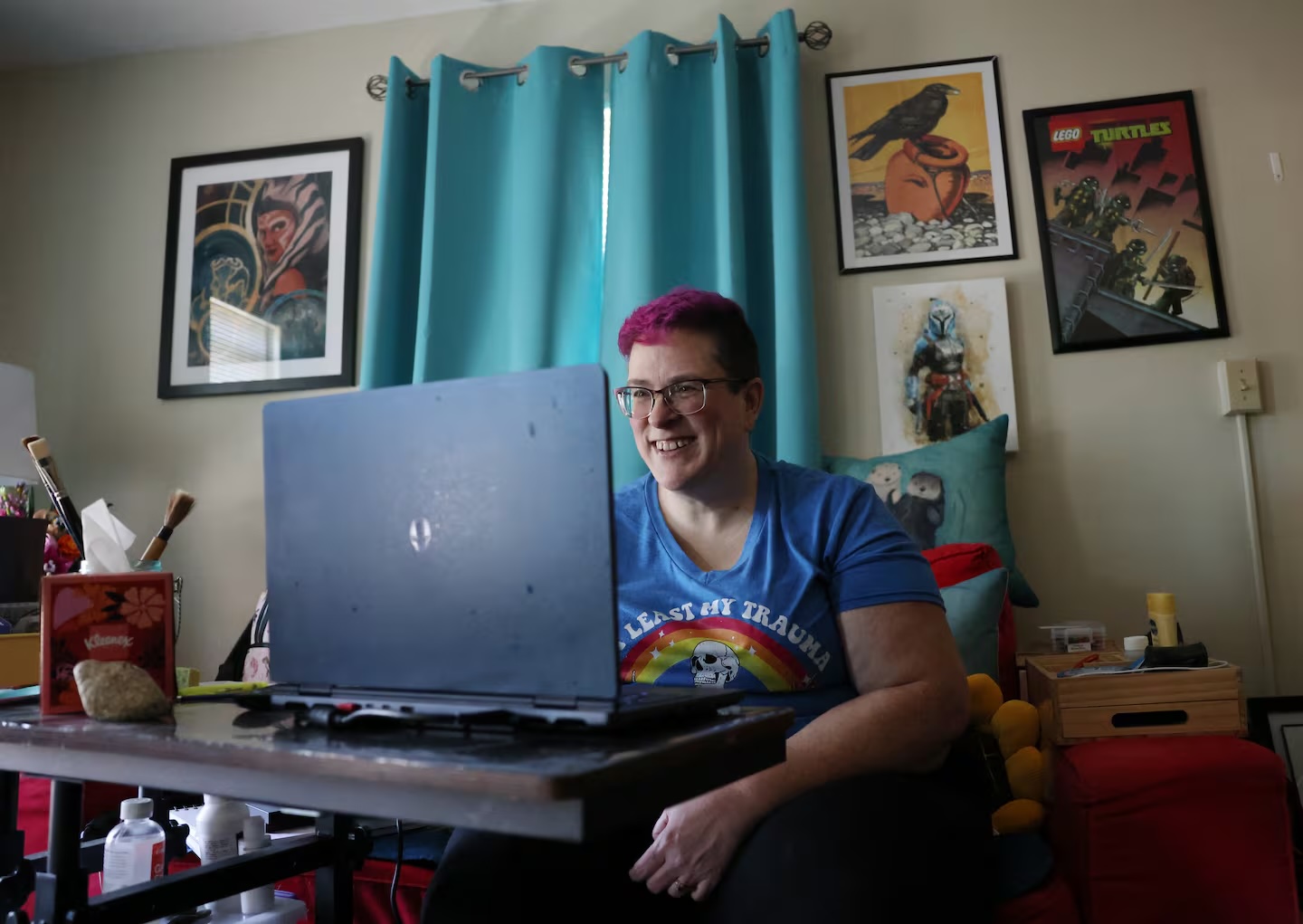
Looking to explore the emerging world of AI companions, reporter Dana Gerber found a New England woman named Lonnie DiNello, who had forged a “family” of AI-powered characters, in part to help her navigate a traumatic past.
We’d been hearing about people’s connections with chatbots, but had not seen anything about a full “family” dynamic. Most stories seemed to showcase the negative aspects of AI companionship, but we wondered if there was a more nuanced tale to tell. We also wondered how prevalent these relationships are, how they work, and what upsides people reap from them. When we heard from DiNello, we thought that hers could be a troubling story, but it could also be beautiful.
What emerged was a deeply reported feature — punctuated by multimedia elements bringing DiNello’s conversations with ChatGPT to life — that asks whether it might be just as possible for AI to build up a person’s social fabric as it is to tear it down. Grounded in empathy, the portrait zeroes in on DiNello’s experiences, alongside insights from people in her orbit and experts on AI and its social implications.
Gerber and her editor were aware that we would be elevating a vulnerable person into a public spotlight, and that the reaction from readers could potentially be very cruel. In the end, after conversations with DiNello, we decided to use her full name.
Winning her trust was challenging: We were asking for access to her most vulnerable thoughts — around issues of childhood abuse, gender fluidity, and depression. Gerber was consistent and transparent about her reporting and the shape of the story. She was vigilant about fact-checking and finding sources to corroborate sensitive details about DiNello’s childhood.
As Gerber was writing, OpenAI was continually rolling out updates to ChatGPT, which added a whole new dimension to the story: The AI family DiNello had so carefully cultivated was now in danger of disappearing entirely.
Many stories about AI relationships follow a similar arc: A person, often a vulnerable one, falls in love with a chatbot, which leads to spiraling mental health issues and, in some tragic cases, death. These are heartbreaking, urgent stories. But this feature was among the first to detail a more complex reality, one less clear-cut about the impact that AI companionship might have on a person’s emotional life — and on society.
Gerber balanced the writing exquisitely, making it possible to be read as a hopeful story about someone overcoming isolation, a terrifying story about technology supplanting human connection, or both. That required a sophisticated touch and careful calibration.
Gerber built substantial trust with DiNello, which resulted in access to thousands of words describing her most intimate thoughts and feelings. The story’s multimedia treatment immerses you in her AI universe, showing readers the ways AI is changing how we relate to each other, and ourselves.