
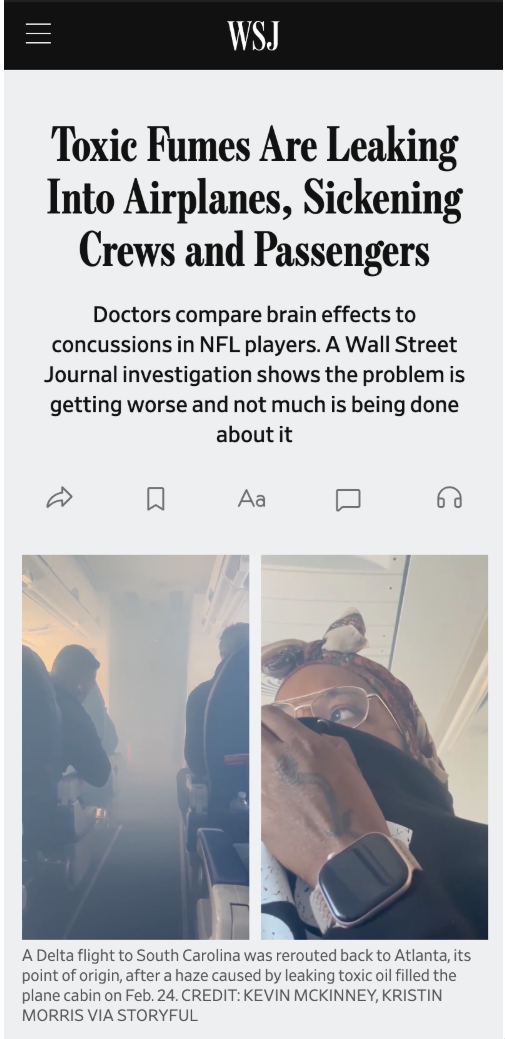
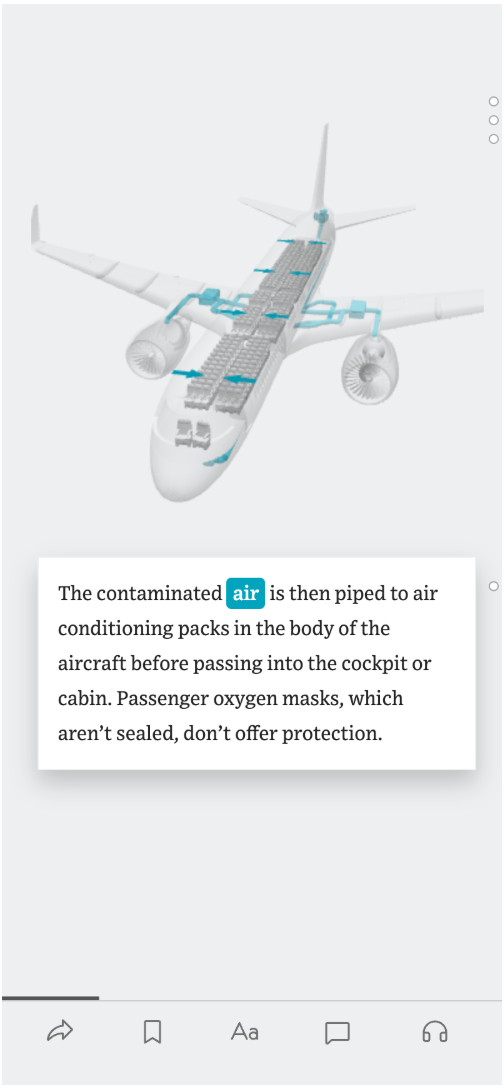
“Fume events”—incidents in which toxic gases from a jet’s engines leak into the cockpit and cabin—have been dismissed for decades by aircraft makers, airlines and regulators as a minor comfort concern. A Wall Street Journal investigation found they are anything but.
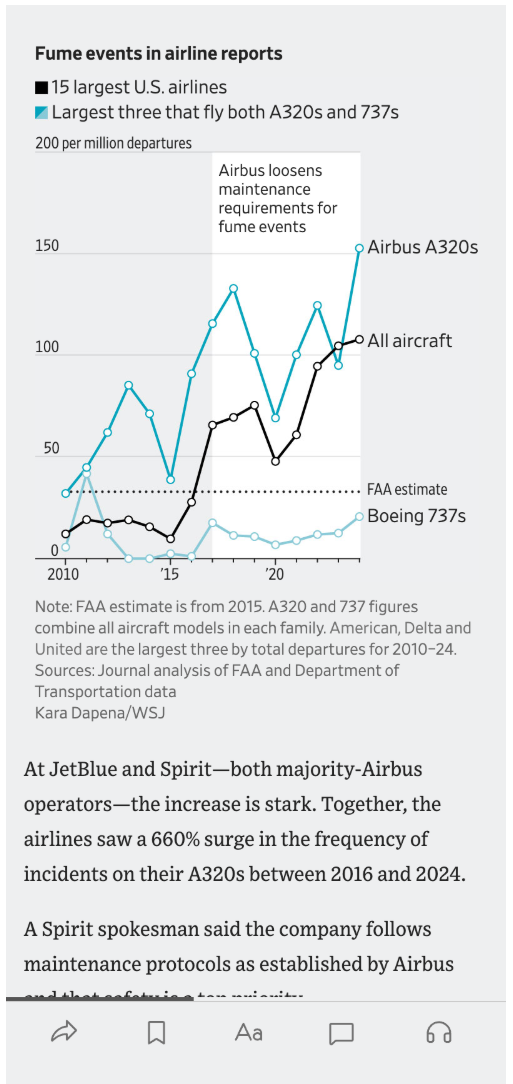
Analyzing more than one million FAA service difficulty reports with machine learning and large language models, the Journal found fume events among the biggest U.S. airlines surged ninefold over a decade, from 12 per million departures in 2014 to 108 per million in 2024—far exceeding the FAA’s public estimate. Reporters also found internal industry data put the number even higher.
The analysis identified the Airbus A320 family as the worst-affected aircraft, with rates at the three largest U.S. mixed-fleet carriers more than seven times those of the Boeing 737. It also showed repeat incidents became far more common after Airbus loosened maintenance requirements it knew could increase events.
Because fume events are not tagged or publicly tracked, reporters built custom software to gather 15 years of FAA records one day at a time, then developed a conservative two-step classification process. A statistical model trained on expert-classified reports first identified likely fume events; a large language model prompt derived from academic literature and aviation industry documents then checked the results.
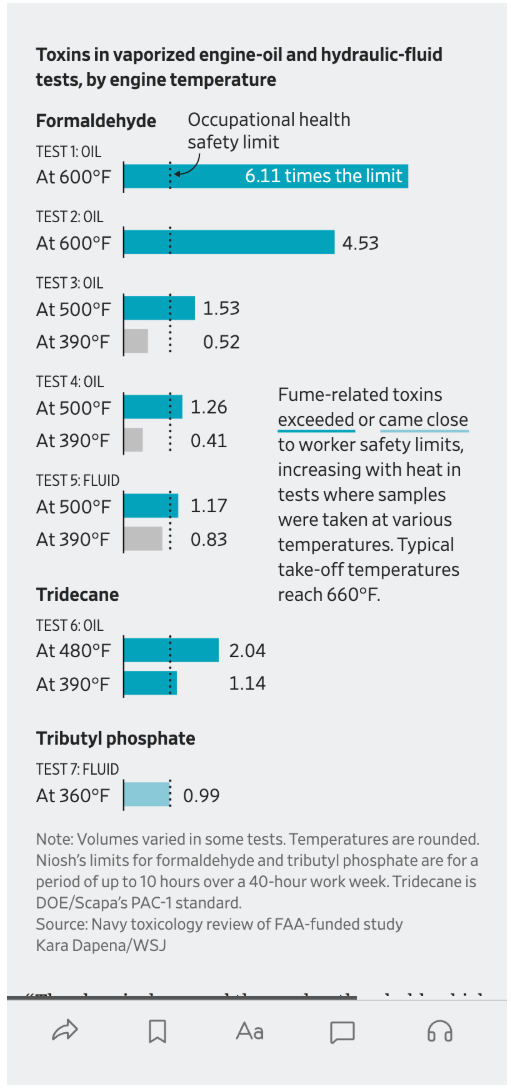
The Journal paired the data analysis with more than 100 interviews and thousands of pages of internal documents, maintenance records, legal depositions and confidential studies. Those records showed manufacturers knew about fume-causing defects, yet loosened maintenance rules; documented deaths blamed on fume exposure; revealed industry lobbying against air-quality sensors; and exposed FAA-funded research showing chemical levels exceeding occupational safety limits.
While other outlets had investigated fume events, the Journal’s analysis was the first of its scale, drawing comprehensively from more than one million service difficulty reports and establishing that the problem had grown sharply, was concentrated in a specific aircraft family and had roots in documented industry decisions.