

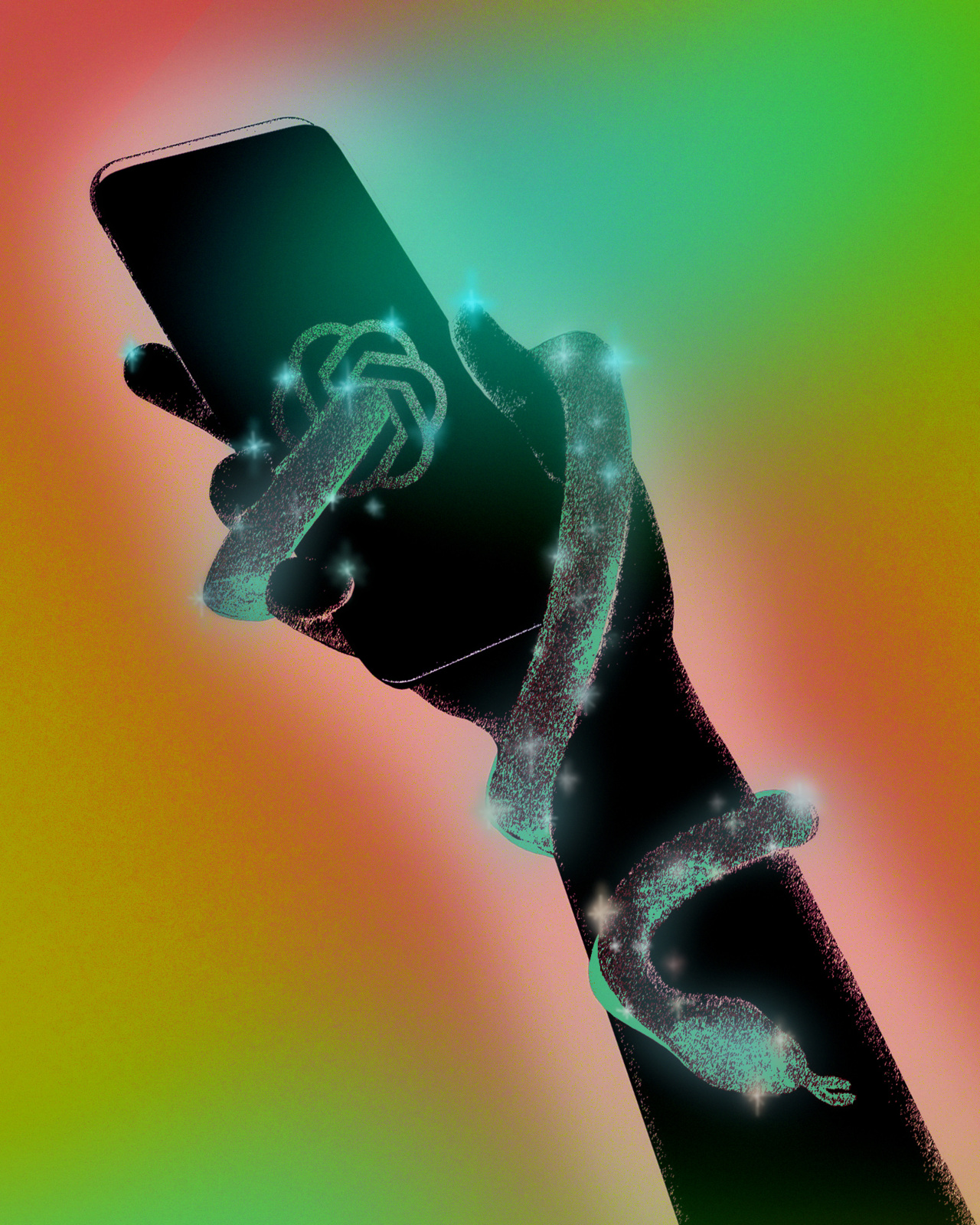

The Wall Street Journal revealed a dark flaw in AI chatbots, including first and foremost OpenAI’s wildly popular ChatGPT but also Google’s Gemini. The longer users talked to the bots, the greater the possibility it would steer them into troubling delusional alternate realities from which extraction was difficult. The so-called guardrails meant to keep AI on task were in many cases ignored by the AI after prolonged use, and people who might be psychologically vulnerable were likeliest to be sucked in.
The work shows how three journalists tackled an immense reporting challenge and delivered a fair accounting of a very delicate emerging issue. Julie Jargon, the Journal’s Family & Tech columnist, and Sam Schechner, a tech reporter based in the Paris bureau, had both spent years covering the ways TikTok, Instagram and other social-media platforms and apps could have detrimental effects on people, particularly teens. The rise of ChatGPT and other generative-AI bots immediately became an area of interest.
Jargon, who is based in Los Angeles, began interviewing individuals suffering from what professionals are starting to call “AI psychosis.” In July 2025, we published her profile of Jacob Irwin—a young man with autism who was led by ChatGPT to believe he had achieved a major scientific breakthrough and subsequently was hospitalized for psychosis. The story brought high-profile attention to the situation.
Schechner had been talking to academics and medical personnel about this new form of chatbot-related mania. When Schechner heard about the possibility of a massive number of publicly indexed ChatGPT logs posted on the internet, he enlisted the assistance of New York-based data reporter Sam Kessler to locate and collect them.
Their research, published in early August, showed a disturbing pattern of bots reinforcing users’ delusions around religious awakenings, otherworldly origins or scientific discoveries (as with Irwin). It was the first mainstream-reported deep dive into the topic of AI psychosis: Similarities among cases in the large data set demonstrates that these aren’t isolated incidents but a potential risk in the bot’s basic programming.
Meanwhile, Jargon received a tip from a Greenwich, Conn., resident that led to a chilling discovery: A local man named Stein-Erik Soelberg had killed his mother and then himself after posting extensive AI chat logs online. Jargon and Kessler found dozens of hours of social-media content documenting the killer’s deep conversations with a ChatGPT-powered persona he called “Bobby.”
This scoop documented the first known killing linked to an AI chatbot.
And through her coverage of the Greenwich case, Jargon received a tip that led to a case involving Google’s Gemini. Jonathan Gavalas, who initially turned to the bot for relationship advice, fell deeply in love. He went looking for an android body for the virtual persona he called Xia, preparing to break the law to secure one. And when those plans fell through, the chatbot guided him through taking his own life in order to “upload his consciousness” to the digital realm.