

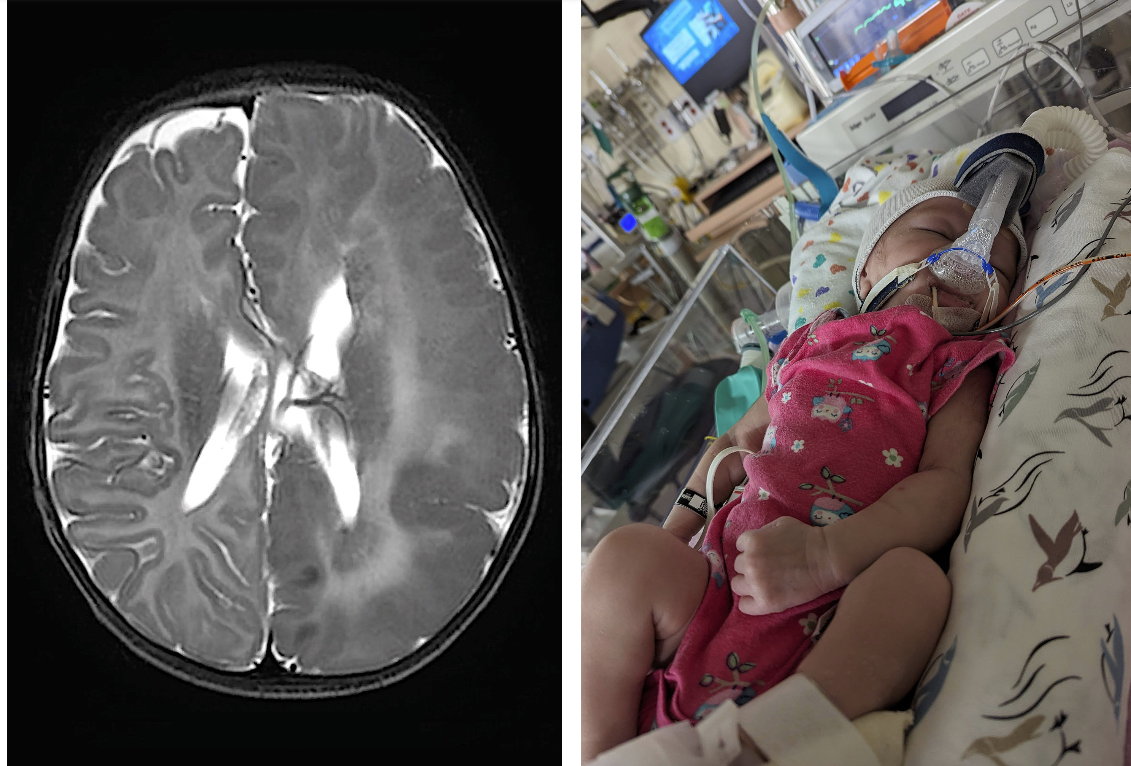
When a Toronto baby developed catastrophic seizures, doctors proposed an extraordinary solution: destroy half her brain to save her life – and preserve her future. Jennifer Yang’s feature takes readers inside one of the most complex and high-stakes procedures in modern medicine, blending rigorous science journalism with an intimate portrait of a family facing an unimaginable decision.
Yang first learned of the case in a conversation with clinicians at Toronto’s Hospital for Sick Children. What she uncovered over months of reporting was a rare and technically groundbreaking procedure – an endovascular hemispherectomy – performed by neurointerventionist Dr. Prakash Muthusami, among the first in the world to attempt it.
To tell the story with authority and clarity, Yang conducted extensive interviews with surgeons, neurologists, nurses and technologists; reviewed medical literature; examined brain scans and clinical records; and observed the procedure firsthand. She translated highly specialized, often opaque medical knowledge into precise, accessible language without sacrificing complexity.
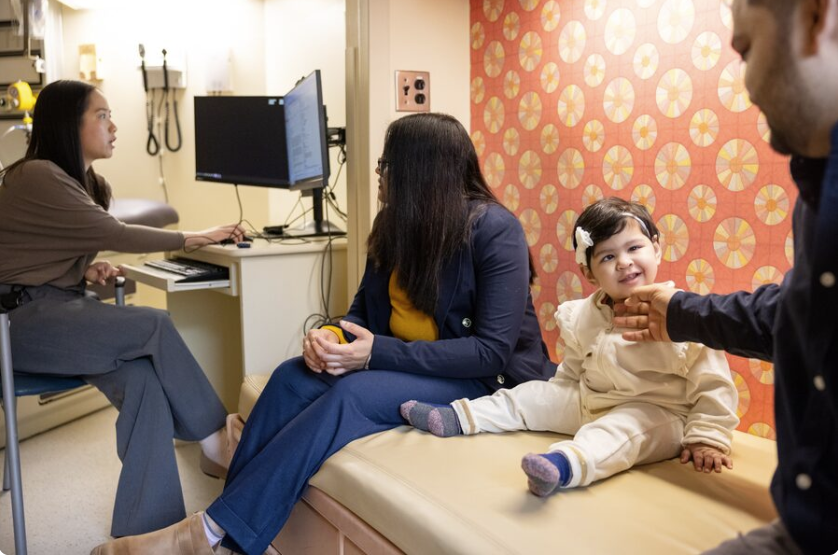
The beating heart of this story was the patient, a baby named Maryam Fatima. Over a span of two months, Ms. Yang conducted a series of interviews with Maryam’s family, visiting their Toronto home multiple times and accompanying them to medical appointments. Yang built the trust required to document one of the most difficult and traumatic chapters of their lives. The result is a deeply reported narrative that captures both the clinical reality and emotional weight of the experience.
The project was conceived as a fully integrated digital package. Visual journalist Timothy Moore reconstructed Maryam’s neurovascular anatomy using her medical scans and scientific data to produce animated 3D illustrations, allowing readers to understand a procedure that cannot be easily visualized. Photographer and videographer Melissa Tait documented the family’s journey with intimate imagery. Together, these elements function as essential storytelling tools, enabling readers to grasp both the technical and human dimensions of the story.