About the Project
No region has felt the Trump administration’s second-term immigration crackdown more directly than South Florida. The largest Venezuelan, Haitian and Cuban diasporas in the United States live here — communities that have spent the past year watching repeated federal attempts to terminate the Temporary Protected Status that has shielded hundreds of thousands of them, while sitting just across the Florida Straits and the Caribbean from the countries they fled.
It is also where the Trump administration and the State of Florida chose to build “Alligator Alcatraz,” which has come to symbolize the harshest edge of the federal enforcement push. WLRN has been operating on this frontline. This sample demonstrates the depth, range and reach of that coverage.
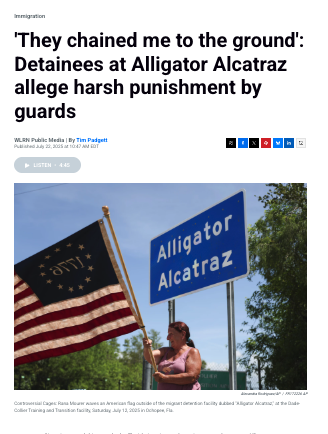
- “Alligator Alcatraz” exposé. Americas Editor Tim Padgett’s investigation was among the first to break specific allegations of physical punishment inside the newly opened facility. It was one of dozens of stories we published on the facility and the legal, political and human sagas around it.
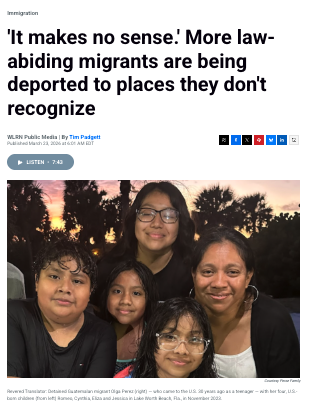
- “It makes no sense.” This long-form story not only shines a needed light on the deportation drive’s lie that it only targets criminals and the families it is tearing apart; it also follows the story to their new lives, examining a little-reported but deeply upsetting consequence – that many of the deportees are being sent to places they barely know. It centers on Olga Perez, a revered Guatemalan-Maya translator and community leader, and Armando, a Mexican deportee brought to Florida at age seven, now hiding from cartel violence in Mexico City.
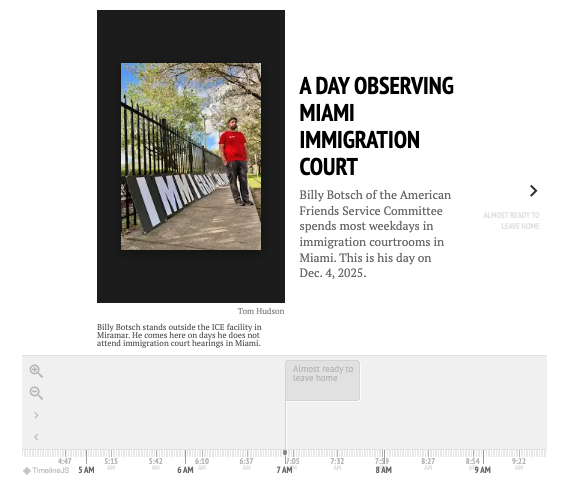
- Inside the Miami immigration courtroom. Through a profile of Billy Botsch, an AFSC volunteer who has watched hundreds of hearings and documented nearly 200 ICE arrests outside court, we get an insightful and unlikely window into the experiences of thousands of families around the country. The story is built around an interactive audio diary across one full day.
Each of these three digital pieces is paired with a high-quality, dedicated long-form audio version produced for broadcast and streaming, reaching radio, podcast and online audiences.
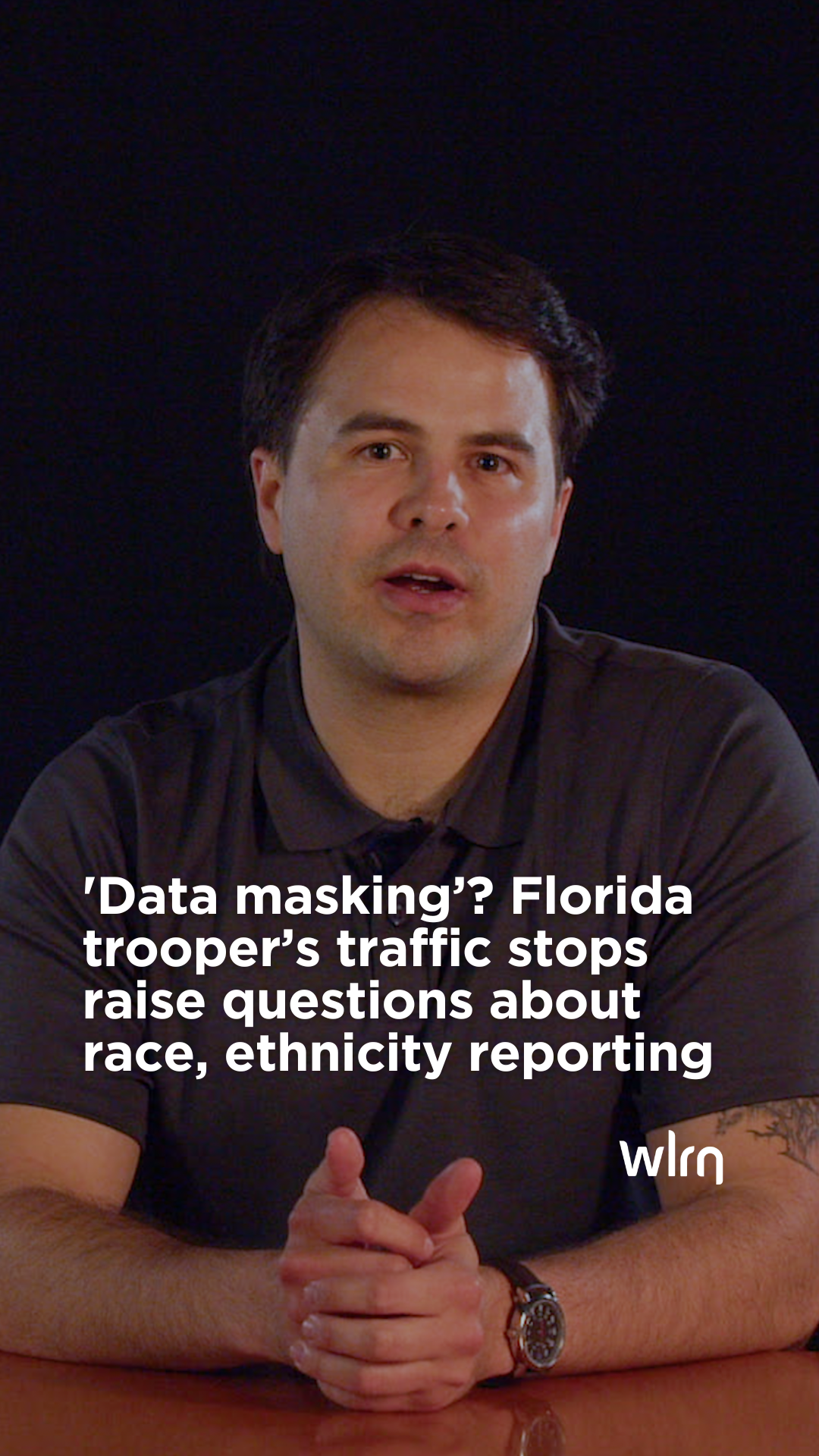
- Trooper investigation, on social. A vertical-video adaptation of a deeply reported investigation into a Florida Highway Patrol trooper accused of racially profiling immigrants in Palm Beach County as part of state enforcement efforts. Reformatted for mobile feeds and distributed where immigrant audiences actually scroll, the video drew tens of thousands of views, nearly 3,000 likes, 171 shares and 44 comments — circulating both nationally and through the immigrant-community networks most directly affected by the trooper’s reported conduct.
- Haitians under TPS, on Instagram. An edited reel from a special WLRN live show (available in full in podcast form) on the plight of Haitian residents living under the constant threat of TPS termination. Packaged natively for Instagram and distributed in the format where many in Miami’s immigrant community get their news, the piece carried a timely, informative and emotional long-form public-radio conversation to an audience that doesn’t always seek it out — and to families directly weighing what TPS termination would mean for them.