
“A Long Way Home” is a three-part narrative series and short documentary that follows one Tucson family’s journey from Venezuela to the United States — and their violent expulsion back into danger by the governments they sought refuge from.
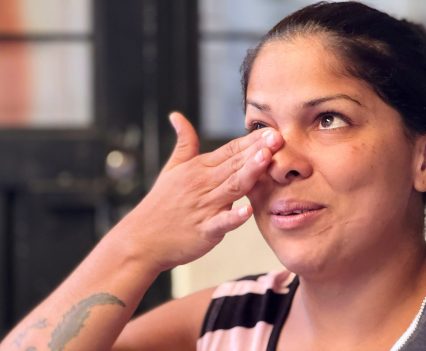
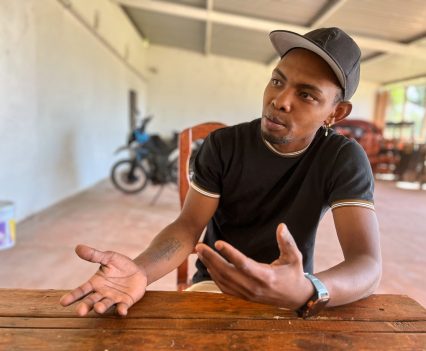
The series centers on Yesenia and Mariano, Venezuelan migrants who survived domestic violence, military persecution, kidnappings, and the Darién Gap — one of the world’s deadliest migration routes — to build a quiet life in Tucson with their four children. They had become part of a Seventh-day Adventist church community. Yesenia was selling arepas in parking lots to supplement the family income. Their kids were enrolled in school. They considered Tucson home.
On February 11, 2025, Arizona state troopers pulled Yesenia over for driving below the speed limit. Officers called Border Patrol. Within hours, Yesenia and two of her children were handcuffed, detained, and deported to Mexico — a country she does not know and had no legal status in. Mariano fled barefoot through Tucson streets, hiding beneath a car in a parking lot, to avoid arrest and protect his two sons still at home alone.
Chapter 1, written by Arizona Luminaria reporter John Washington, follows Yesenia’s perspective: the jungle crossings, the kidnappings in Mexico, the family’s arrival in Tucson, the traffic stop, and the terrifying overnight detention — during which a Border Patrol agent questioned her 6-year-old daughter about whether her father owned a gun. Chapter 2, written by Erik López of La Silla Rota, tells Mariano’s story in parallel — his persecution by Venezuelan military officials, his first harrowing crossing, and his desperate flight through Tucson. Chapter 3, co-reported by both, chronicles Yesenia’s miscarriage while being transported by Mexican authorities, her more than 6,000-mile journey to find her family, her nights sleeping under a bridge, and the family’s ongoing effort to reunite while living in hiding outside Mexico City.
The series is grounded in more than a dozen hours of in-person interviews conducted by reporters who traveled to meet Yesenia and Mariano near Mexico City, along with seven months of messages, audio files, public records and interviews with family members, advocates and legal experts. It places one family’s experience in the broader context of coordinated U.S. and Mexican anti-immigrant enforcement that experts say is systematically eroding asylum rights and due process for Black and Brown migrants.
The project is a collaboration between Arizona Luminaria and La Silla Rota, Mexico’s largest digital news outlet, produced as part of Deportation Tracker, a project of the Border Center for Journalists and Bloggers, with support from Global Exchange. All chapters were published simultaneously in English and Spanish. A companion video documentary produced for the series brings Yesenia and Mariano’s voices directly to readers, deepening the emotional and narrative impact of the written work.
The series launched in a news environment saturated with immigration policy debate but largely absent of the human stories deportation leaves behind.