
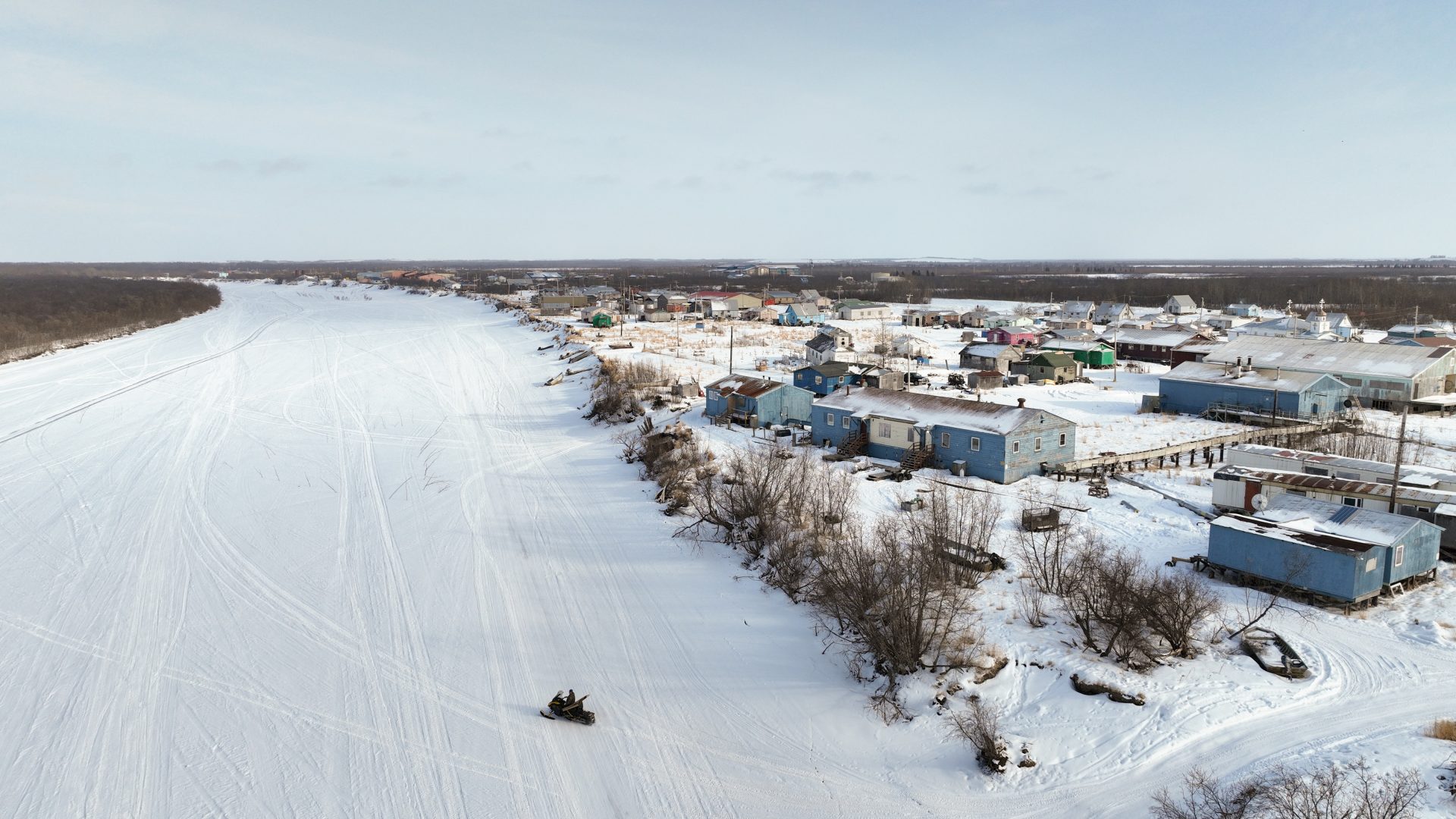
The judges all agreed that it was tough to choose a winner in the Feature, Small Newsroom category because the stories in this category were great. We chose “Saving Sinking Homes & Mourning Land that Leaves,” by The Margin, because it took a unique and targeted look at the effects of climate change on a population that has been traditionally neglected by the U.S. government. The reporters got a great story because they stayed in the community and gained the trust of those affected. The reporting illuminates a collective experience with great care, but its emotional center is somewhat dispersed across many voices rather than concentrated in one deeply realized life.
Together, Saving Sinking Homes and Mourning Land that Leaves form a two-part investigation into one of the most urgent and underreported crises in the United States, the collision of climate change, colonial policy, and Indigenous sovereignty in Alaska’s Native villages. Published by The Margin in 2025, these investigations center the voices and experiences of Yup’ik and other Alaska Native communities facing the loss of ancestral homelands as present, compounding reality.
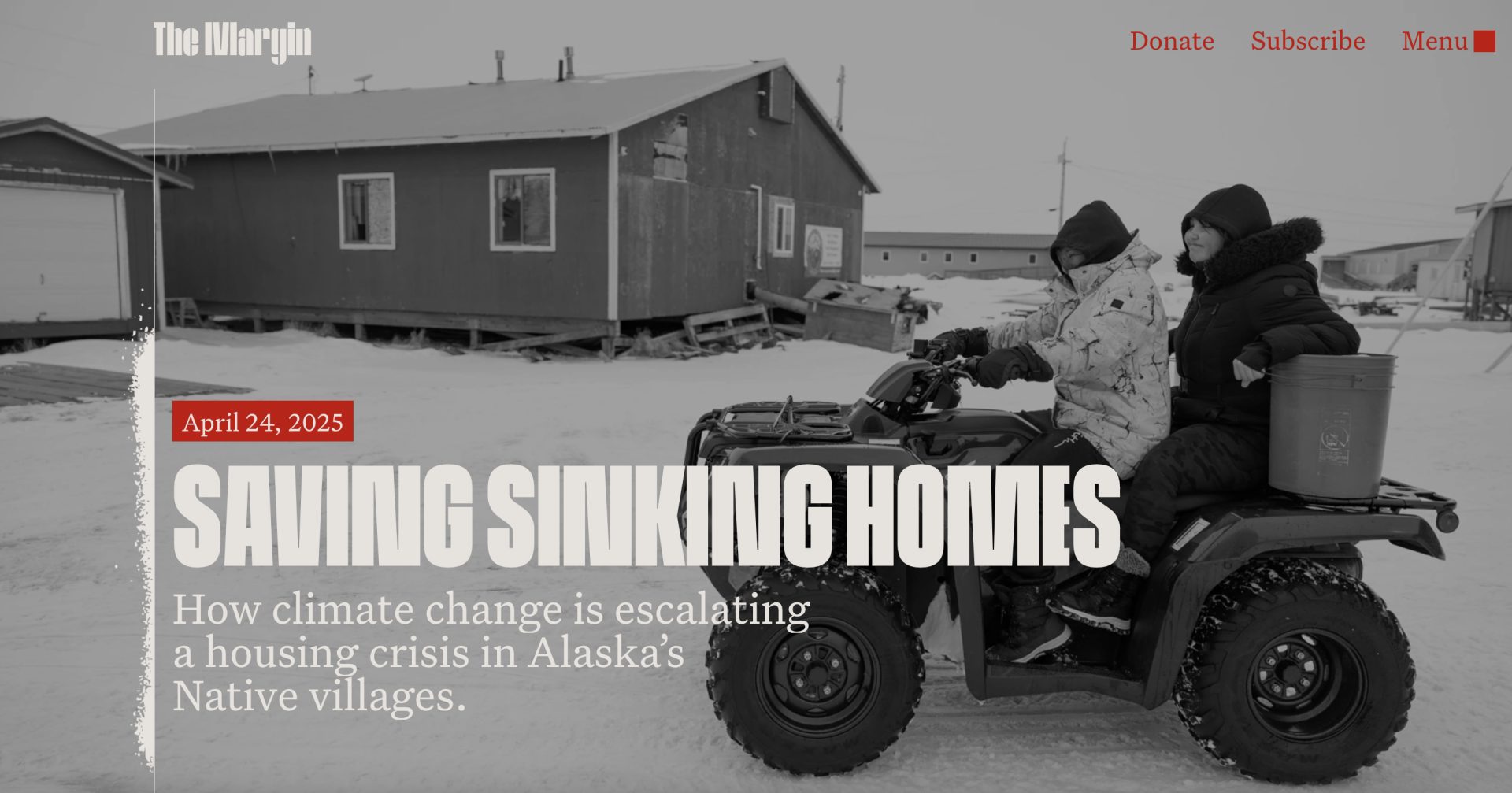
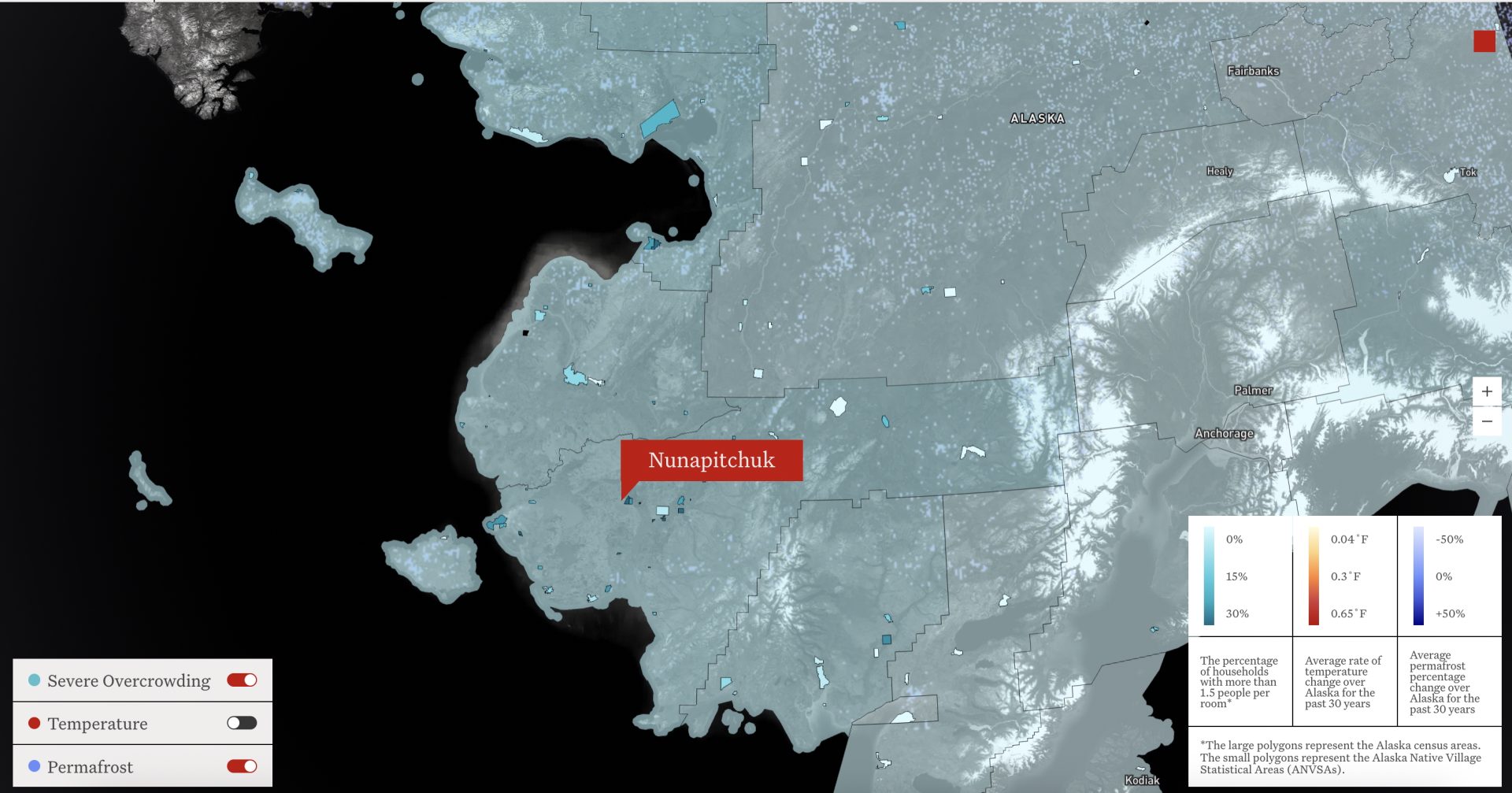
Saving Sinking Homes, reported by Jess Zhang and Megan Gannon with photography by Katie Basile, opens in Nunapitchuk, a village reachable only by plane, where melting permafrost and flooding have pushed one four-bedroom home to shelter 26 people. The story traces how federal policies coerced Alaska Native communities into fixed settlements on fragile land and how climate change is now accelerating the consequences of those decisions. It includes a first-of-its-kind interactive map visualizing overcrowding in Native villages alongside 30 years of temperature and permafrost data, making the scale of the crisis impossible to ignore.
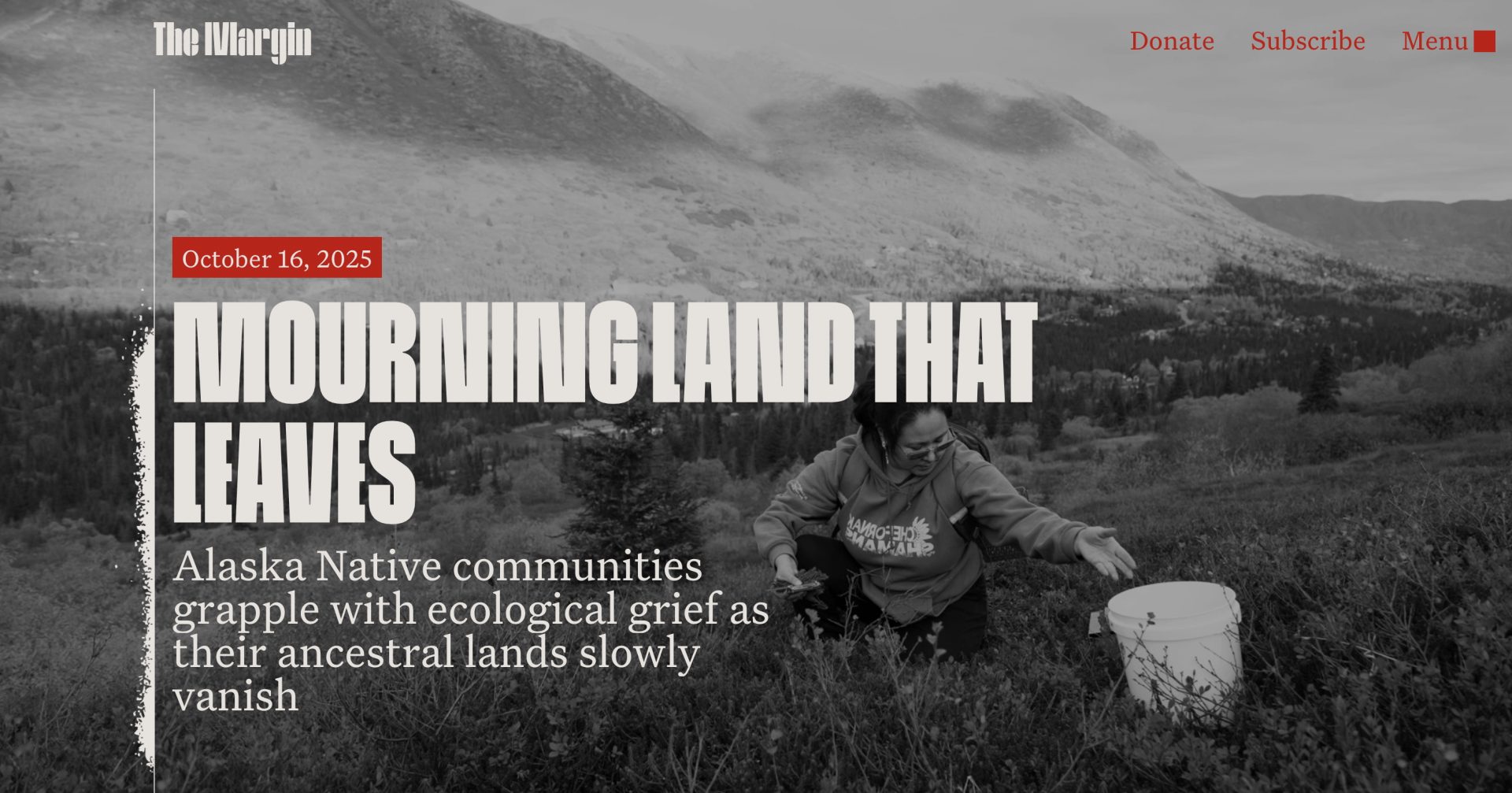
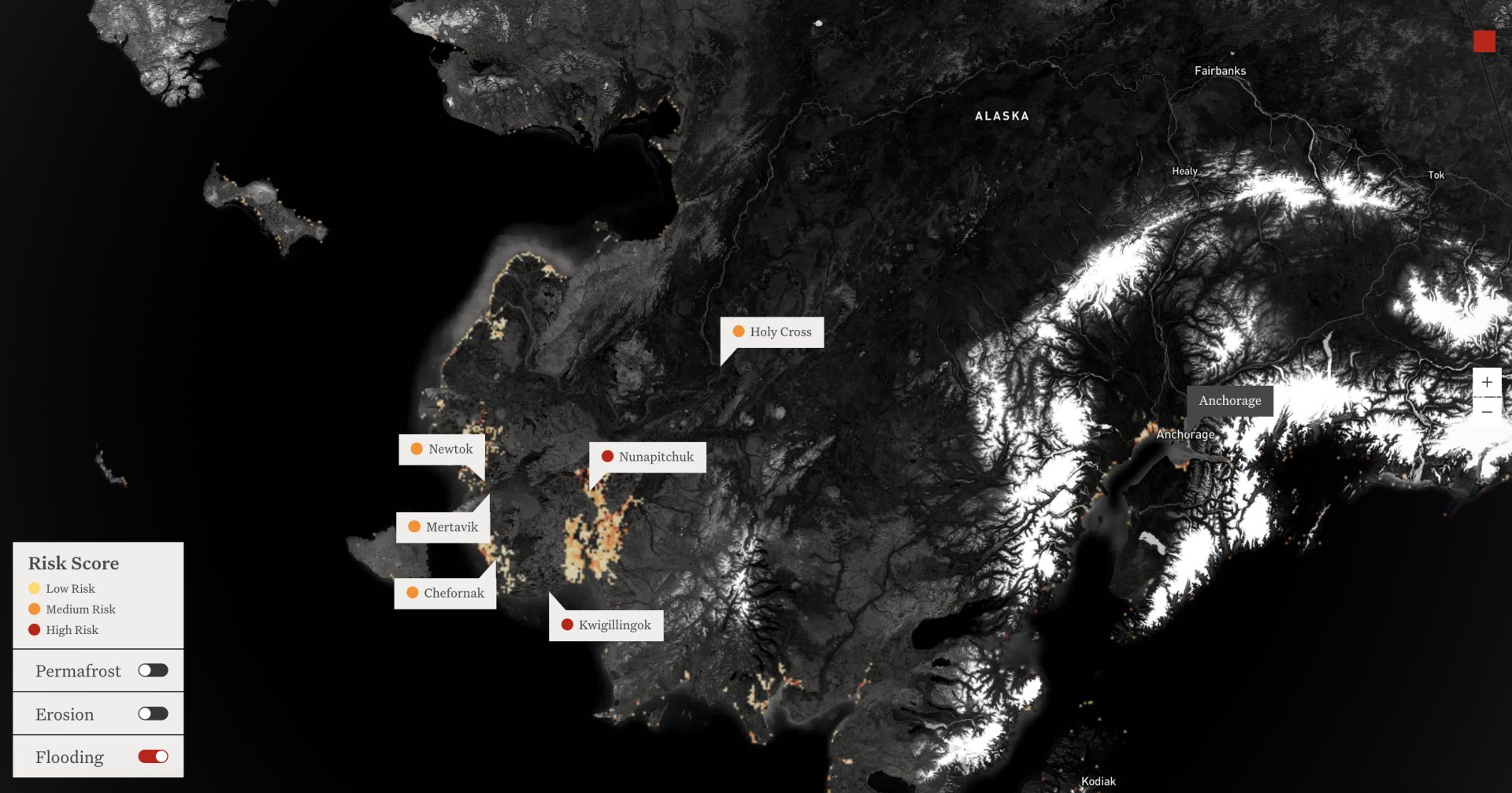
Mourning Land that Leaves, reported by Jess Zhang, goes deeper into the psychological and cultural toll of climate displacement. The story centers on Christina Waska, a Yup’ik woman who named her youngest son after her birthplace, Newtok, after being forced to abandon it. Through more than a dozen interviews with people who relocated from Native villages to Alaska’s cities, Zhang documents a form of loss that scientific literature has only recently begun to name: ecological grief. The accompanying data visualization maps the migration routes of former village residents, grounding the emotional narrative in structural reality.
What distinguishes this body of work is its layered approach. These are not parachute stories. Zhang traveled to remote communities, spent time with residents and Tribal officials, and reported with the depth and care that these communities deserve. The journalism interrogates historical systems, including federal housing neglect, the 1971 Alaska Native Claims Settlement Act, and FEMA’s exclusion of gradual climate disasters, while never reducing its subjects to symbols of suffering. The Calista Corporation and the Alaska Native Tribal Health Consortium are now using this reporting to inform their advocacy on housing and climate policy.
The investigations were re-published with Indian Country Today and KYUK, a nonprofit Native American-run public media outlet, extending their reach to both national audiences and the communities depicted. The Economic Hardship Reporting Project provided additional support.