
This article presents an AI-assisted analysis of climate editorials in South Korea, examining how energy policy is framed in public discourse and identifying a critical structural bottleneck: the politicization of energy sources.
While climate change is broadly recognized as an urgent global challenge, public debates in Korea are often polarized around specific energy technologies—most notably nuclear versus renewables. Rather than focusing on shared climate goals, these debates tend to revolve around competing narratives of cost, feasibility, and national competitiveness. This article investigates how such framing is constructed and reinforced through editorials, a genre that plays a key role in shaping elite opinion and policy direction.
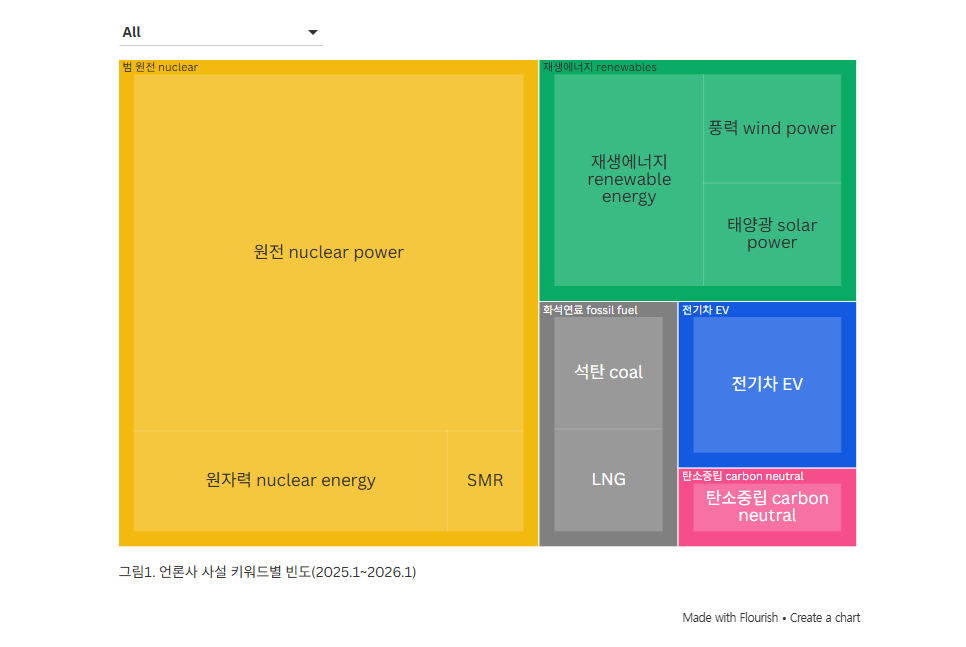
The analysis is built on a structured framework consisting of three core dimensions: keyword frequency, speed, and direction. First, the article tracks the frequency of key climate and energy-related terms—such as nuclear power, renewables, LNG, and electricity pricing—to identify which issues dominate editorial agendas and how attention is distributed across energy sources.
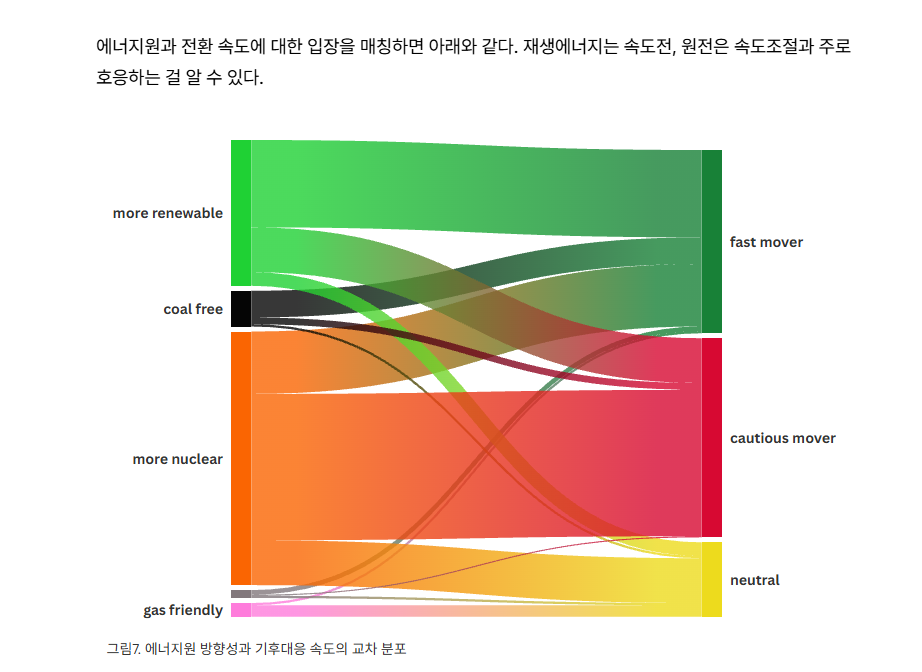
Second, each editorial is classified by its implied speed of climate action, distinguishing between “fast mover,” “cautious mover,” and “neutral” positions. This classification is based on linguistic signals, including expressions of urgency, prioritization of policy action, and whether climate measures are framed as immediate necessities or as conditional, gradual steps. Importantly, this framework is adapted to the Korean context, where explicit climate denial is rare. Instead of a “denial” category, the analysis introduces “cautious mover” to capture a more prevalent stance—one that acknowledges the need for climate action but emphasizes cost concerns, feasibility constraints, or a slower pace of transition.
Third, the article evaluates the direction of energy preference, identifying whether an editorial leans toward expanding renewables, nuclear energy, fossil fuels, or a mixed approach. This dimension is determined through a rule-based interpretation of explicit support, critique, and the framing of trade-offs between different energy sources.
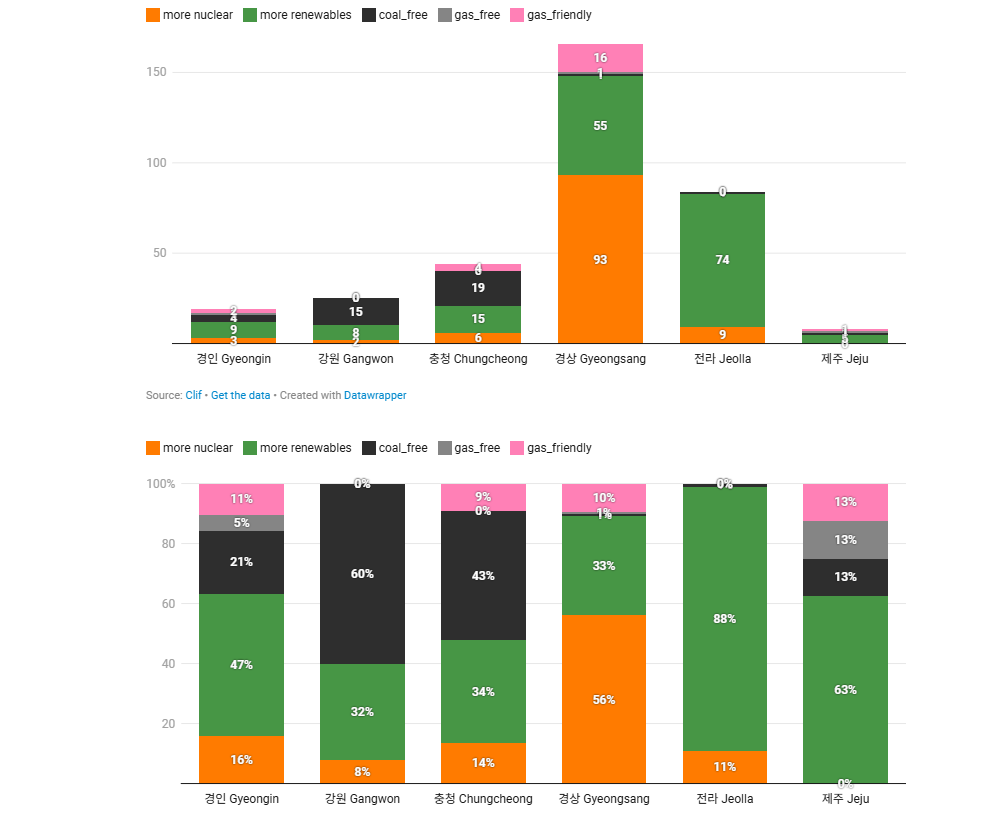
The findings show that climate discourse in Korean editorials is less about coordinated responses to a shared global risk and more about competing narratives around energy choices. Energy sources are frequently treated not as policy instruments but as politicized symbols that anchor broader ideological positions. Notably, the analysis reveals significant variation across media types—including national dailies, economic newspapers, and regional outlets—highlighting how institutional positioning shapes editorial perspectives on climate action.
Ultimately, the article argues that the greatest bottleneck in Korea’s energy transition is not technological or financial, but discursive. By making these patterns visible, it demonstrates how AI can enhance both the analytical rigor and the public impact of journalism. The findings have also led to a proposed collaborative study with a researcher from the Korea Press Foundation, which is currently underway, with a joint report expected to be published in November.