Extreme weather has become a seemingly regular part of American life these days. In any given week, some community is being hammered by flooding, fire, drought, heat, or a multitude of other natural disasters. There are the catastrophic events that dominate national headlines, like the July 4th Texas floods or wildfires in Los Angeles. But there is now also the steady drumbeat of less attention-grabbing events — the intense rain that floods basements, the fires that sweep through small, forested towns, the hail that punctures roofs, or the extreme heat that makes it unsafe to go outside. Disaster recovery and rebuilding now costs communities tens of billions of dollars a year.
As a news outlet focused on climate change, Grist knew we could no longer just report on these events, we had to understand what readers needed to protect and empower themselves in these moments of chaos and grief.
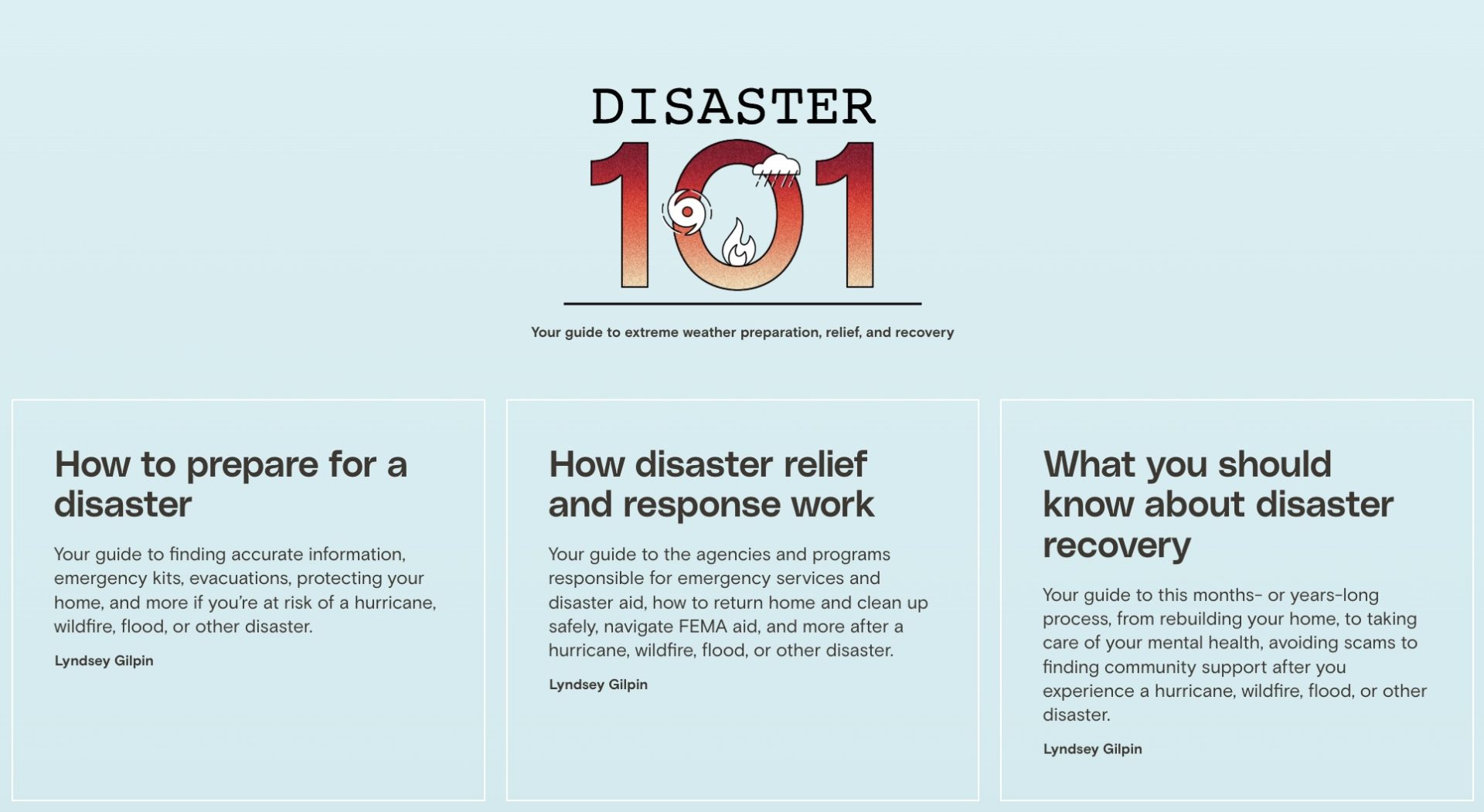
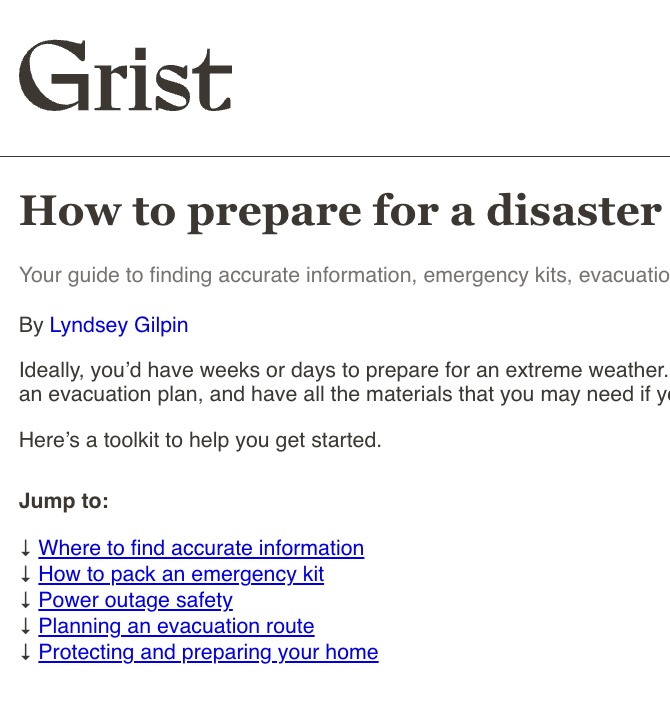
Using insight from years of community conversations, on-the-ground reporting, and discussions with local newsrooms in disaster-hit areas, Grist, led by Senior Manager of Community Engagement Lyndsey Gilpin, published Disaster 101, a comprehensive guide to help readers stay ready and informed before, during, and after these traumatic and chaotic events. The series covers a variety of issues, including food access, FEMA aid, voting rights, immigrant rights, processes for tribal nations, public health issues, and more.
The editorial initiative aims to move past the traditional coverage of extreme weather — the devastation — to center what readers can control. Their preparation and their recovery.