


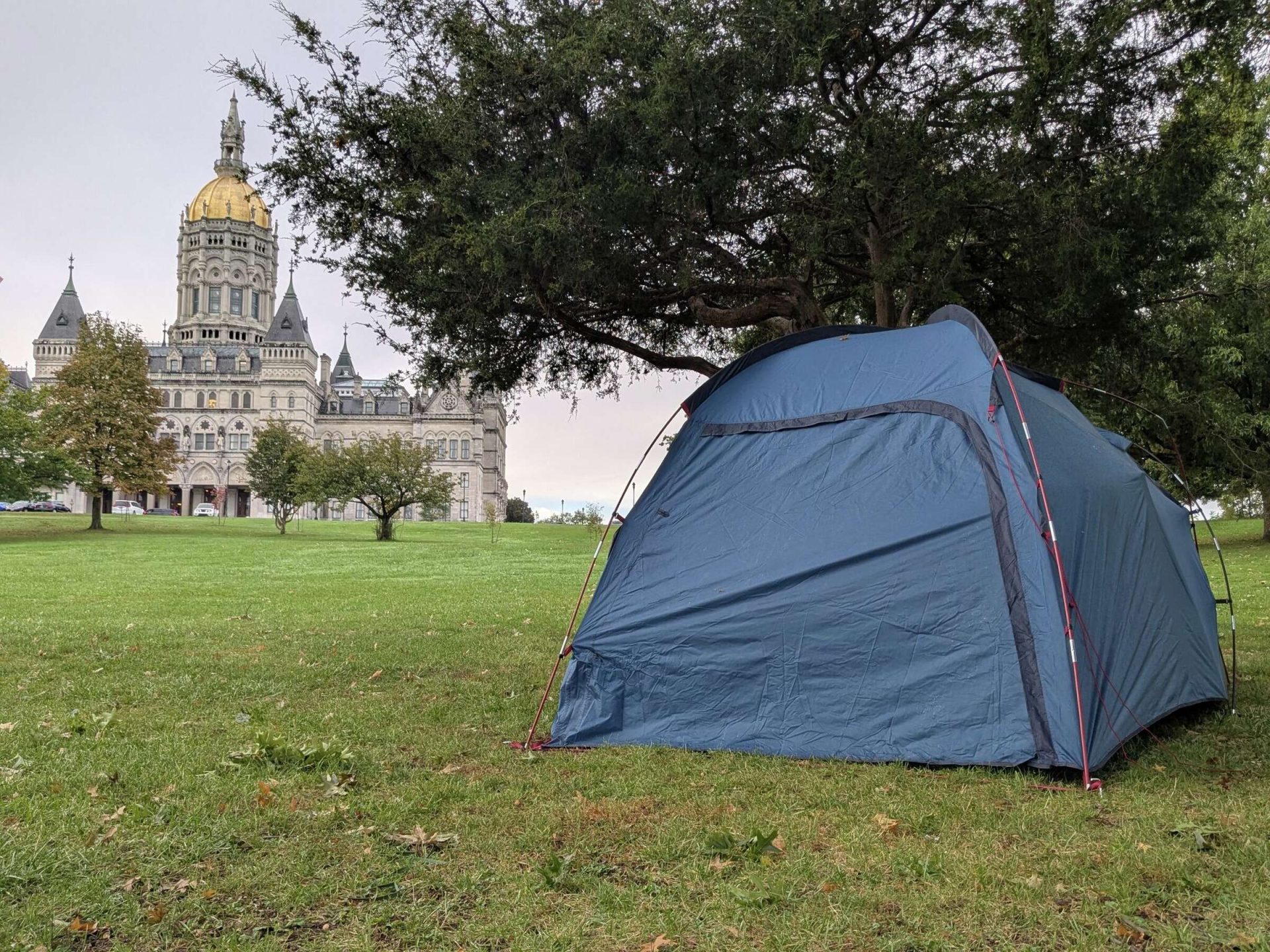
“No Place to Sleep” is a Hearst Connecticut project built on a question we couldn’t shake: what happens when one of the nation’s wealthiest states runs out of shelter?
At the project’s center is “48 Hours of Homelessness in Connecticut,” an immersive account in which our team embedded with those navigating emergency shelter waitlists, sleeping outside, cycling through emergency rooms, foster care and prison, and waiting — often for years — for housing that does not exist.
As homelessness surged over the last several years, lead reporter Jacqueline Rabe Thomas noticed a striking gap in the public conversation: the voices of people living without shelter were largely absent from the coverage, allowing the scope and urgency of the crisis to be too often overlooked. Early reporting brought her into repeated contact with people sleeping outside. Many described feeling hopeless and invisible — reduced to statistics while others spoke for them in policy debates. Recognizing that disconnect became the catalyst for “No Place to Sleep” – a project designed to restore marginalized voices and report with depth, fairness and accountability through on-the-ground reporting.
We negotiated press access to spaces where journalists are rarely allowed, and worked carefully around consent, safety and the realities of trauma, mental illness and displacement.
The project’s key attributes:
Immersive narrative reporting that follows individuals and families through the system in real time.
A community-centered method. In “Connecticut’s Unhoused Share What They Wish You Understood,” we distributed index cards in shelters and encampments and invited people to write what they wished the public understood about being homeless. The technique lowered the barrier to participation, let people control their own narratives, and surfaced shared truths.
A roll call of the dead. For “134 Unhoused People Have Died in Connecticut This Year,” we identified and named every known unhoused person who died in the state in a single year – several from exposure to the cold, fires in vehicles where they were sleeping, and suicide. Only two lived long enough to reach the state’s average life expectancy. We also profiled the circumstances of those who froze to death in, “9 people froze to death in CT in 2025.” The work required cross-agency records collection, verification and outreach to families and providers.
Original data journalism. In establishing that the suffering reporters witnessed was systemic — not just anecdotal — the team had to reconstruct the crisis from fragmented sources, assembling shelter waitlists, tracking down death certificates, police reports and housing datasets.
A historical investigation. “CT Was Once a Model for Addressing Homelessness. What Happened?” traced the dismantling of the state’s nationally recognized housing safety net. Using budget records, housing data, expert analysis and firsthand accounts, reporters showed how stagnant housing production and policy paralysis shifted the state’s response from prevention to crisis management through emergency rooms, prisons, and foster care — at enormous cost.
These pieces gave the public a crisis it could no longer look past — and gave the people inside it a place to be heard.