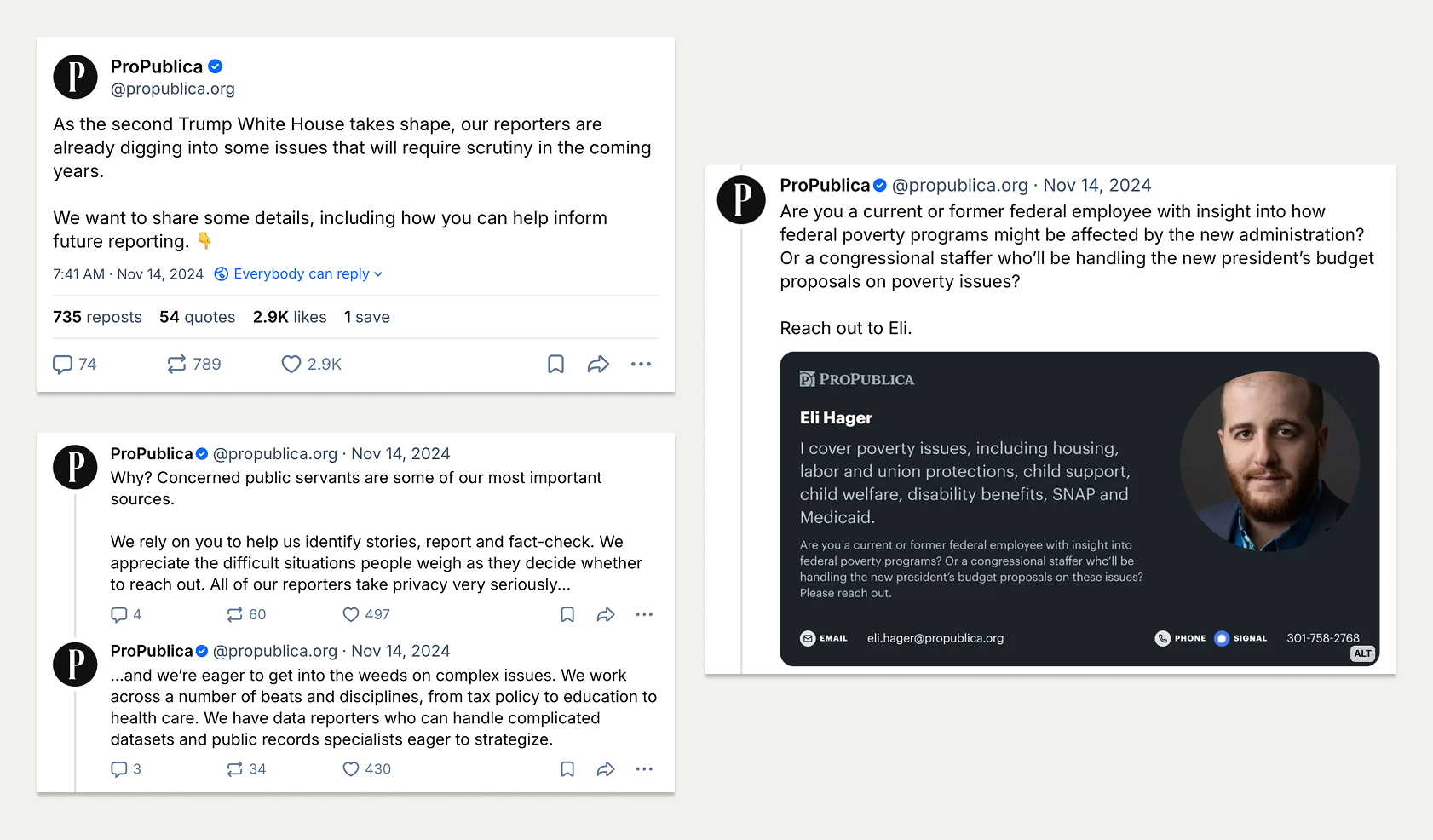
Just before the 2024 election, ProPublica published stories about key Trump ally Russell Vought. In speeches, he’d laid out his plan to demonize federal workers and “put them in trauma.” It would be a priority, he said, to defund certain agencies and demonize career civil servants, and to make it easier to fire a large swath of government workers.
The federal government is the country’s largest employer, encompassing postal mail carriers to scientists to FBI agents, and its remit stretches across American life. This represented an existential threat. Diverse as it is, we saw it as a community facing a crisis.
Before we asked federal workers to trust us, we did a major security audit. We concluded that third-party survey providers we’d used in the past were no longer sufficient, and developed workflows on encrypted tools like Signal. We removed tracking from our tips pages and sensitive callouts, gamed out scenarios with lawyers and security experts and began to codify a risk matrix. We trained every reporter who might interact with a respondent or tip.
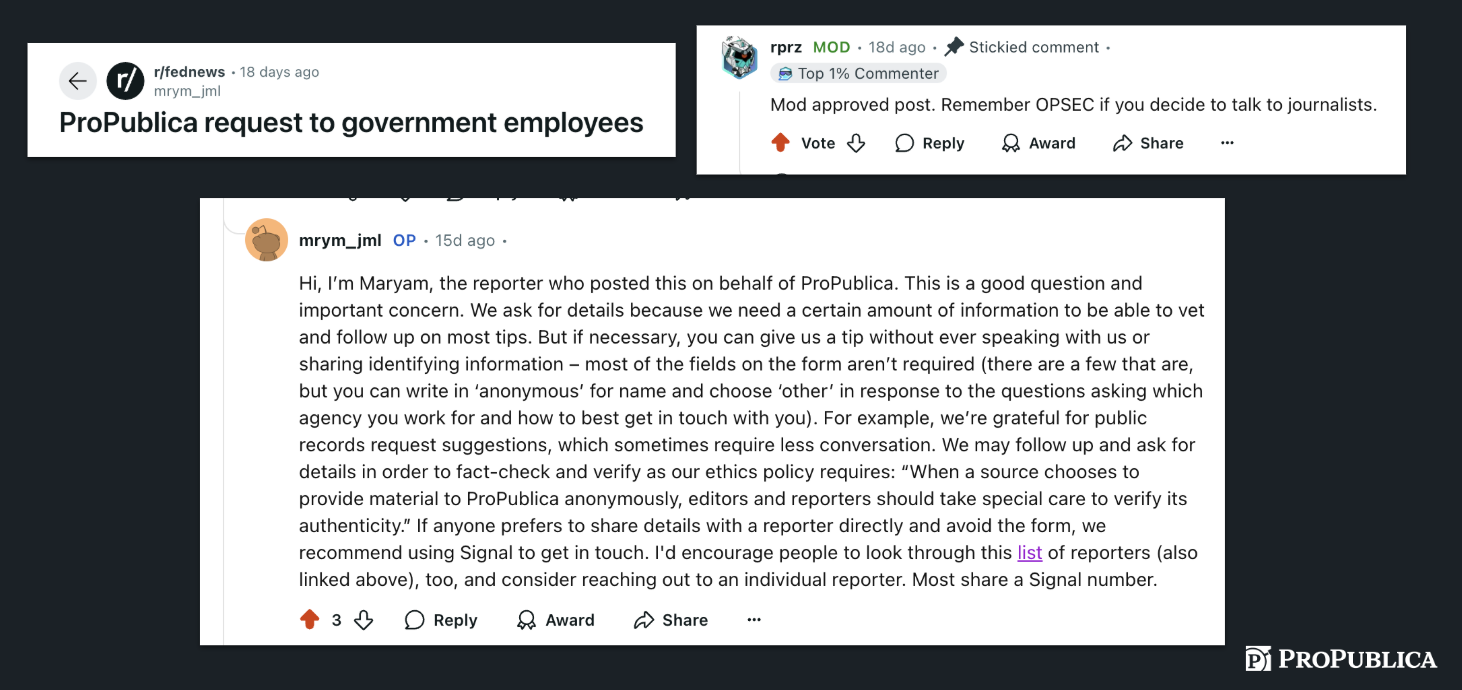
We surveyed federal workers in our source network (which we’ve been building since 2019) to hear concerns and to ask them to help us strategize. Our editor-in-chief recorded a video callout, to emphasize how seriously we were taking these issues. We connected with federal worker union leaders of digital communities such as r/fednews. Early in the year, Redditors organically vouched for us and shared our reporter directory. We jumped in to provide resources about what it would mean to contact our reporters and how we protect sources and reported back through AMAs.
Career public servants repeatedly told us they wanted to remain active participants in democracy, even under threat of retaliation. They wanted attention on what they saw as a crisis with serious consequences.
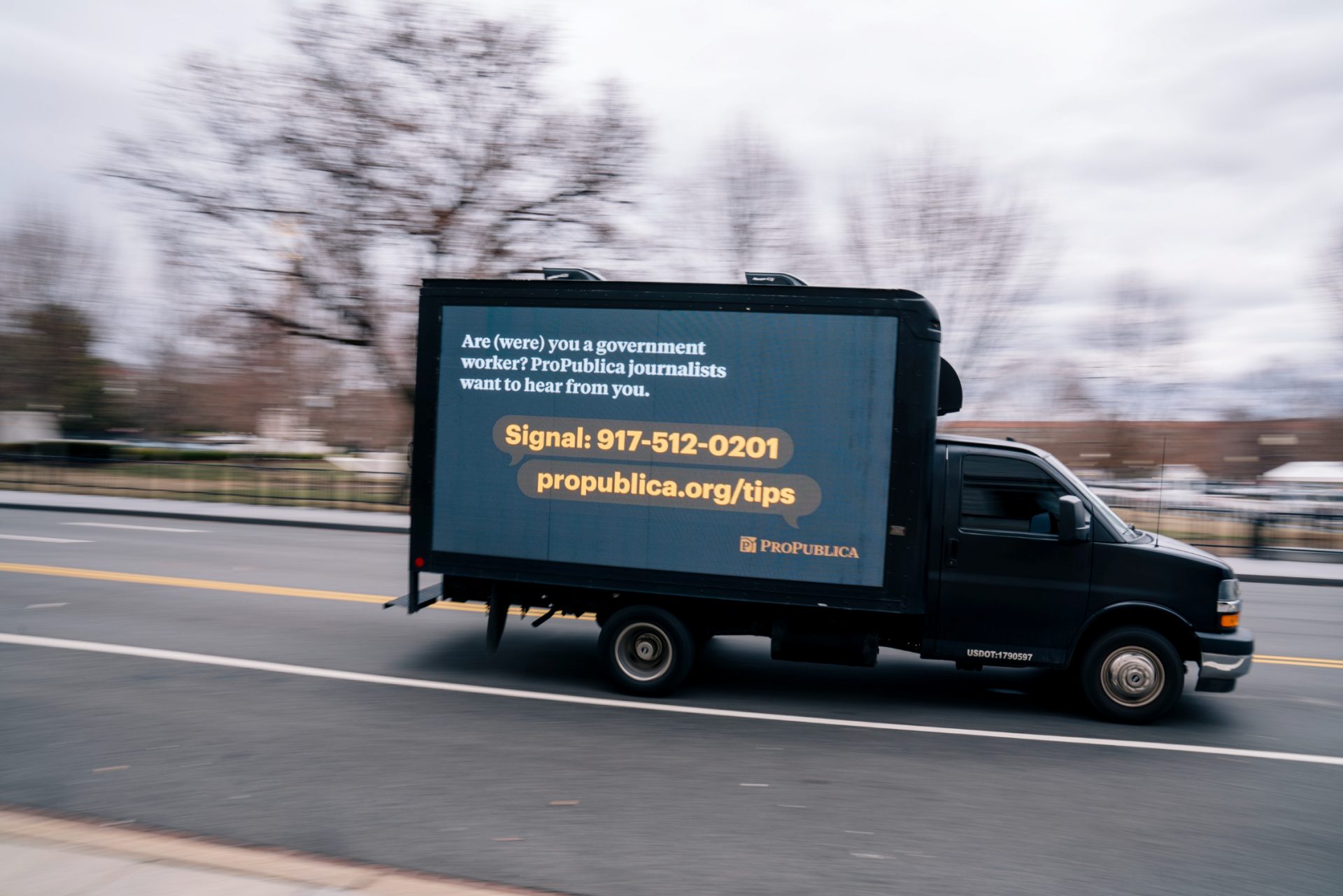
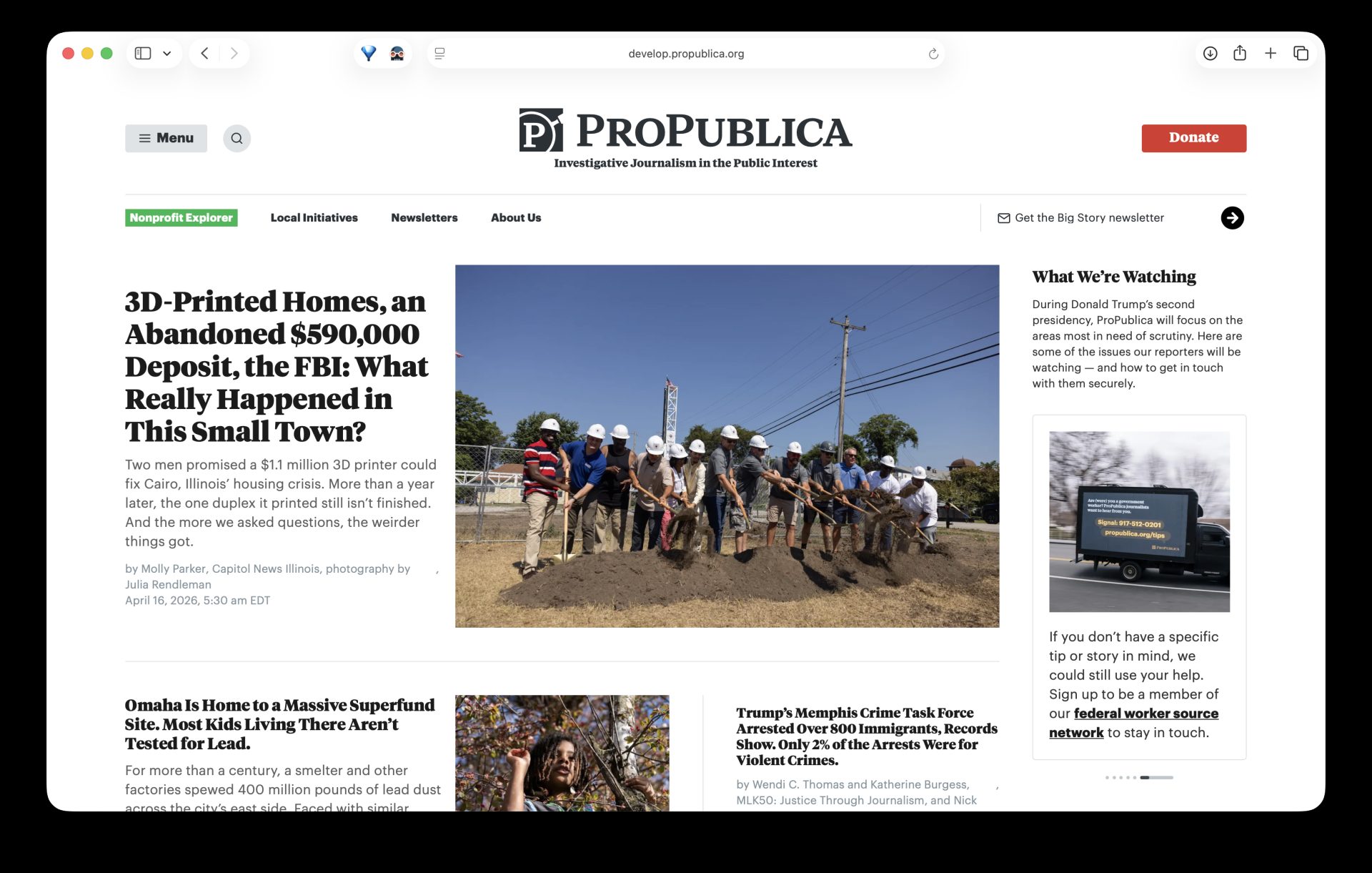
Our most public outreach strategy unfolded at the urging of our sources. In February 2025, reporters learned that fired employees at USAID had been assigned 15-minute windows to clear their desks. Many had decades of insights, information about which programs were being dismantled and troubling predictions. So, we rented a truck with a digital billboard to advertise our tip line: “Are (were) you a government worker? ProPublica journalists want to hear from you.” For two days, as ex-staffers emerged from headquarters holding cardboard boxes, the truck circled the USAID office. Over 100 tipsters reached out. When CFPB and Department of Education employees were told to clean out their desks, our truck rode again, while reporters waited nearby with business cards.
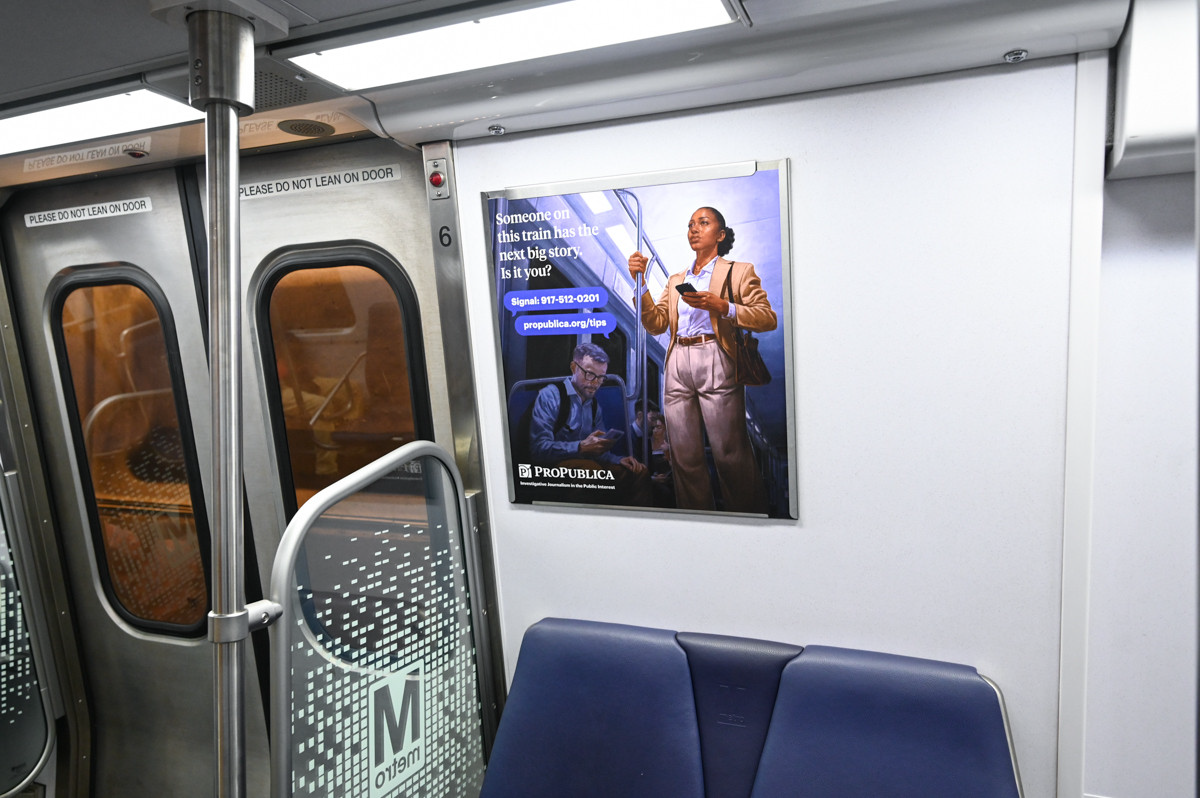
We also heard from federal workers worried about Trump’s return to office mandates. Many had built lives dependent on the ability to work from home. This inspired our idea to place ProPublica ads inside railcars as workers were forced back to their commutes. Sources told us this aligned well with their need to connect without being tracked or observed. Once our ads ran in September, workers could see our callout during their off hours and reach out on their own terms.