
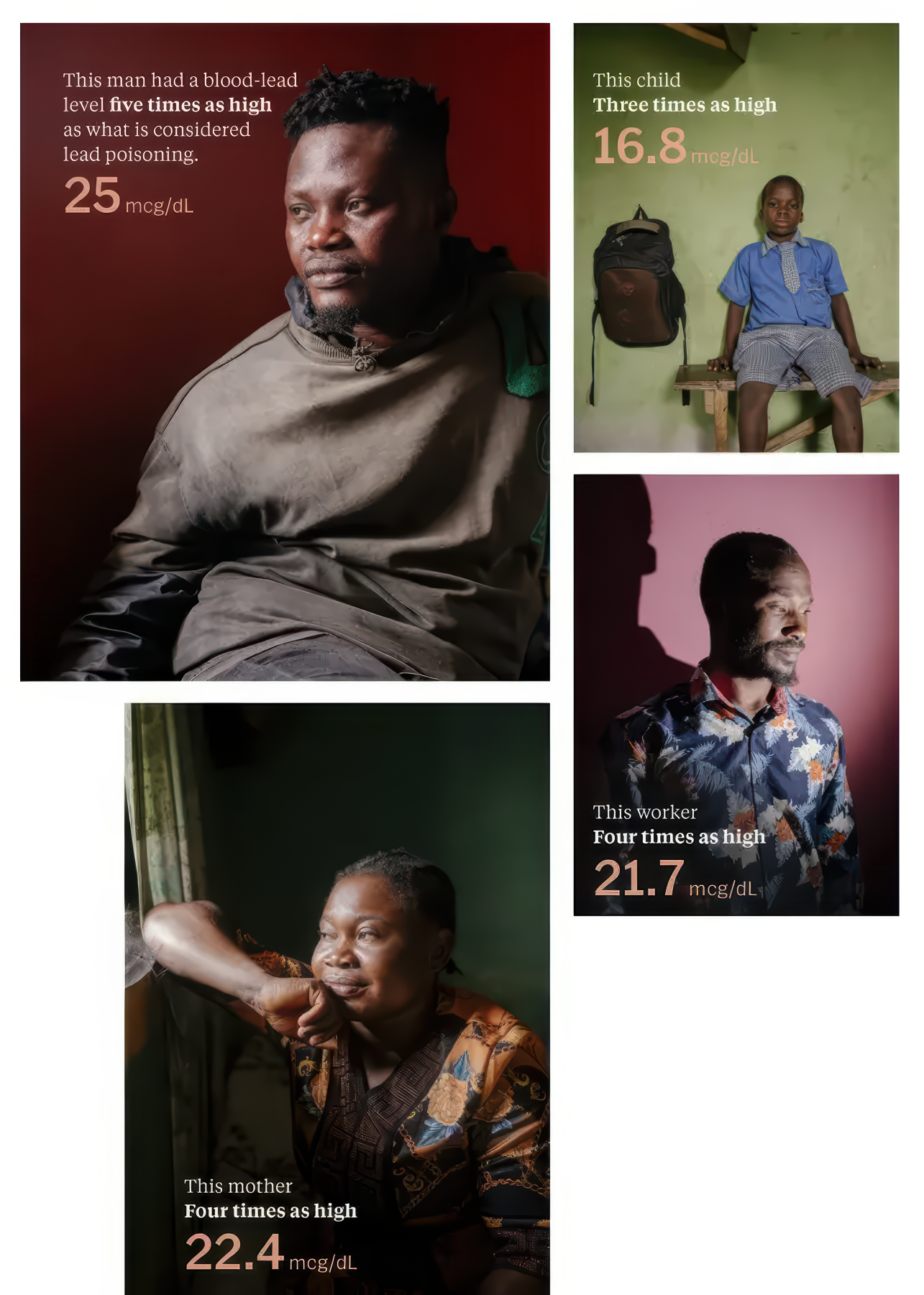
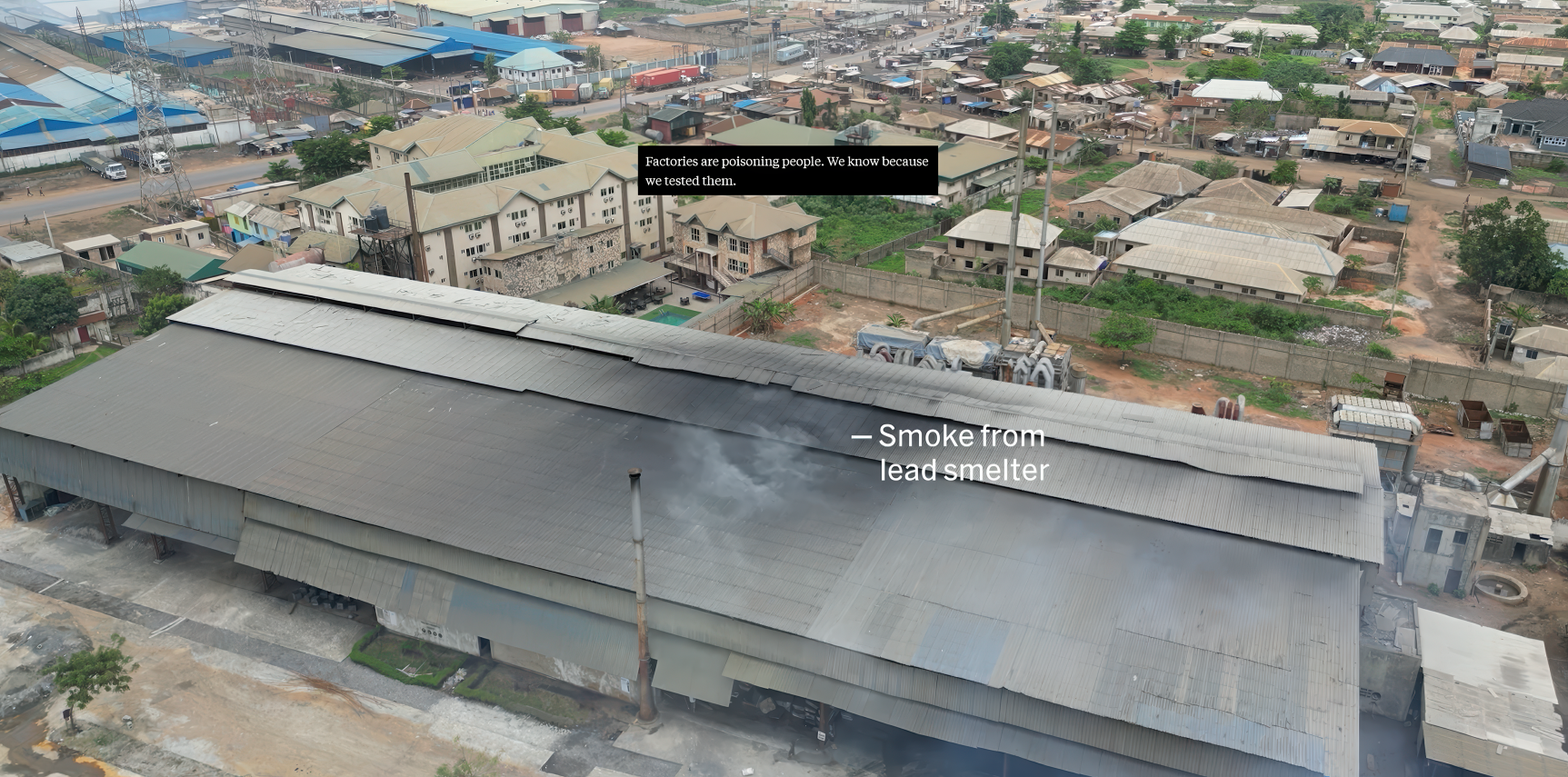
Oluwabukola Bakare was pregnant when she moved into a home in Ogijo, Nigeria, near a battery recycling factory that spewed gray smoke and ash into the sky. “In the morning, when we looked outside, the ground seemed to be covered in charcoal,” Bakare said. Neighbors complained of headaches, seizures and learning delays — all consistent with lead poisoning.
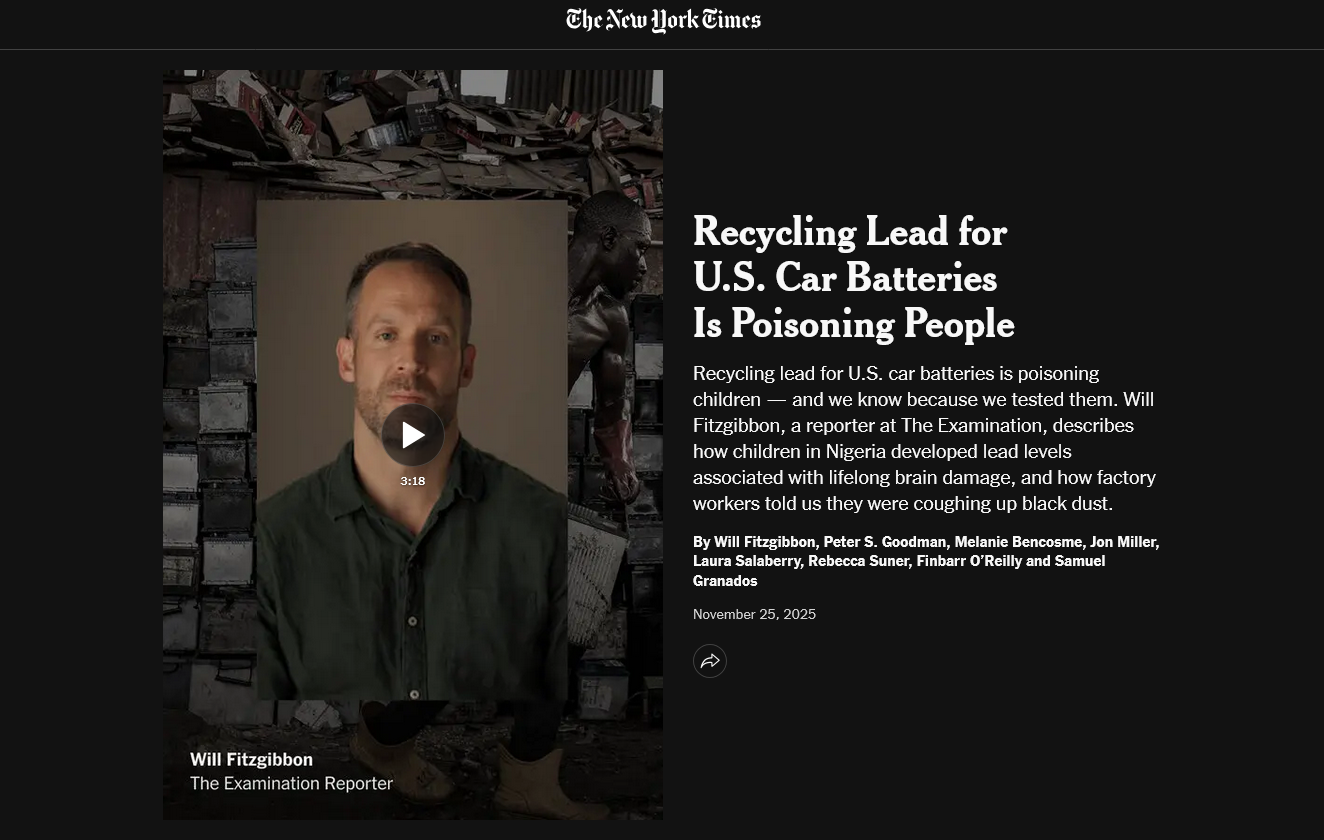
Examination reporter Will Fitzgibbon had gotten a tip that a trading company supplying the American auto industry was buying recycled lead from factories like this. He teamed up with The Times’ Peter Goodman, who covers supply chains, to see if major carmakers were profiting from toxic, unaccountable factories half a world away.
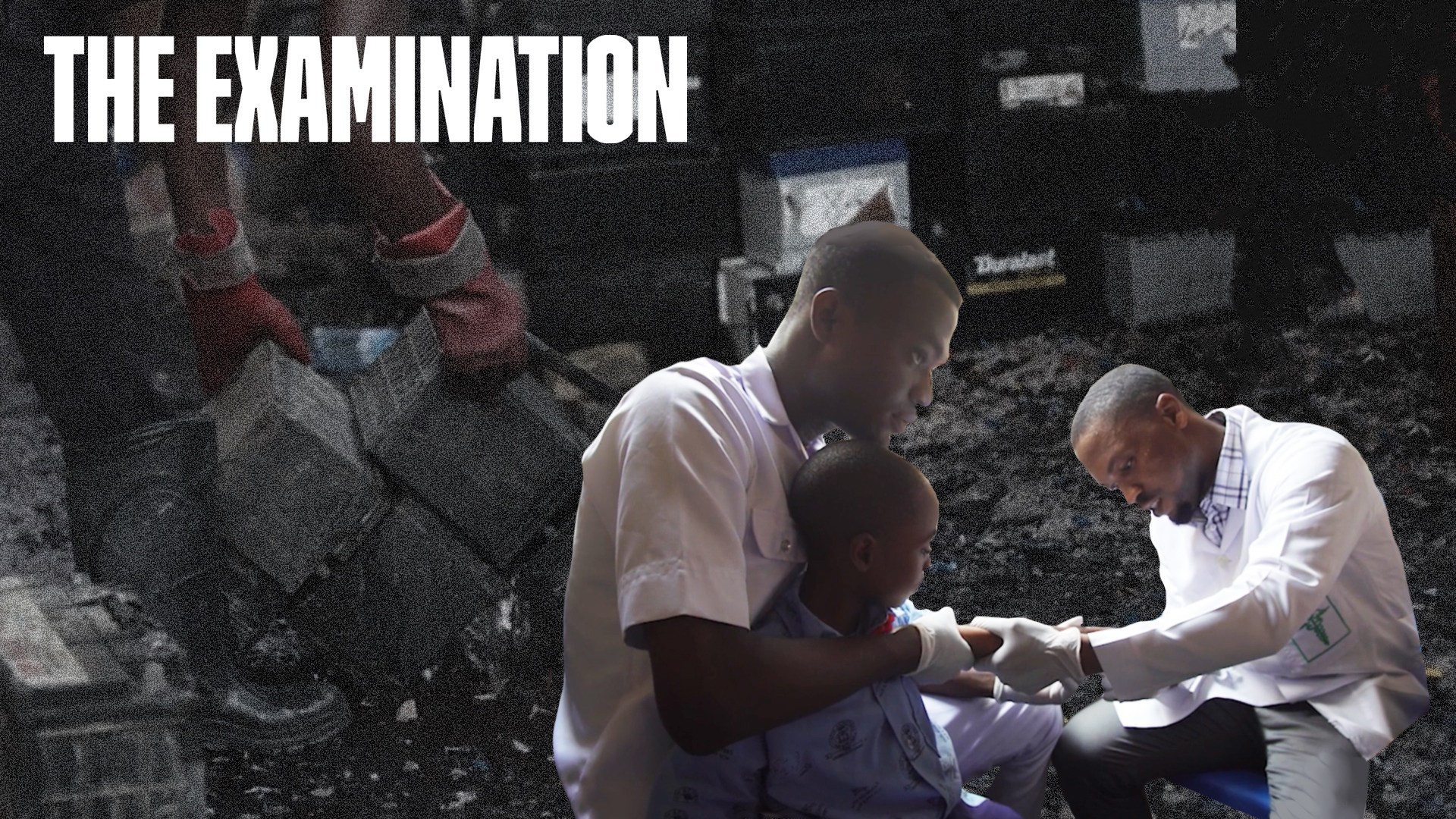
The first hurdle was both ethical and logistical. We commissioned a Nigerian research organization to conduct blood tests, but informed consent was essential. The organization held community meetings to explain the project; reporters sought an audience with the local king to get his buy-in.
Those tests revealed that 70% of volunteers living near and working in the factories had lead poisoning. More than half the children tested had levels of lead associated with lifelong brain damage. Soil testing showed contamination near schools, markets and homes.
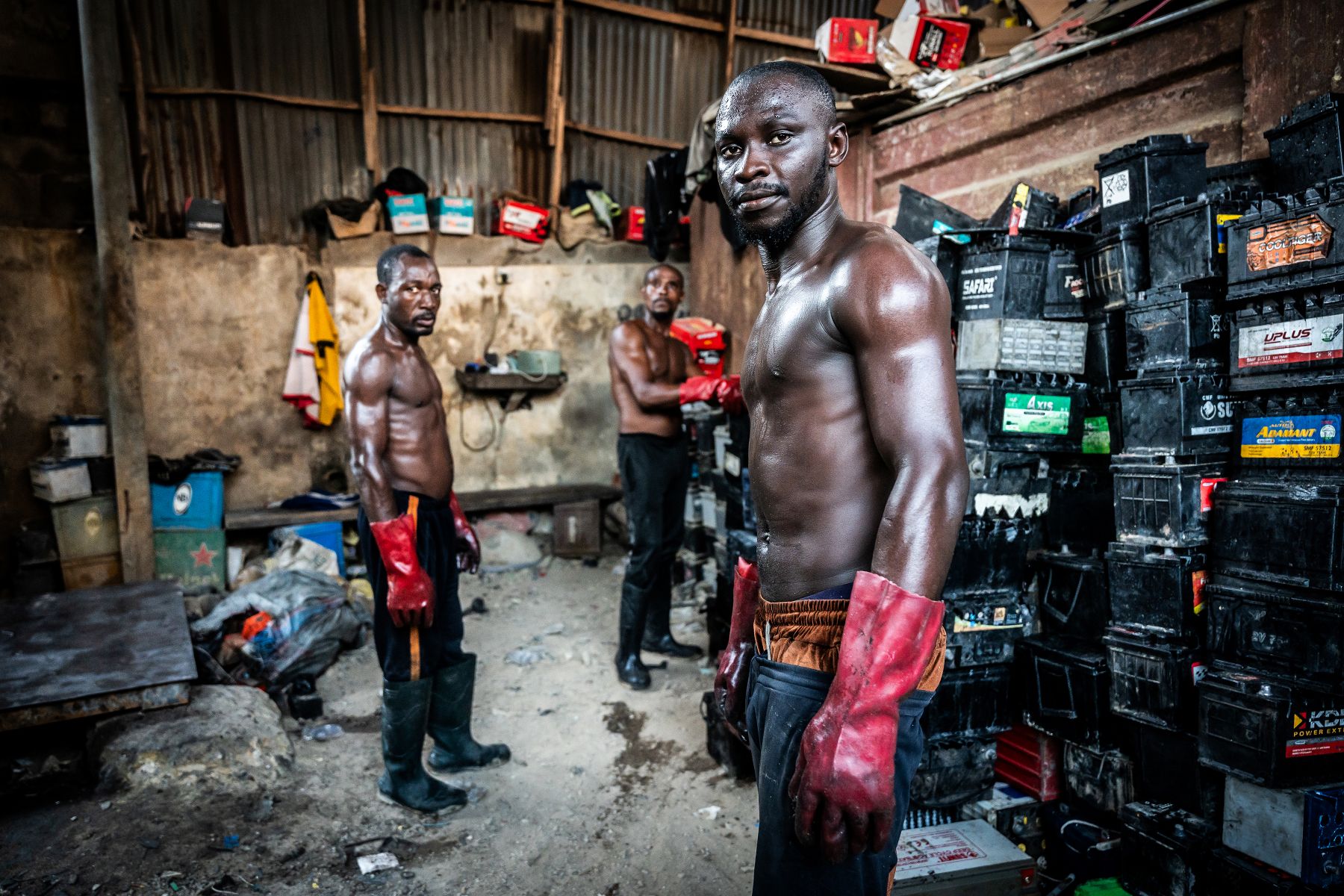
Reporters saw workers without protective gear hacking batteries apart with machetes. They obtained confidential government reports and videos showing hazardous conditions inside a lead recycler.
But tracking the lead to buyers was tricky because trade records were incomplete and outdated. Reporters recorded the numbers on shipping containers outside recycling plants and followed the shipments to Baltimore. They used interviews and trucking records to track the lead to the world’s second-largest battery maker, which supplies Ford, Honda and others.
Our online story blended accountability journalism with scrolling visual explainers, data viz, annotated images and striking portraits of the people who had been poisoned. We published those photos alongside their test results and their accounts of living with the dust and smoke they had long suspected was harming them.
We also produced a 13-minute short documentary and two social videos, posted our findings to a WhatsApp group targeted at the community and partnered with local news outlets.