
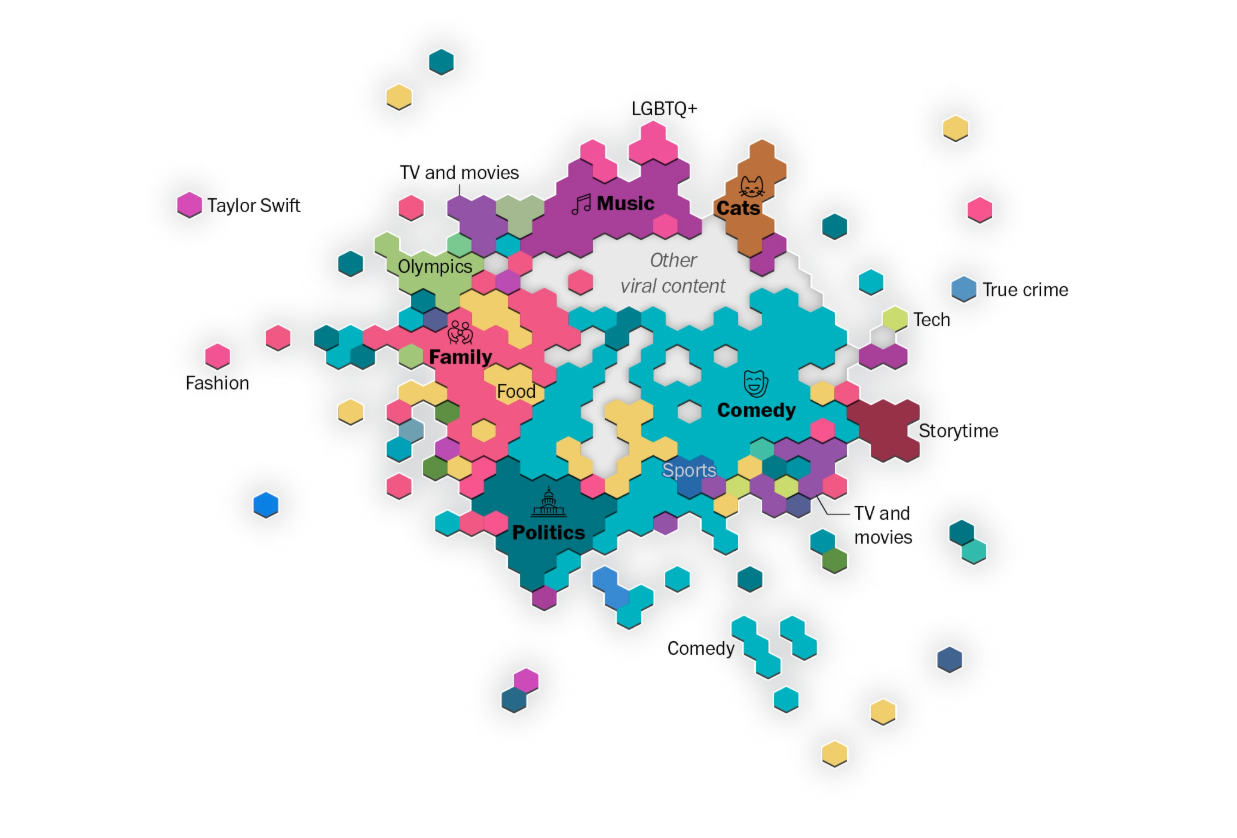
The Washington Post compiled reader submissions into the largest database of TikTok user data ever assembled, in order to shed new light on how the platform personalizes each user’s feed and affects users’ habits. Our project revealed how people use the notoriously fragmented and personalized social media app – and our online presentation gave readers unique ways to explore the data, see how it matches their experience and better understand why what they see is just a fraction of the app’s content.
TikTok does not provide much, if any, information about how its algorithm works to serve content to users or what people see on the platform. Previous journalism that centered on the company’s algorithm relied on small samples of user experience, or on “sock puppet” accounts run by computers mimicking human behavior. This project blazes a trail for data journalists to circumvent big tech companies’ secrecy by teaming up with our audiences. It also unveils new findings about how real people are lured in by the app – and about how they sometimes find themselves in possibly damaging content “corners” that can be hard to get out of.
Shortly after our story about how users increased their use of the platform throughout the length of our study, TikTok launched a “Time and Well-being space” app for users to track their screen time. Other national media picked up our findings, highlighting our work in multiple news segments, including interviews with reporters on two national NBC broadcasts.