
Following the catastrophic July 4 Hill Country floods that claimed the lives of more than 130 people, Houston Chronicle journalists from across the newsroom sprang into action.
We worked together to produce revelatory data-driven explanatory and investigative reporting showing how regulatory and emergency-response failures left residents, vacationers and campers vulnerable to catastrophic flooding.
While hard-hit government agencies in Kerr County were unable to respond to basic inquiries or records requests, the team mined government documents and forged new partnerships with private data providers to keep readers informed. Our staff used immersive data-driven storytelling to reveal how the disaster unfolded, why safeguards failed and who was responsible.
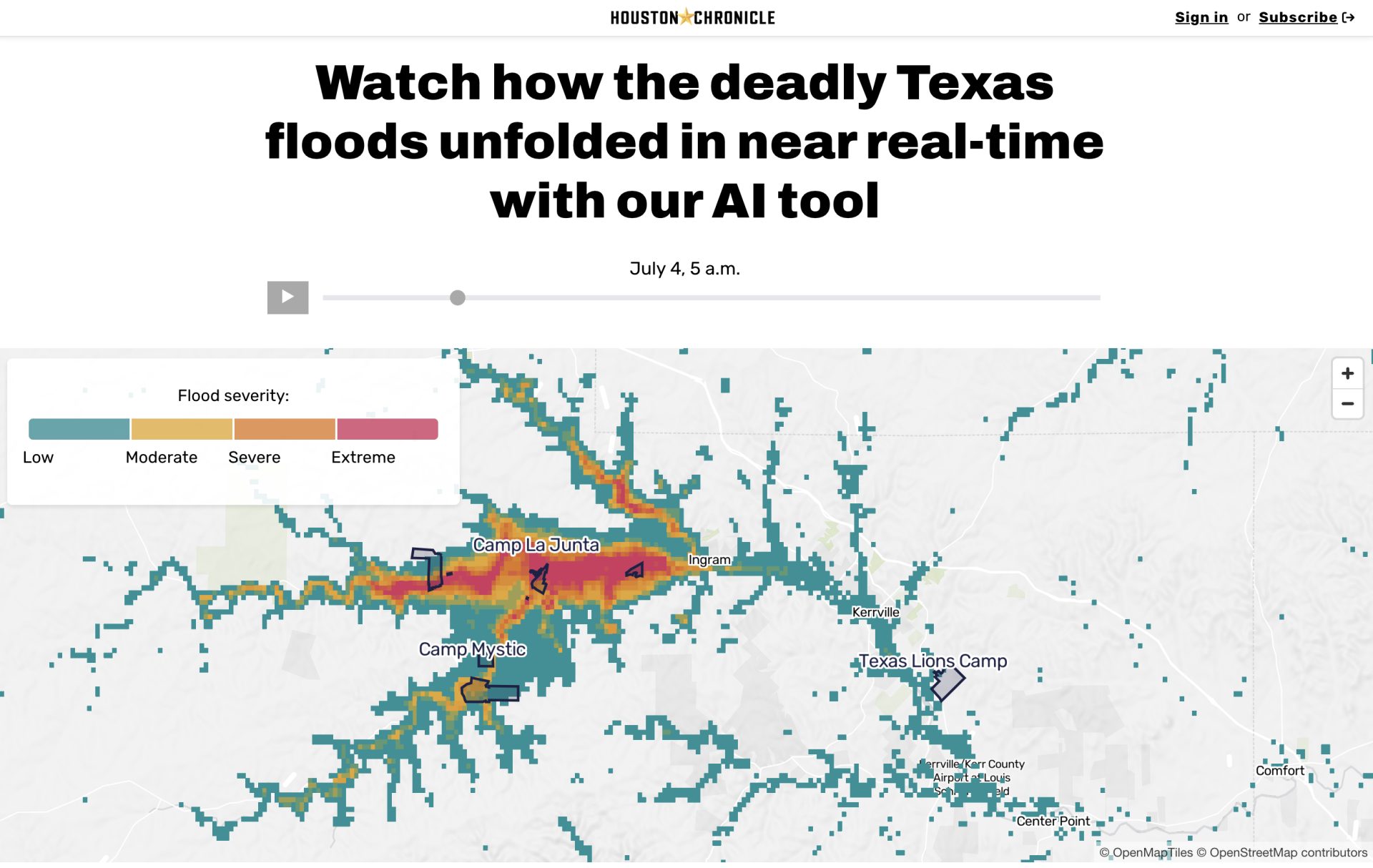
We partnered immediately with Floodbase, a company that uses machine learning to model flooding, and built a map that estimated in near-real time how the Guadalupe River rose to flood stage and how a wall of water moved downstream into children’s summer camps.
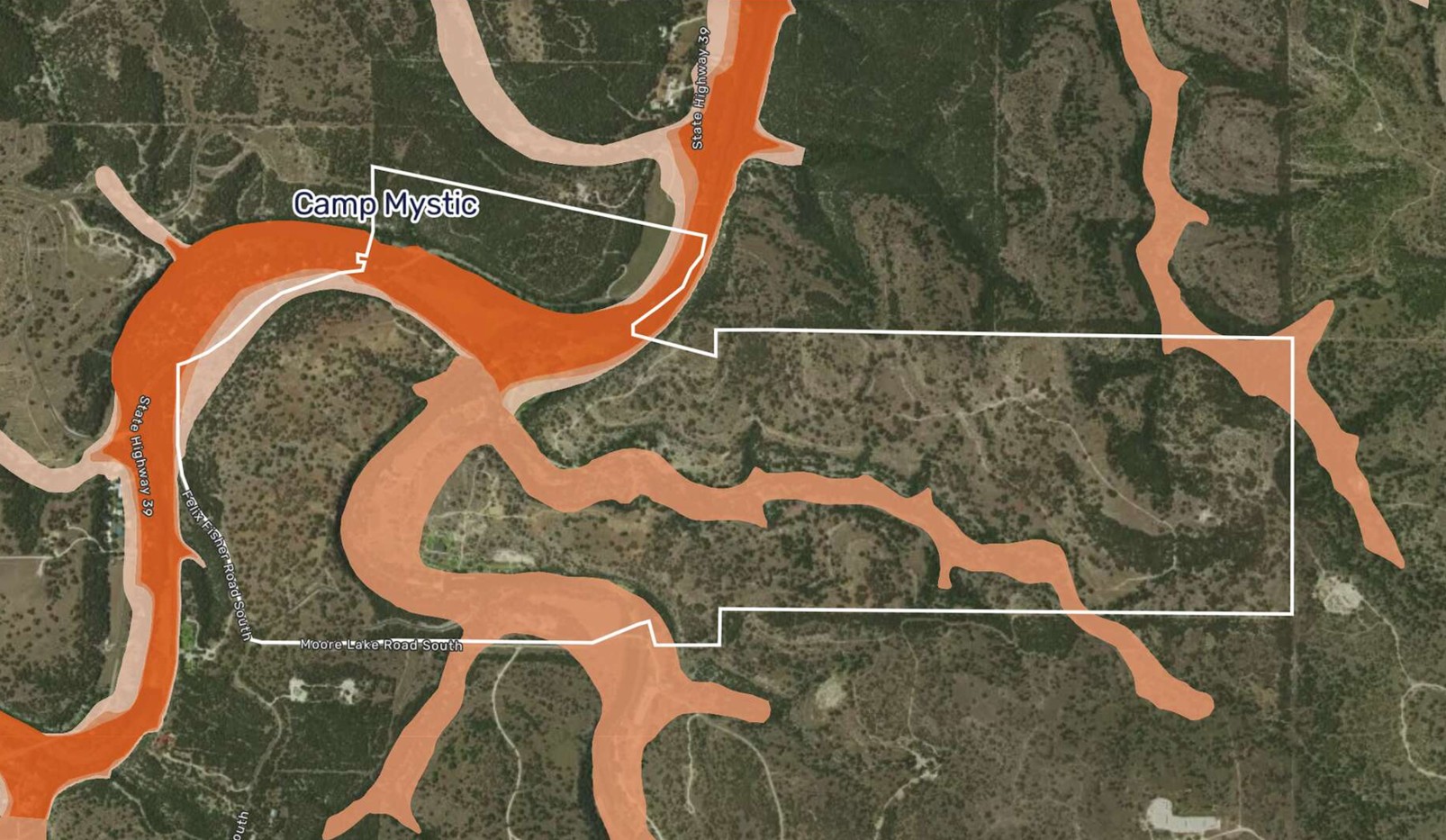
Our team was among the first journalists to reveal that the flooded summer camps sat in areas the federal government had designated as likely to flood, and to map them. We built a searchable tool allowing residents to check flood risk by address.
We paired automation with shoe-leather reporting to piece together how officials had recognized the need for a better flood warning system, but still failed to secure one for years. Investigative and data reporters scraped and parsed local archives to reconstruct, for the first time, what the system would have looked like and whether it could have saved lives.
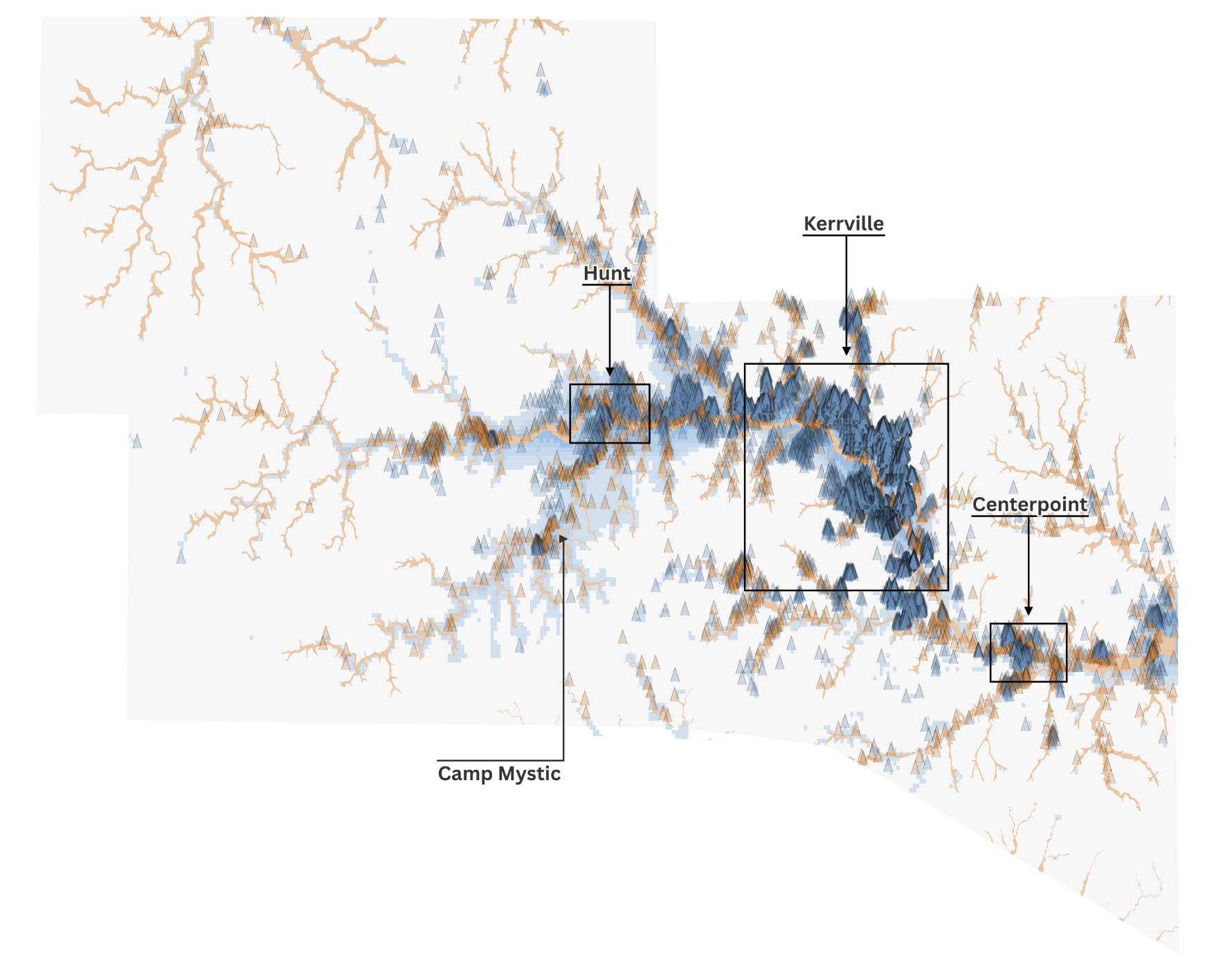
Our journalists were the first to estimate the financial toll of the tragedy, too. By overlaying Floodbase’s modeling of the floods with federal insurance data, we revealed how outdated federal risk maps had left thousands uninsured and facing rebuilding costs alone. When federal aid began flowing to victims, we built a tracker to follow every dollar and reveal who was – and wasn’t – getting help.
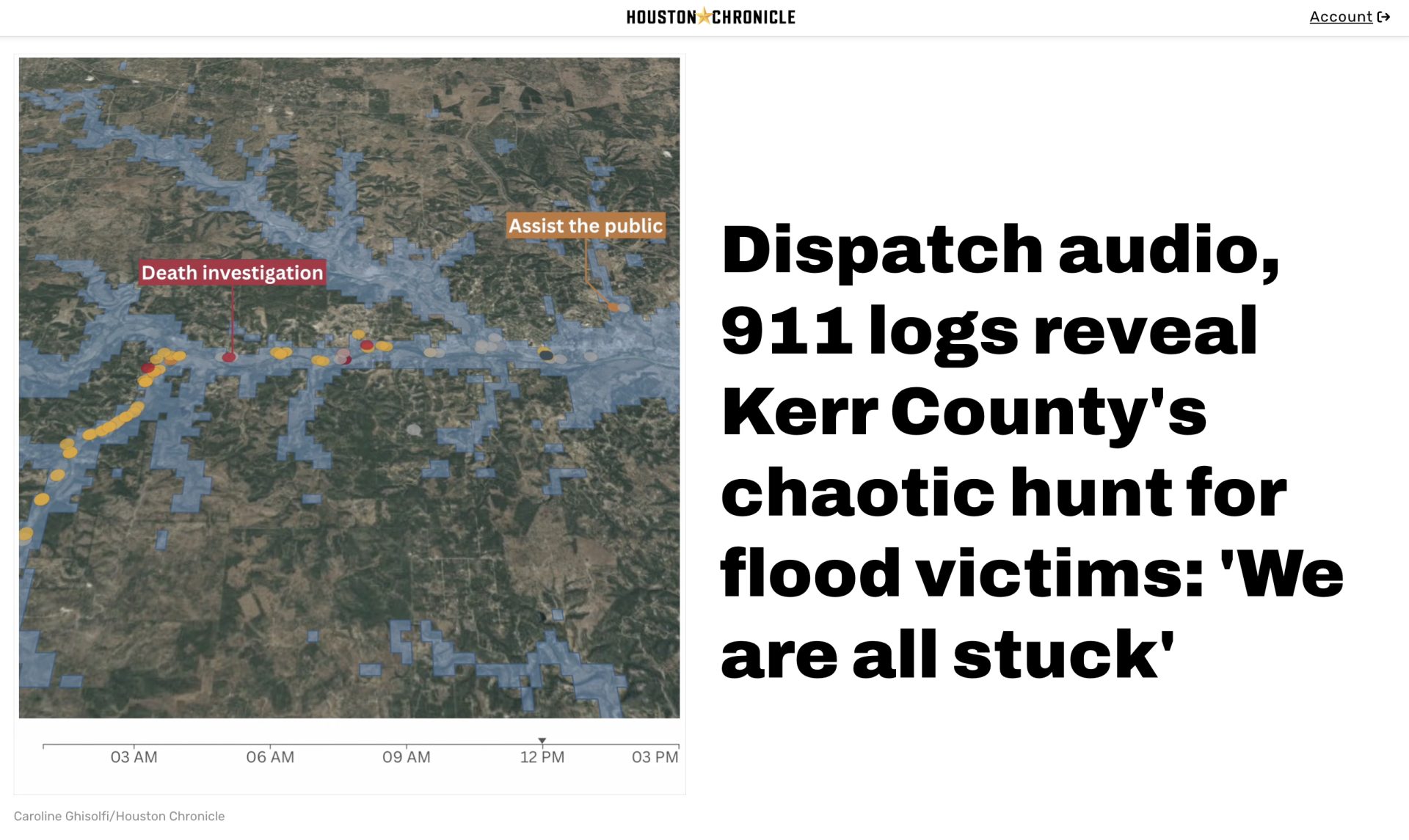
Months later, when Kerr County officials released radio communications and dispatch logs from July 4, our journalists used audio, video and geospatial tools to build a multimedia timeline. The interactive piece takes readers inside the chaotic first hours of the tragedy, showing how emergency calls overwhelmed first responders – some of whom became stranded themselves as the waters rose.