


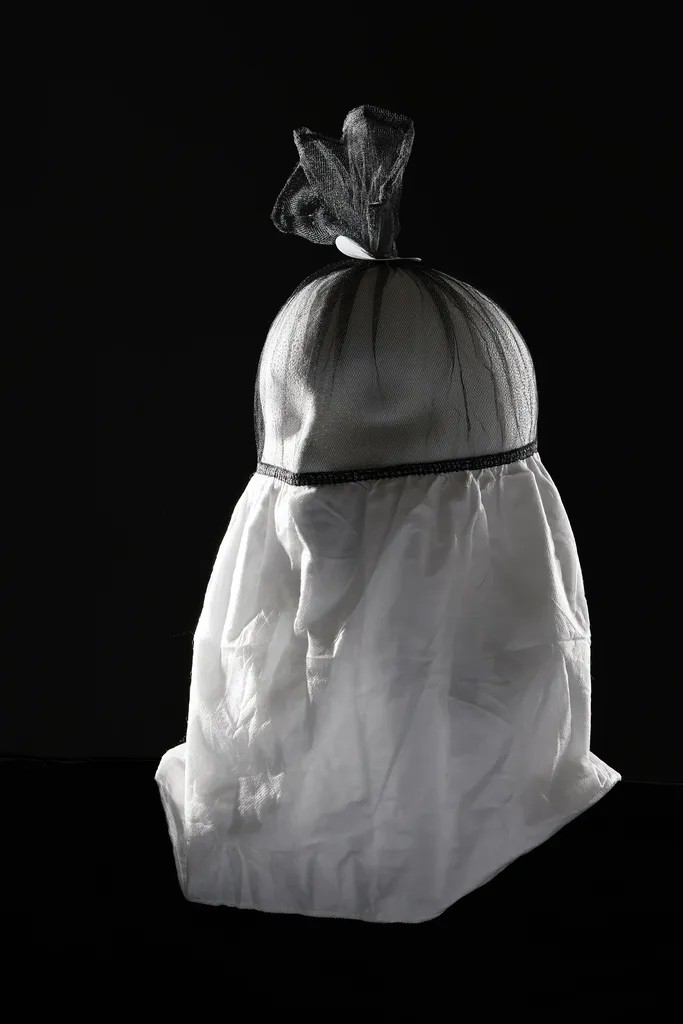
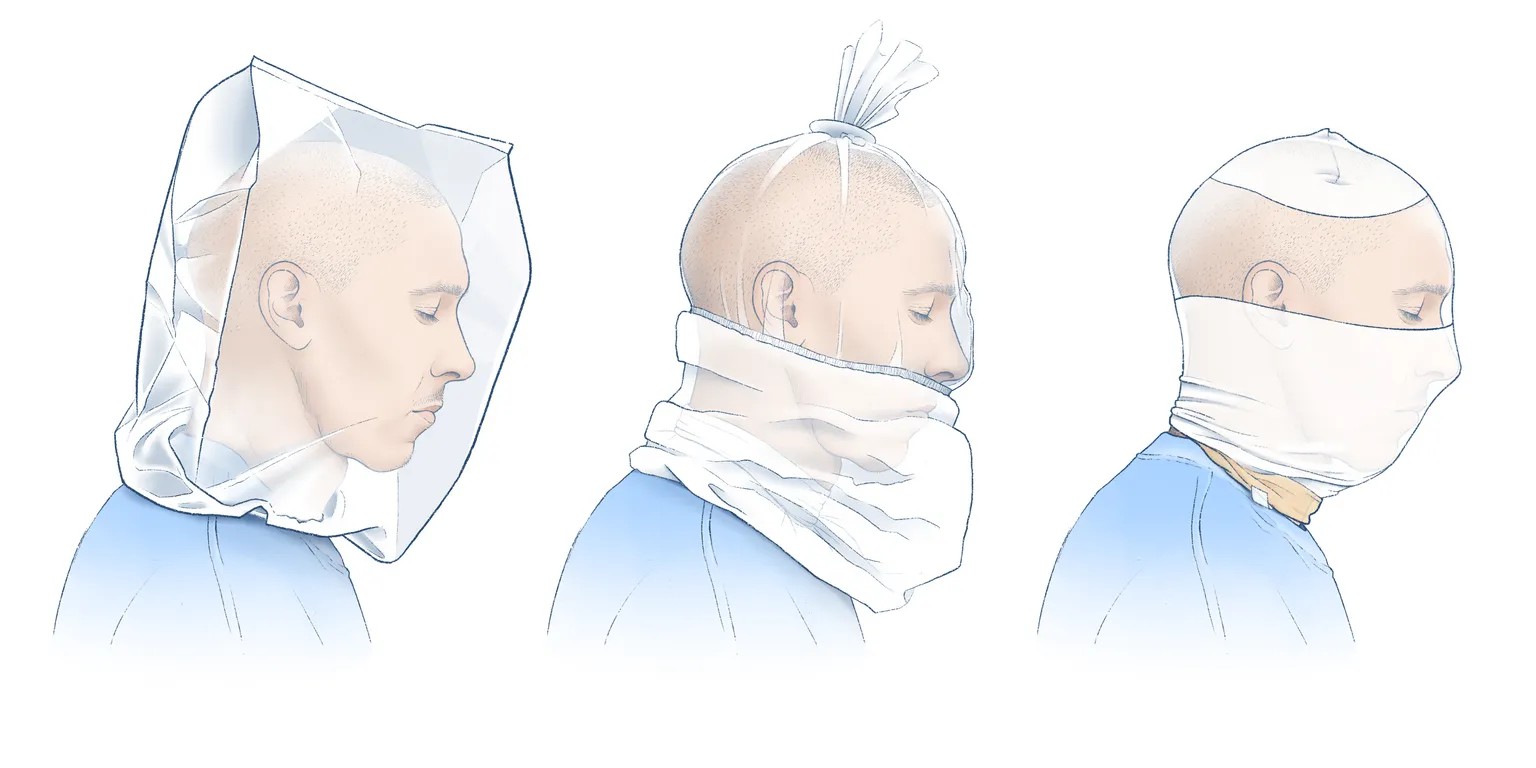
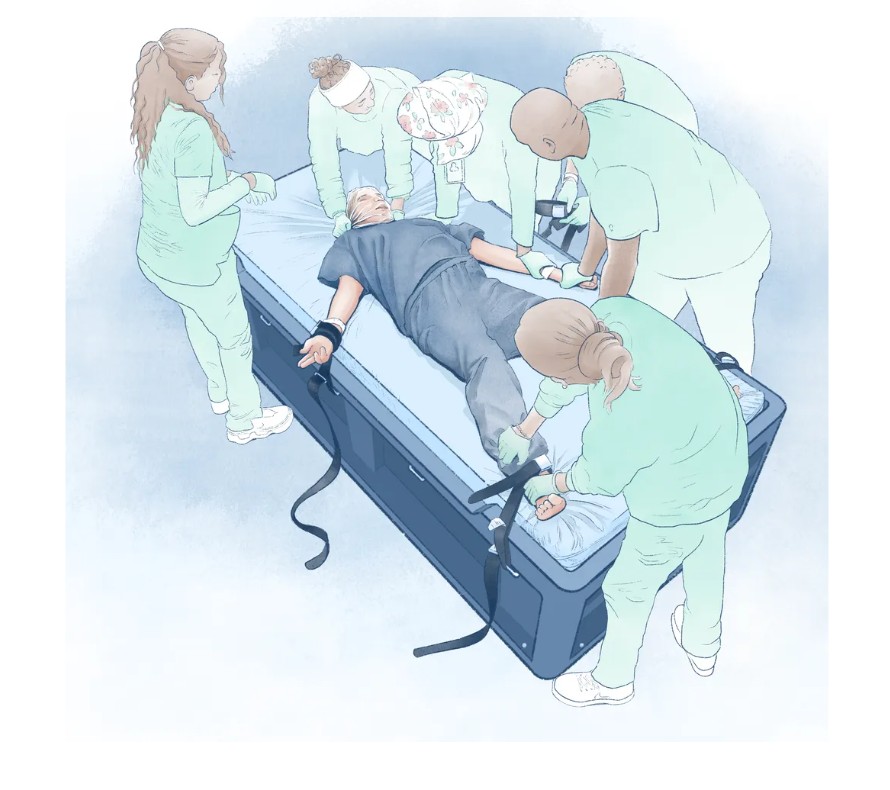
The Kansas hospital where the 13-year-old girl sought treatment for a suicide attempt was supposed to be a safe harbor. Instead, staff there tied down her wrists and ankles and covered her head with a mesh bag called a spit hood. Said a nurse who defended the treatment: “On day two I was going to take the restraints off but she was being so mouthy.”
Over the past decade, at least five patients have died and countless others have been hooded in potentially life-threatening ways with spit hoods, which were patented as an infectious disease-prevention device for police but have for years been used under the radar as a form of control inside emergency departments, ambulances and psychiatric wards.
Reporter Hannah Furfaro spent a year investigating how a device that many leading civil rights groups and psychiatrists had never heard of had quietly become a tool of choice by medical workers in at least 29 states. The stories centered on the tension between balancing patient and staff safety, and offered a confronting window into how far that scale tips against vulnerable children and adults being treated behind closed doors.
The resulting series, “Shrouded in Secrecy,” is the first nationwide investigation into how healthcare workers are using spit hoods to dangerously restrain patients in the name of disease prevention and with virtually no accountability or oversight.
Following an exhaustive analysis of lawsuits, news stories and hospital inspection reports, Furfaro manually built a dataset that provides the most comprehensive record of spit hood incidents in U.S. medical settings to date. Furfaro paired these findings with a nationwide survey she conducted to document how spit hoods have propelled into mainstream psychiatric treatment inside private and taxpayer-funded hospitals alike.
Not a single state that responded to The Seattle Times survey systematically tracks spit hood use, and federal oversight agencies and hospital accrediting agencies don’t either. The Seattle Times helped fill in these gaps. Through interviews with dozens of healthcare workers and legal and regulatory experts, and by gaining the trust of sources who risked their careers by providing testimonies and internal video evidence showing how spit hoods are used to restrain patients’ necks, Furfaro’s reporting offered an unprecedented accounting of the price patients pay and the failures of oversight agencies meant to look after them.
One of the stories gave states and the federal government a roadmap to regulation, including regulating spit hoods as a medical device, as the FDA does with restraints like limb straps and sedatives. Another story included an interactive map and searchable database based on Furfaro’s survey and reporting that allows readers to look up where spit hoods are used and whether taxpayer dollars are funding them at hospitals in their state. A third story, paired with detailed illustrations of several spit hood brands, revealed how a lack of research on whether spit hoods actually work – and whether they’re safe – has given manufacturers with financial stakes in the product the freedom to police themselves.