
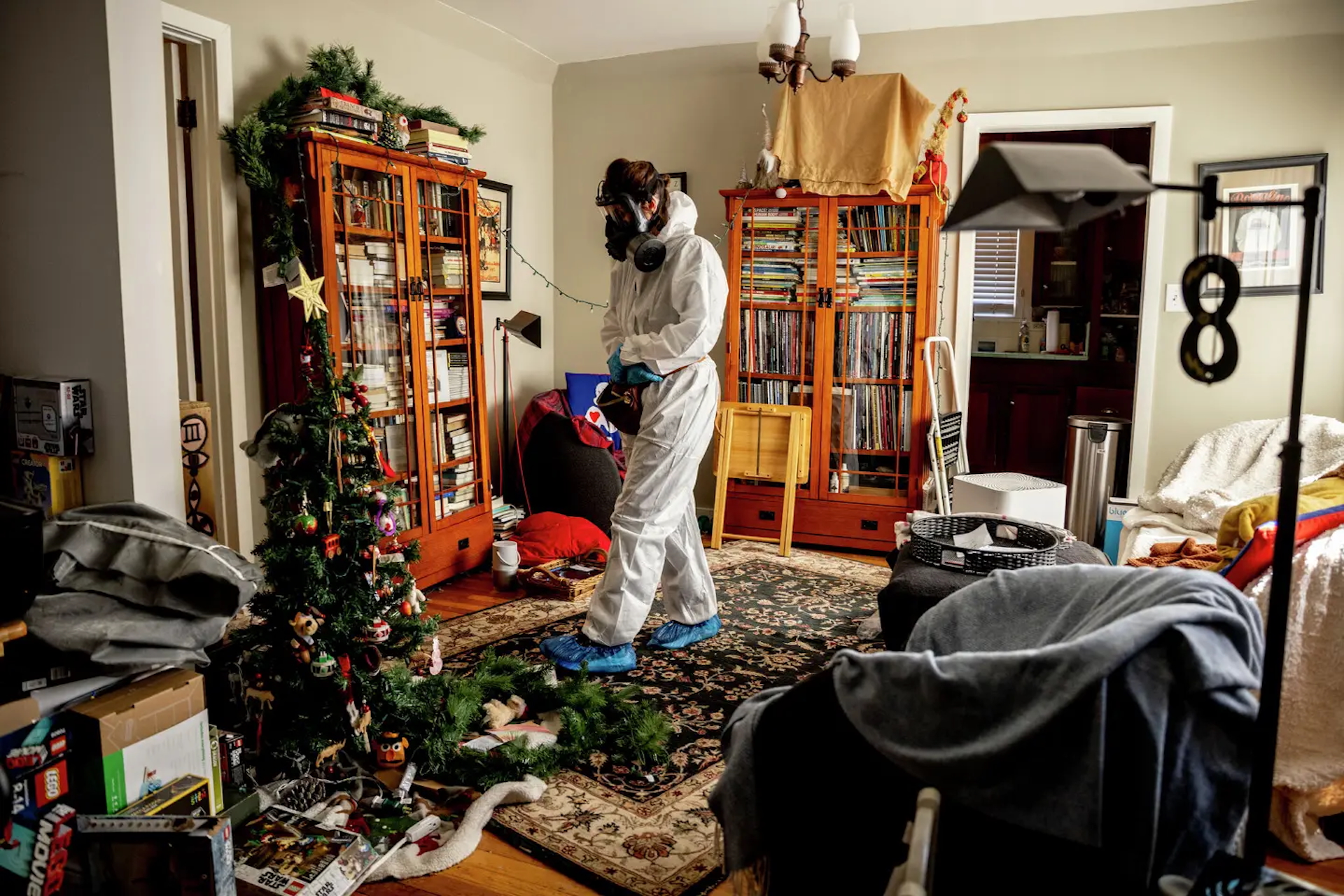



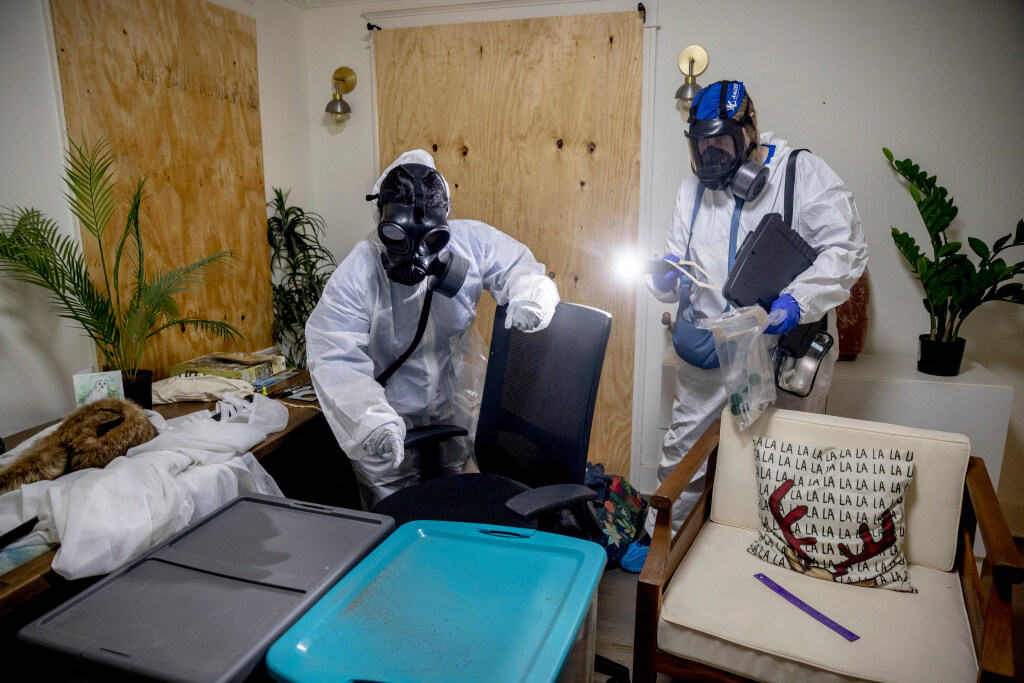
For every home razed to the ground in the Los Angeles wildfires’ burn zones, another remained standing but filled with ash. These thousands of homes carried the remains of car batteries, asbestos insulation and lead paint, drawing comparisons to 9/11. Yet public officials have struggled to address the increasing toxicity of what wildfires leave behind.
“Burned,” a multi-part investigation, exposed how the lack of standards on the public health consequences of wildfire smoke have allowed insurance companies to rush wildfire survivors back into potentially unsafe homes. It explored the secret internal guidelines and science-for-hire that the insurance industry uses to cut down or deny claims for policyholders with smoke-contaminated homes, leaving them vulnerable to these toxic chemicals.
The Chronicle revealed that beryllium, a rare carcinogen, had been found in dozens of homes in Los Angeles County — the first time this metal has been widely documented following a wildfire. The unprecedented nature of the contamination left homeowners without answers about how to keep themselves and their children safe, an uncertainty exploited by insurers seeking to avoid paying for costly cleanup. Reporters interviewed nuclear scientists, doctors and public health experts to understand the threat beryllium exposure poses and offer homeowners practical advice on how to reduce risks inside their houses.
When California regulators convened a panel meant to address the lack of scientific standards for smoke damage, reporters uncovered that several members of the panel had histories of downplaying the toxicity of wildfires on behalf of insurance companies. The journalists obtained dozens of reports showing how task force members attributed ash and soot found inside homes to unlikely sources, including unlit candles or fireplaces, and prescribed barebones cleaning methods even when doing so conflicted with the current science — and common sense.
For the final story in the series, reporters amassed a database of insurance companies’ internal handbooks to help readers understand exactly how insurers make decisions about claims. They documented how the companies’ often arbitrary rules led to lowball payments for legitimate damage — especially for smoke-damaged homes.
Custom graphics throughout the series helped visualize concepts such as how beryllium affects the body and the ratio of homes that burned down in the Eaton and Palisades fires versus those that survived but were nevertheless infiltrated by ash and debris.
The resulting series provided a comprehensive explanation of how California wildfires — increasingly more urban than they are wild — are leaving behind an unprecedented level of toxic ash and debris, threatening to cause a new public health crisis as more fires burn.