
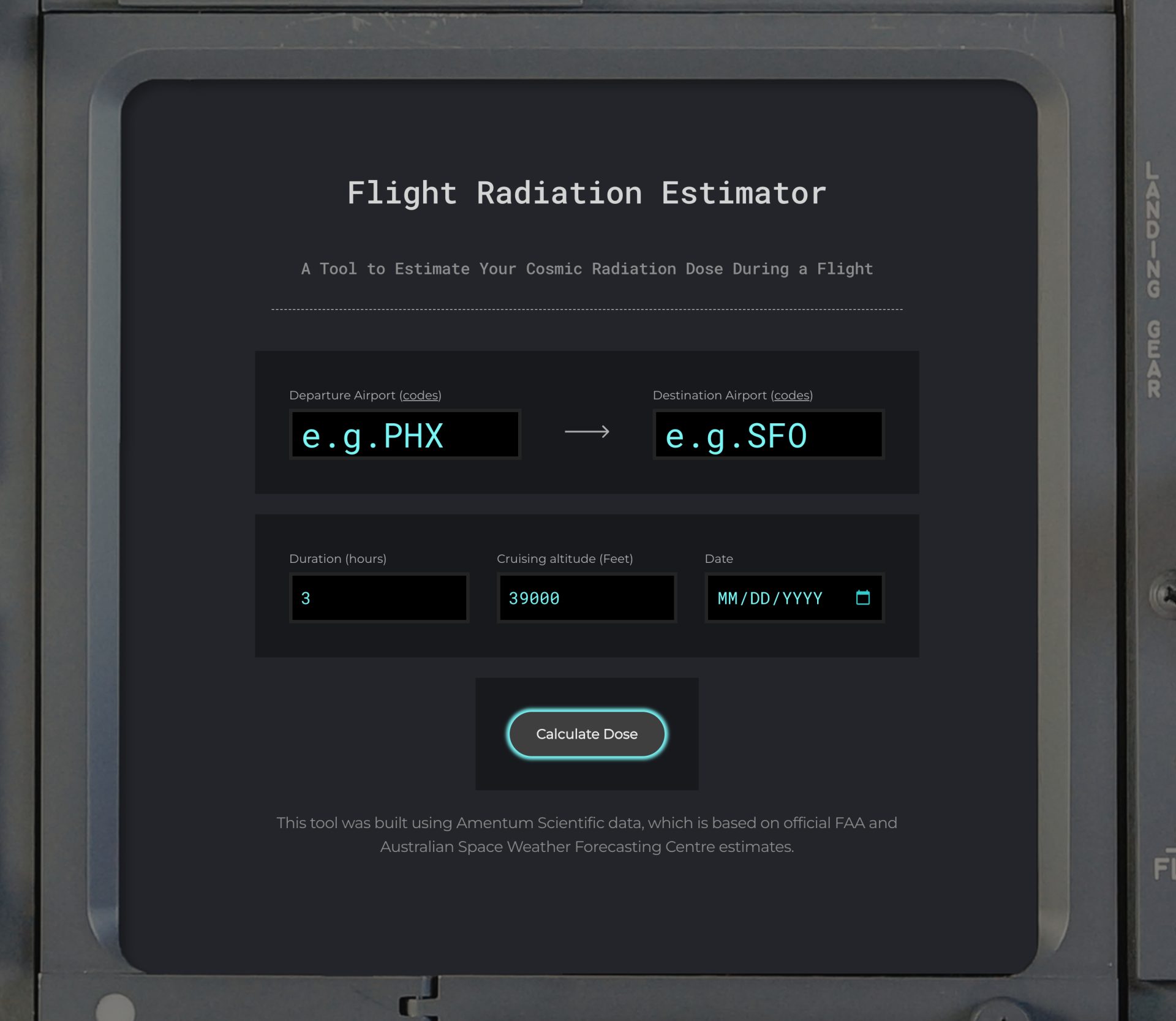


The multimedia investigation “Exposed” found the FAA does almost nothing to protect aircrews from cosmic radiation exposure, which flight attendants and pilots encounter every time they fly. This project — jointly submitted by the Howard Center for Investigative Journalism at Arizona State University and Scripps News — is accompanied by an online radiation exposure estimator to empower flight crews and passengers to monitor their radiation exposure from air travel themselves.
This investigation found:
The science was complex, particularly around radiation changes in the solar cycle. In May 2024, during one of the strongest solar radiation storms in decades, many long-haul flights did not reroute, even after federal alerts warned radiation levels were elevated. A Howard Center data analysis found that half the international flights analyzed crossed through a region near the poles, which is where the FAA says there is “little to no protection from solar cosmic radiation.”
In addition, this package includes two important explainers on the Exposed website, in a section called, “The Science of Radiation.” The science explainers highlight how public language around radiation can further minimize risk. One story found that government agencies, doctors and industry often compare flight exposure to a fraction of a chest X-ray, but the CDC acknowledged to the Howard Center that its comparison to “one” chest X-ray can count an exam involving two separate images. That accounting can make flight radiation appear to translate into fewer chest X-rays, obscuring the math of cumulative exposure.
Another story found that comparisons to natural background radiation can also be misleading. The commonly cited U.S. benchmark of 3.1 mSv per year includes indoor radon, a major lung-cancer risk that is often increased by human construction and can be preventable. Without radon, the baseline drops to about 1.1 mSv, making the roughly 3 mSv aircrew receive annually at work appear nearly triple a more meaningful natural-background comparison. Taken together, “Exposed” found a systemic failure by U.S. regulators and institutions to clearly communicate, measure and reduce occupational radiation risk for aircrews.